Weighing Options for Water Softeners Across Gadsden County Florida?
Good installations start from a lab result and work toward a device that suits it; read on for how the pieces fit together.
Call Ackuritlabs And Aqua Systems at 850-616-2634 to ask which questions come before any equipment.
Before Any Equipment: Why Skipping It Backfires
A smell, a stain or a taste is a symptom, and the symptom alone rarely identifies the cure; most reputable providers ask for results before quoting a system. A first conversation commonly ends with advice on what to sample before the next step; the equipment decision waits until the numbers are in.
Softening: a Bed of Beads and a Brine Tank
A conventional softener passes the supply through a bed of resin beads that grab calcium and magnesium, and the stored brine is topped up with salt as needed. Where a softener is sized correctly, white crust becomes much less of a chore; it is not meant to filter out bacteria or chemicals.
Template-Assisted Units – Setting Expectations
Conditioners leave the hardness figure unchanged and change the shape of the crystals that form, which suits some households and some local rules. A conditioner will not give the slick feel that a softened supply has in the shower; asking for a plain description of the outcome avoids disappointment.
Adsorption Media – Contact Time and Capacity
Filters based on carbon are the usual choice for chlorine taste and many household odors; each type of carbon targets specific compounds, so the media is picked to suit the finding. Carbon has a limited capacity, and once it is spent, it stops doing its job, and the maker's change interval is a guide, not a promise.
Canisters on the Line: Reading the Micron Number
Sediment cartridges screen out sand, rust flakes and silt before they reach appliances, which lets each cartridge last longer. Carbon cartridges, including carbon block types, often sit downstream of the sediment stage; a wrench for the housing is a worthwhile purchase.
Drinking Supply Upgrades: Pressure, Membrane and Reject Stream
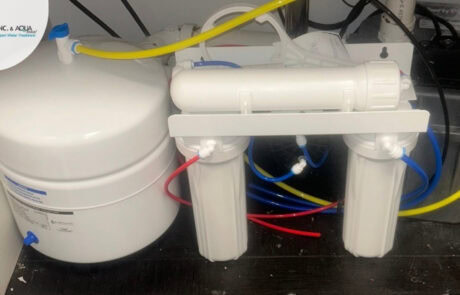
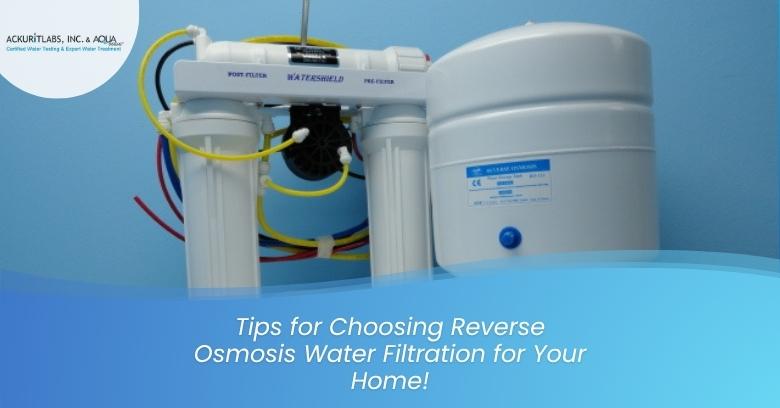
Dissolved solids stay on one side of the membrane and get flushed away; compact units fit under a sink and serve a single tap. Pre-filters protect the membrane, and replacing them on time protects the system, and the reject volume is worth asking about.
Feeding Chlorine Into the Line – the Carbon Stage Afterward
A chlorine injector meters a small amount of disinfectant into the line ahead of a holding tank; time in the tank is what makes the reaction complete. A backwashing filter often follows, clearing the particles the reaction produces; a wrong dose helps nobody.
Scope of a System – Matching Scope to Need
Everything inside the building sees treated flow when equipment sits at the entry; a garage or utility closet often becomes the home. Smaller units at one sink target what people drink, leaving the rest of the plumbing alone; ask for a simple diagram of the plan.
Sizing: What Undersizing Looks Like
A unit has two numbers that matter: a peak flow rating and a capacity between cleanings, along with the hardness or iron level on the lab report. Equipment that is too small works harder and wears out sooner; a reasoned answer is a good sign.
Space and Connections: the Checklist Behind a Clean Install
Shutoffs on both sides of a unit make servicing simple, and electrical needs vary from a plug-in transformer to a dedicated circuit. Whoever does the installation should be able to say what the local rules ask for, and clear labels on valves help the next person.
Supply Source Matters – Pressure Tanks and Pumps
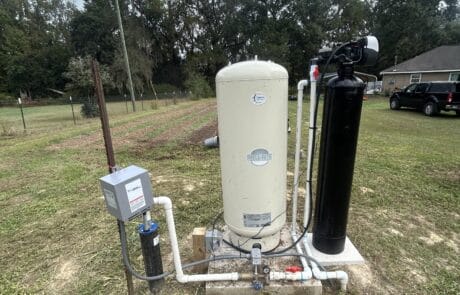
Raw well supply brings the chemistry of the ground straight to the plumbing, and the right system differs accordingly. A quick description of the plumbing path is enough to start the right conversation; neighbors on the same aquifer can still differ.
Weather and the Equipment Room – Protecting Gear From Surge and Silt
A unit left without power may skip a scheduled recharge, which leaves the media tired when flow resumes, and a surge protector on the outlet is sensible protection for the electronics. Silt in a housing, a wet motor or a corroded joint can turn a repair into a replacement; keep manuals and settings notes together.
Living With the Equipment: Garages, Closets and Mechanical Rooms
Pumps and metering equipment hum when they work, so placement matters for bedrooms and offices, and a level pad keeps tanks from shifting. Equipment is easiest to live with when the controls and the drain sit where a person can reach them; measure doors and hallways as well.
Working With Existing Equipment: Planning a Sensible Sequence
A house may come with equipment that nobody remembers installing, so a look at the labels is the first step; the model number on the label usually leads to a manual and a parts list. A sediment screen or a carbon stage can often be added without replacing everything, and old manuals are worth saving.
Commercial Systems – Coordinating With Maintenance
Boilers, cooling equipment and ice makers can be sensitive to scale, which shapes the design; a duplex arrangement keeps soft supply flowing through each recharge. Written procedures and a labeled schematic make handovers between staff smoother; ask what monitoring the equipment offers.
Keeping Equipment in Shape: What Gets Neglected
Every type of equipment has a consumable: salt for softeners, cartridges for filters, membranes for osmosis units; a simple calendar reminder prevents most lapses. Warning signs include a return of the old taste, scale reappearing and a drop in pressure; do not wait for a complete failure.
The Second Sample: Before and After Side by Side
Nothing beats a repeat panel for showing whether the readings moved, and the lab can run the identical methods again. Expect a number lower than before, not necessarily a number of zero; store copies where they can be found.
Where Hardware Stops: Questions for Any Seller
Marketing language tends to be broader than what a product actually does; read the data sheet, not just the front of the box. A provider unwilling to discuss limits is one to think twice about, and a plain no is sometimes the most useful answer.
Questions for a Provider: Points Worth Raising
- Which readings on the report are meant to change, and which are not expected to; ask for the reasoning in writing.
- Who installs the equipment, and who services it after the job is done; a walk-through at the end is reasonable to ask for.
- Which items are checked on a routine visit, and which need special tools; ask about it before work starts.
Talking It Through – Share Your Lab Report
Contact Ackuritlabs And Aqua Systems at 850-616-2634 to go over the lab report and the symptoms at your tap.
Bringing It Together: Matching Hardware to the Finding
Every lasting installation rests on a clear diagnosis, a suitable size and regular care; whatever has brought you to read about Water Softeners near Gadsden County Florida, a short call sorts out where to begin. You can speak with Ackuritlabs And Aqua Systems at 850-616-2634 about your plumbing and your goals; the call goes quickly.
Verified

Verified
Verified
Verified
Verified