Weighing Options for Water Purification Service Around Gadsden County Florida?
Equipment gets chosen to fix a measured problem, and the fix is only as good as the diagnosis behind it, and the sections below cover sizing, setup and upkeep.
Contact Ackuritlabs And Aqua Systems at 850-616-2634 and describe the stains, scale or smells you want gone.
Where Treatment Begins: Naming the Target
Taste and appearance narrow the field, though only a lab report settles it; a sample sent to a laboratory turns a guess into a figure. A first conversation commonly ends with advice on what to sample before the next step; patience at this stage tends to save money later.
Taking Out Hardness: Regeneration in Plain Terms
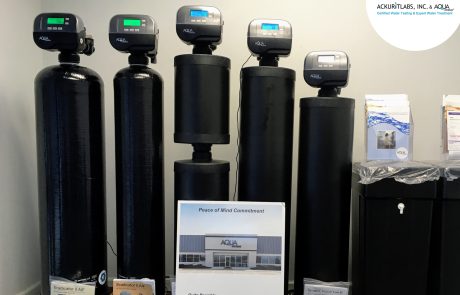
The core of a standard softener is a resin bed that exchanges hardness minerals for a softer ion, and a salt or potassium brine recharges the bed on a schedule. Where a softener is sized correctly, white crust becomes much less of a chore; it is not meant to filter out bacteria or chemicals.
Alternatives to the Brine Tank – Changing How Scale Forms
A salt-free unit does not remove calcium or magnesium; it alters how those minerals behave, though results vary with the water and the model. A conditioner will not give the slick feel that a softened supply has in the shower, and a good provider explains that before the purchase.
Activated Carbon – Granular Beds and Blocks
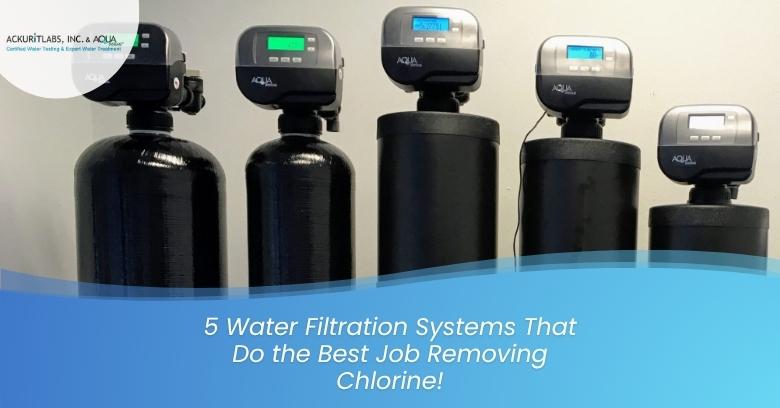
Filters based on carbon are the usual choice for chlorine taste and many household odors; it helps to know what the utility adds. Carbon has a limited capacity, and once it is spent, it stops doing its job; a taste that creeps back is the usual reminder.
Spun, Pleated and Wound Media – Catching Grit Before It Travels On
Sediment cartridges screen out sand, rust flakes and silt before they reach appliances, and the sequence is part of the design. Carbon cartridges, including carbon block types, often sit downstream of the sediment stage; replacements are sold by size, so note the model.
High-Pressure Polishing: Where It Sits and What It Wastes
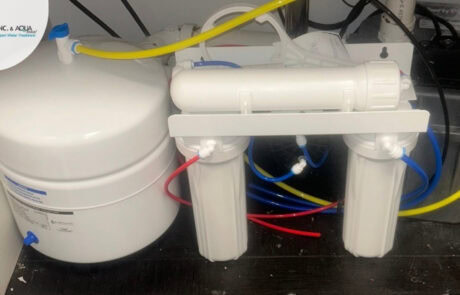
A small pump or the line pressure drives the flow through a membrane with extremely fine pores; most home units sit under a sink and serve one tap. Reverse osmosis units reduce many dissolved substances, though performance varies by model and by supply, and the reject volume is worth asking about.
Oxidation Systems: Why Dose Control Matters
Where a well carries iron, sulfur or microbes, injecting chlorine is a long-established approach; time in the tank is what makes the reaction complete. Where the supply is meant for drinking, the leftover chlorine is filtered off; dosing is not a do-it-yourself guess.
Scope of a System: Choosing the Footprint
Point-of-entry installations deal with problems that affect the entire plumbing system; scale, iron and chlorine are the usual reasons to go this route. Many households combine both: a main-line device for scale and a sink model for taste; the provider can sketch where each unit would go.
Peak Demand Math: Gallons per Minute and Grains
Equipment is rated by how fast supply can pass through it and by how much it can treat before servicing; a bigger tank may be the practical answer. Equipment that is too small works harder and wears out sooner, and a vague one deserves a follow-up question.
Space and Connections: the Checklist Behind a Clean Install
Valves around the equipment allow it to be taken out of service in minutes; chlorine feed pumps and contact tanks add their own requirements. Permits or inspections can be required in some jurisdictions, depending on the work, and access for servicing should be planned from the start.
Supply Source Matters: Chlorine Added or Not
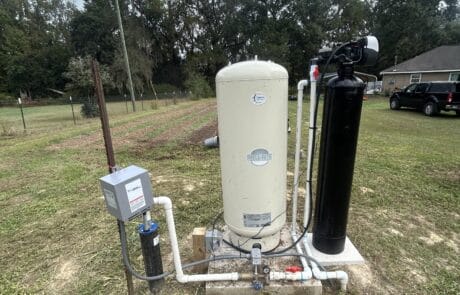
Supply from a public system arrives already disinfected, which changes what is left to fix; wells also bring a pump and a pressure tank into the plan. The provider needs to know which source feeds the house before suggesting anything; photos of the existing equipment help.
Weather and the Equipment Room – Resetting the Clock and the Valve
Electronic valves keep time with the power, so a clock that resets can trigger recharges at odd hours, and a surge protector on the outlet is sensible protection for the electronics. Silt in a housing, a wet motor or a corroded joint can turn a repair into a replacement; ask the installer what to do before a storm.
Living With the Equipment: Keeping the Area Tidy
A recharge brings gurgling and flowing noises for a spell, usually at a scheduled hour, and the location is chosen to keep lines short and service easy. Some owners build a small enclosure, though it must not block air or access, and the installer can suggest a layout.
An Older System in the Garage – Reading Old Labels
Older units may still work but have worn parts, such as seals, valves, resin or membranes, and the provider can often read the date code. New components usually have to fit the pipe sizes, the pressure and the drain already in place; ask for a plain list of what changes and what stays.
When a Property Has Many Users – Coordinating With Maintenance
Business equipment is sized for higher flows and often arranged in pairs so one tank can work while the other recharges; the existing mechanical room often decides what fits. Training the people on site about shutoffs and alarms prevents small problems from growing; a log of salt, media and filter changes helps.
Upkeep: Signs a Unit Needs Attention
Treatment is not a one-time purchase, since something wears out or runs low on every system; the manual lists intervals, though a heavy load shortens them. Warning signs include a return of the old taste, scale reappearing and a drop in pressure, and a retest confirms the numbers.
Verifying What Changed: Tracking Performance
Comparing a new lab report against the original is how a household confirms the hardware did its job; a retest a few months in shows whether the system is holding. Some substances respond well and others hardly at all, which the new figures reveal; store copies where they can be found.
Limits to Keep in Mind: Misuse and Misfit
Equipment performs within limits set by its design, the supply and the upkeep; ask how that is demonstrated. Honest answers sound specific, and vague answers sound like a sales line; clear explanations are the best sign.
What to Ask at the Door: Scope, Parts and Follow-Up
- Is the recommended size tied to the lab figures and the household's flow; vague answers deserve a follow-up.
- How is the unit set up at the start, and what will you be shown before the crew leaves; a walk-through at the end is reasonable to ask for.
- Which items are checked on a routine visit, and which need special tools; each of these is worth asking.
A Call Before a Purchase – Share Your Lab Report
Dial Ackuritlabs And Aqua Systems at 850-616-2634 to go over the lab report and the symptoms at your tap.
The Short Version: Test, Choose, Install, Confirm
The reliable path runs from a lab figure, through a sensible choice of equipment, to a retest that shows the change; whatever has brought you to read about Water Purification Service near Gadsden County Florida, a short call sorts out where to begin. To get started, reach Ackuritlabs And Aqua Systems at 850-616-2634; the details you share shape the advice.
Verified

Verified
Verified
Verified
Verified