Thinking About Water Softener Installation Throughout Newport Florida?
Each piece of hardware on the market answers a particular complaint, and none answers all of them; the sections below put the options in plain language.
Call Ackuritlabs And Aqua Systems at 850-616-2634 and say whether the supply is a well or a city line.
Before Any Equipment: a Lab Number Beats a Guess
Equipment bought off a shelf may handle a different problem than the one at the tap; most reputable providers ask for results before quoting a system. A first conversation commonly ends with advice on what to sample before the next step; the equipment decision waits until the numbers are in.
The Salt-Based Softener – Swapping Minerals for Sodium or Potassium
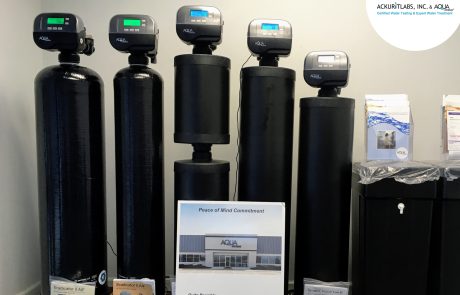
Inside the tank, tiny resin beads attract the minerals that cause scale and give up sodium or potassium in return, and a salt or potassium brine recharges the bed on a schedule. Where a softener is sized correctly, white crust becomes much less of a chore; other equipment handles those jobs.
Salt-Free Conditioners: What They Do and Do Not Do
The minerals stay in the supply, but the device nudges them toward forming less scale on surfaces; they need no electricity in many designs. Because the minerals remain, soap and shampoo behave as they would on hard supply, and a good provider explains that before the purchase.
Adsorption Media – Contact Time and Capacity
A carbon bed or block is the common answer when a city supply tastes or smells of disinfectant; a catalytic grade is often used where chloramine is the disinfectant. Capacity depends on how much is in the supply and how much a household uses, and the maker's change interval is a guide, not a promise.
Canisters on the Line: Reading the Micron Number
The simplest way to protect a pump, a softener or a fixture is usually a sediment screen ahead of it, and the sequence is part of the design. Pressure falls as an element loads up, which is the practical signal to swap it; a wrench for the housing is a worthwhile purchase.
The Under-Sink Purifier: Fair Expectations
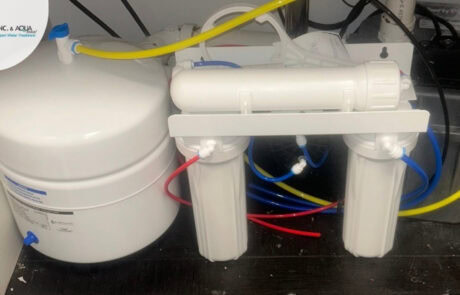
Dissolved solids stay on one side of the membrane and get flushed away; the rejected stream runs to a drain, so a connection to the sink drain is part of the installation. Pre-filters protect the membrane, and replacing them on time protects the system; the provider can explain what to expect for your supply.
Oxidation Systems: a Metering Pump and a Retention Tank
The setup pairs a feed pump with a retention tank so the chlorine has time to work, and it also acts on bacteria in the supply. A backwashing filter often follows, clearing the particles the reaction produces; dosing is not a do-it-yourself guess.
Point of Entry Versus Point of Use: Choosing the Footprint
Equipment where the supply enters the building protects all the plumbing downstream; larger tanks and brine cabinets take real room. A point-of-use unit serves a single faucet, usually the kitchen, and suits drinking and cooking; ask for a simple diagram of the plan.
Peak Demand Math: Gallons per Minute and Grains
Ratings printed on the label describe the equipment, and the installer matches them to the building; high readings use up capacity faster. A well-matched system suits the building rather than the biggest model on offer; a reasoned answer is a good sign.
Practical Requirements: Bypass Valves, Drains and Outlets
A bypass lets the household isolate a unit without shutting off the whole supply; the installer plans the route up front. Codes affect drain connections, backflow protection and the placement of equipment, and clear labels on valves help the next person.
Private Source or Public Main: Planning Around the Source
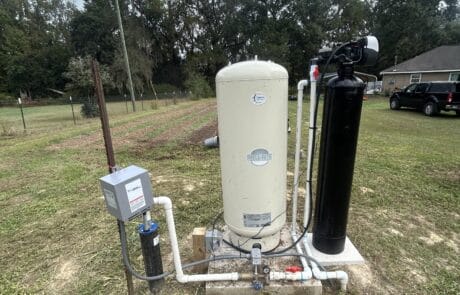
A well has no utility between it and the tap, so equipment often handles more of the load; wells also bring a pump and a pressure tank into the plan. The provider needs to know which source feeds the house before suggesting anything; each property gets its own plan.
Storms and Power Interruptions: Controllers, Pumps and Flooding
Softeners and filters with electronic controllers can lose their settings in a long outage unless a backup battery holds them, and a surge protector on the outlet is sensible protection for the electronics. Equipment that sat in floodwater needs inspection before it goes back into service; ask the installer what to do before a storm.
Practical Details Homeowners Ask About – Reaching the Controls
A recharge brings gurgling and flowing noises for a spell, usually at a scheduled hour, which is worth thinking through before delivery. Equipment is easiest to live with when the controls and the drain sit where a person can reach them; a tank that cannot get through a doorway is a common surprise.
Inherited Hardware – Keep, Repair or Replace
A house may come with equipment that nobody remembers installing, so a look at the labels is the first step; a fresh lab panel shows whether the present system is still doing its job. Adding a stage to an existing setup requires attention to order, flow rate and pressure drop; photographs of the current setup speed up the first conversation.
Larger Buildings and Heavier Demand: Duplex Tanks and Bigger Flows
Larger buildings may need several tanks and manifolds, not one household unit, and a drawing of the proposed layout is a reasonable request. A property manager benefits from a maintenance plan that lists tasks, intervals and who does them, and it supports any later troubleshooting.
Service Schedule – Setting Reminders
Soft supply depends on a brine tank that is kept stocked; the manual lists intervals, though a heavy load shortens them. Bad smells from a filter housing mean it has gone too long, and a service call beats a failed system.
Verifying What Changed – Numbers, Not Impressions
Comparing a new lab report against the original is how a household confirms the hardware did its job; a retest a few months in shows whether the system is holding. Some substances respond well and others hardly at all, which the new figures reveal, and keeping both reports together tells the story.
Honest Limits: Misuse and Misfit
Marketing language tends to be broader than what a product actually does; ask for the specific substances a product addresses. Honest answers sound specific, and vague answers sound like a sales line; nothing here replaces advice for your property.
Before You Sign – Written Answers Preferred
- Does the plan name the substances it targets, rather than speaking in general terms, and the proposal should say so on paper.
- Which local rules apply to this installation, and who handles them; clear scope prevents surprises.
- Which items are checked on a routine visit, and which need special tools; follow-up is as important as the install.
Planning a System – One Call Sorts Out Next Steps
Contact Ackuritlabs And Aqua Systems at 850-616-2634 to find out how a system would be planned and sized.
Pulling the Threads – the Sequence That Works
A dependable setup follows a sequence: measure the supply, pick equipment to suit, install it carefully and test again; this page on Water Softener Installation in Newport Florida is a starting point, and the details of each property decide the rest. Questions are welcome at 850-616-2634, where Ackuritlabs And Aqua Systems can lay out the options, and say what you would like to change.
Verified

Verified
Verified
Verified
Verified