Thinking About Residential Water Treatment Company for a Property in Havana Florida?
Equipment gets chosen to fix a measured problem, and the fix is only as good as the diagnosis behind it, and the sections below explain how the common options differ.
Speak with Ackuritlabs And Aqua Systems at 850-616-2634 and describe the stains, scale or smells you want gone.
Where Treatment Begins – Results Decide the Hardware
Three households with the same complaint can need three different systems, because the underlying chemistry differs; most reputable providers ask for results before quoting a system. If the history of the supply is unknown, a baseline panel is the sensible opener; skipping ahead is where most mismatches begin.
Taking Out Hardness – What It Fixes and What It Leaves
Inside the tank, tiny resin beads attract the minerals that cause scale and give up sodium or potassium in return, and the stored brine is topped up with salt as needed. Softened supply leaves less scale on fixtures, glass and heating elements, and it will not change the taste of the supply on its own.
Template-Assisted Units – Setting Expectations
These devices work on how scale sticks, and they do not strip the minerals out, which suits some households and some local rules. Expect scale to be reduced rather than eliminated, and expect no change in how soap lathers; asking for a plain description of the outcome avoids disappointment.
Carbon Filtration – Granular Beds and Blocks
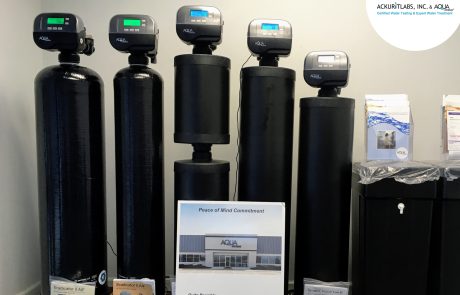
Carbon holds onto certain compounds as supply passes through, which cuts chlorine taste and some odors, and the lab or the utility report can say. Every carbon filter eventually fills up, so replacement or backwashing is part of owning one; a pre-filter often extends the life of the carbon.
Canisters on the Line: Reading the Micron Number
Sediment cartridges screen out sand, rust flakes and silt before they reach appliances, and the sequence is part of the design. Carbon cartridges, including carbon block types, often sit downstream of the sediment stage; a wrench for the housing is a worthwhile purchase.
Membrane Systems – Storage Tank, Faucet and Drain
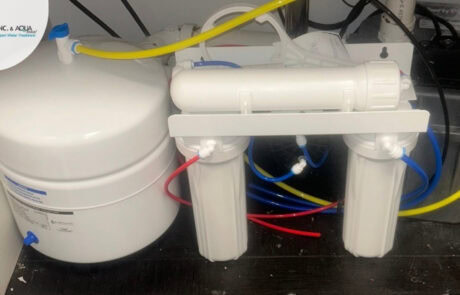
Pressure pushes the supply against a semipermeable membrane, and most dissolved material is held back, and a small storage tank holds finished supply for the dedicated faucet. A lab test before and after is the reliable way to know what a particular system achieves; the provider can explain what to expect for your supply.
Chlorination: What the Installer Sets Up
A metering pump feeds sodium hypochlorite into the flow, and a tank gives it time to react, and the dose is set from lab readings. A backwashing filter often follows, clearing the particles the reaction produces; a wrong dose helps nobody.
Where the Equipment Sits – One Tap, One Sink, One Appliance
Whole-house layouts put one set of equipment ahead of every fixture; scale, iron and chlorine are the usual reasons to go this route. Where only one fixture matters, a compact installation avoids treating the whole house, and it shows which walls and lines are involved.
Flow Rate and Capacity – People, Fixtures and Usage
A unit has two numbers that matter: a peak flow rating and a capacity between cleanings; a bigger tank may be the practical answer. An undersized system forces flow past the media too fast, which weakens the result; ask to see the numbers behind the recommendation.
Plumbing, Power and Drain Needs – Planning for Service Access
Most systems need a bypass valve so the plumbing can keep flowing during service; the installer plans the route up front. Whoever does the installation should be able to say what the local rules ask for, and access for servicing should be planned from the start.
Two Starting Points: Chlorine Added or Not
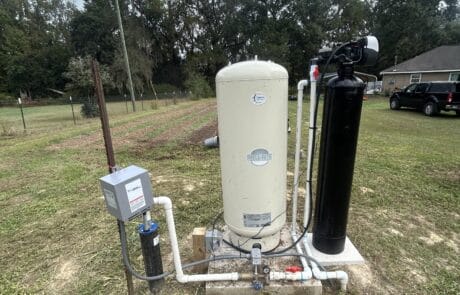
Raw well supply brings the chemistry of the ground straight to the plumbing, and the right system differs accordingly. The provider needs to know which source feeds the house before suggesting anything, and a lab report removes most of the guesswork.
After an Outage: Controllers, Pumps and Flooding
Softeners and filters with electronic controllers can lose their settings in a long outage unless a backup battery holds them, since a stuck valve is easier to catch early. Anything touched by flooding, including a well pump and chemical feed gear, deserves a professional look; keep manuals and settings notes together.
Day-to-Day Presence: Tanks, Hums and Cabinets
Noise from a unit tends to come from the drain line and the valve rather than the tanks, and the location is chosen to keep lines short and service easy. Leaving room to open lids, change cartridges and read gauges makes upkeep a quick job, and the provider should ask about access.
Upgrading What Is Already There: Planning a Sensible Sequence
Older units may still work but have worn parts, such as seals, valves, resin or membranes; a fresh lab panel shows whether the present system is still doing its job. A sediment screen or a carbon stage can often be added without replacing everything, and the installer should explain what is being kept.
Commercial Systems: Boilers, Ice Machines and Kitchens
Boilers, cooling equipment and ice makers can be sensitive to scale, which shapes the design, and a drawing of the proposed layout is a reasonable request. A property manager benefits from a maintenance plan that lists tasks, intervals and who does them; ask what monitoring the equipment offers.
Upkeep – Small Tasks That Protect Big Parts
Treatment is not a one-time purchase, since something wears out or runs low on every system; a label on each housing with the install date helps. If stains come back, or the taste creeps back, something in the chain has used up its capacity; the provider can inspect and adjust.
The Second Sample: When to Retest
The most reliable verification is a fresh panel run on the same items as before; collecting at the same tap, in the same way, keeps the comparison fair. If a reading is still high, the report guides the next adjustment; dates on everything keep the record clear.
Expectations Worth Setting – Read the Fine Print
Marketing language tends to be broader than what a product actually does; read the data sheet, not just the front of the box. A provider unwilling to discuss limits is one to think twice about, and the same standard applies to anything written on this page.
A Short Interview: Points Worth Raising
- Does the plan name the substances it targets, rather than speaking in general terms, and what stays the same afterward.
- Where will the drain, the power and the bypass go, and what will be cut or moved; ask for a copy of the manuals too.
- What signs should prompt a call before the next scheduled check; each of these is worth asking.
Talking It Through: Describe the Problem First
Speak with Ackuritlabs And Aqua Systems at 850-616-2634 to go over the lab report and the symptoms at your tap.
Pulling the Threads: Matching Hardware to the Finding
A dependable setup follows a sequence: measure the supply, pick equipment to suit, install it carefully and test again, and everything above about Residential Water Treatment Company in Havana Florida is general background, not a verdict. You can speak with Ackuritlabs And Aqua Systems at 850-616-2634 about your plumbing and your goals; the call goes quickly.
Verified

Verified
Verified
Verified
Verified