Shopping for Water Softeners Across Gretna Florida?
Matching the device to the finding is what separates a useful installation from a blind guess; read on for how the pieces fit together.
Call Ackuritlabs And Aqua Systems at 850-616-2634 to talk through what the tap has been doing.
Before Any Equipment: Why Skipping It Backfires
A smell, a stain or a taste is a symptom, and the symptom alone rarely identifies the cure, which keeps the proposal tied to evidence. Anyone without a recent report can usually be pointed to a suitable panel first; patience at this stage tends to save money later.
The Salt-Based Softener: Regeneration in Plain Terms
The core of a standard softener is a resin bed that exchanges hardness minerals for a softer ion, and a salt or potassium brine recharges the bed on a schedule. Less mineral reaching the pipes also means less deposit inside them; the lab result still decides what else belongs in the plan.
Scale Control Without Salt – Setting Expectations
A salt-free unit does not remove calcium or magnesium; it alters how those minerals behave, though results vary with the water and the model. Expect scale to be reduced rather than eliminated, and expect no change in how soap lathers; ask what the device will not do.
Activated Carbon – Contact Time and Capacity
A carbon bed or block is the common answer when a city supply tastes or smells of disinfectant; each type of carbon targets specific compounds, so the media is picked to suit the finding. Contact time and flow rate affect results, and a unit pushed too hard performs worse; keeping a date on the housing is a good habit.
The Filter Under the Cap: Sizes, Ratings and Swaps
Grit and flakes get stopped by a pleated or wound element sitting in a clear or opaque canister; the rating, given in microns, states how small a particle the element is built to catch. The installer chooses which element goes first, because a clogged first stage starves the rest; replacements are sold by size, so note the model.
The Under-Sink Purifier – Dissolved Solids Reduced
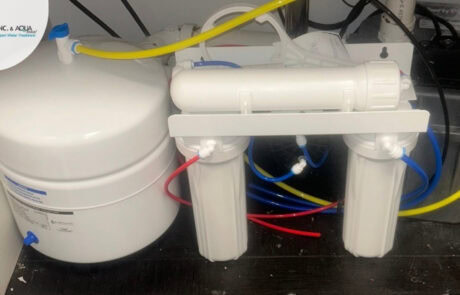
A small pump or the line pressure drives the flow through a membrane with extremely fine pores, while larger units serve whole buildings. Some units add minerals back after the membrane to adjust taste; the provider can explain what to expect for your supply.
Chlorination – Time, Dose and Cleanup
A metering pump feeds sodium hypochlorite into the flow, and a tank gives it time to react; time in the tank is what makes the reaction complete. A backwashing filter often follows, clearing the particles the reaction produces, and chemical equipment is installed and set up with care.
Treating Everything or Just the Faucet – One Tap, One Sink, One Appliance
A unit at the main line treats every tap, the shower, the washer and the water heater; the flow at the entry is worth measuring before ordering. A point-of-use unit serves a single faucet, usually the kitchen, and suits drinking and cooking; the provider can sketch where each unit would go.
Flow Rate and Capacity – Pressure Drop and Pace
Equipment is rated by how fast supply can pass through it and by how much it can treat before servicing, along with the hardness or iron level on the lab report. An undersized system forces flow past the media too fast, which weakens the result; a reasoned answer is a good sign.
Installation Details – Planning for Service Access
Good installations include a way to route flow around the unit when needed; a drain line, an air gap and a nearby outlet come with a softener. Local plumbing and electrical rules may apply, and the installer is the one to know them, and access for servicing should be planned from the start.
What Changes by Source – Raw Groundwater Versus Treated
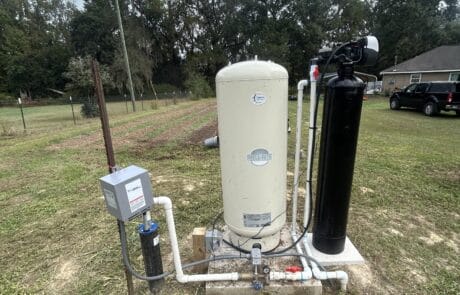
Private wells deliver untreated groundwater, which can carry iron, sulfur, hardness and microbes; wells also bring a pump and a pressure tank into the plan. A quick description of the plumbing path is enough to start the right conversation, and a lab report removes most of the guesswork.
Hurricane-Season Readiness: What to Check Afterward
Many controllers keep their program in memory for a short while, and then need to be set again, since a stuck valve is easier to catch early. A flooded system should be shut off and checked before use, since damage is not always visible, and the provider can describe what a post-storm check involves.
Living With the Equipment – Reaching the Controls
A recharge brings gurgling and flowing noises for a spell, usually at a scheduled hour, and a level pad keeps tanks from shifting. A tidy installation labels valves, supports the plumbing and keeps the area dry; a sketch of the space helps the planning.
Working With Existing Equipment: Planning a Sensible Sequence
Many properties already have a tank, a filter housing or an under-sink unit, and the question is whether it still suits the supply, and the readings guide whether to repair, keep or replace. Mixing parts from different makers is possible, though compatibility needs checking, and old manuals are worth saving.
When a Property Has Many Users – Keeping Service Running
Business equipment is sized for higher flows and often arranged in pairs so one tank can work while the other recharges; the survey of the site comes first. Written procedures and a labeled schematic make handovers between staff smoother; ask what monitoring the equipment offers.
Keeping Equipment in Shape: Signs a Unit Needs Attention
Treatment is not a one-time purchase, since something wears out or runs low on every system; a simple calendar reminder prevents most lapses. Bad smells from a filter housing mean it has gone too long; the provider can inspect and adjust.
Closing the Loop – Filing the Evidence
Measurements taken after setup show the change in black and white; a retest a few months in shows whether the system is holding. Expect a number lower than before, not necessarily a number of zero; a short note on the equipment installed completes the record.
What Equipment Cannot Do: Misuse and Misfit
No single device removes every substance, and a pitch that one box covers everything deserves doubt; compare the data sheet with your lab report. Anyone selling treatment equipment should be able to explain what it reduces and what it leaves alone; nothing here replaces advice for your property.
A Short Interview – Written Answers Preferred
- Which lab results is the proposal based on, and which items does it address; vague answers deserve a follow-up.
- Which local rules apply to this installation, and who handles them; clear scope prevents surprises.
- What does a retest look like, and when is it scheduled; ask about it before work starts.
Talking It Through – Share Your Lab Report
Dial Ackuritlabs And Aqua Systems at 850-616-2634 to find out how a system would be planned and sized.
The Short Version – Upkeep Keeps It Working
The reliable path runs from a lab figure, through a sensible choice of equipment, to a retest that shows the change; whatever has brought you to read about Water Softeners near Gretna Florida, a short call sorts out where to begin. Questions are welcome at 850-616-2634, where Ackuritlabs And Aqua Systems can lay out the options; the details you share shape the advice.
Verified

Verified
Verified
Verified
Verified