Need Water Softening Service for a Property in Gretna Florida?
Each piece of hardware on the market answers a particular complaint, and none answers all of them, and the sections below cover sizing, setup and upkeep.
Phone Ackuritlabs And Aqua Systems at 850-616-2634 to ask how an installation is planned.
Before Any Equipment – Reading the Problem Correctly
Taste and appearance narrow the field, though only a lab report settles it; a sample sent to a laboratory turns a guess into a figure. If the history of the supply is unknown, a baseline panel is the sensible opener; skipping ahead is where most mismatches begin.
Resin Tanks: How the Resin Works
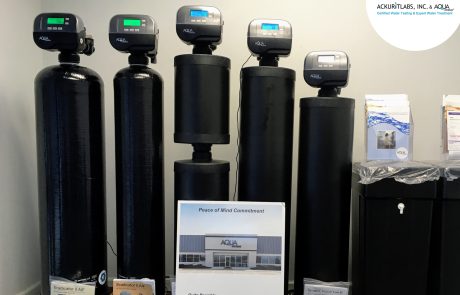
The core of a standard softener is a resin bed that exchanges hardness minerals for a softer ion; a control valve decides when to regenerate by clock or by usage. Scale buildup on heaters, kettles and shower heads slows down where hardness has been removed, and it will not change the taste of the supply on its own.
Conditioning Instead of Softening – Changing How Scale Forms
These devices work on how scale sticks, and they do not strip the minerals out, and maintenance is limited to replacing the media on a schedule. Because the minerals remain, soap and shampoo behave as they would on hard supply, and a good provider explains that before the purchase.
Activated Carbon – Contact Time and Capacity
Carbon holds onto certain compounds as supply passes through, which cuts chlorine taste and some odors, and ordinary carbon handles free chlorine more easily than chloramine. Contact time and flow rate affect results, and a unit pushed too hard performs worse; keeping a date on the housing is a good habit.
Cartridges and Sediment Filters: Reading the Micron Number
The simplest way to protect a pump, a softener or a fixture is usually a sediment screen ahead of it, which lets each cartridge last longer. The installer chooses which element goes first, because a clogged first stage starves the rest; keep a spare cartridge on a shelf.
Reverse Osmosis – Storage Tank, Faucet and Drain
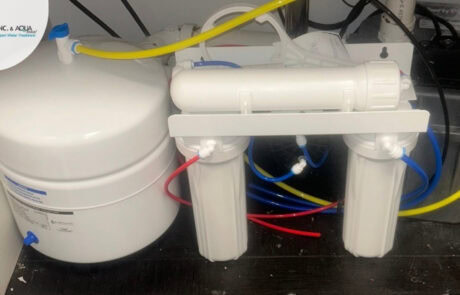
Dissolved solids stay on one side of the membrane and get flushed away, and a small storage tank holds finished supply for the dedicated faucet. The reduction achieved depends on membrane condition, pressure and what is in the feed, and the reject volume is worth asking about.
Treating Iron, Sulfur and Microbes: What the Installer Sets Up
The setup pairs a feed pump with a retention tank so the chlorine has time to work; time in the tank is what makes the reaction complete. The final stage polishes taste and removes what remains of the disinfectant; chemicals are stored and handled according to the label.
Whole-House or Single-Tap: Choosing the Footprint
Everything inside the building sees treated flow when equipment sits at the entry; scale, iron and chlorine are the usual reasons to go this route. Where only one fixture matters, a compact installation avoids treating the whole house, and it shows which walls and lines are involved.
Flow Rate and Capacity: What Undersizing Looks Like
Ratings printed on the label describe the equipment, and the installer matches them to the building; high readings use up capacity faster. When a unit is too small, pressure falls at fixtures during busy mornings, and a vague one deserves a follow-up question.
Practical Requirements – Planning for Service Access
Good installations include a way to route flow around the unit when needed, and electrical needs vary from a plug-in transformer to a dedicated circuit. Checking with the local office is sensible before anything is cut or glued, and access for servicing should be planned from the start.
Wells Versus City Lines – Pressure Tanks and Pumps
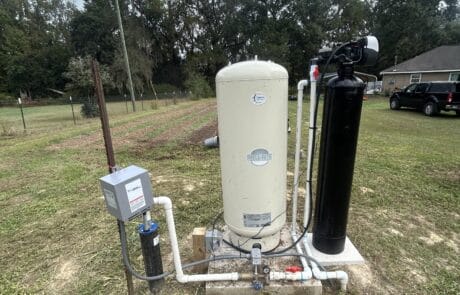
Raw well supply brings the chemistry of the ground straight to the plumbing; sediment and iron tend to be the early concerns. Equipment picked from a neighbor's experience may not suit a different source; neighbors on the same aquifer can still differ.
When the Lights Go Out – Protecting Gear From Surge and Silt
Softeners and filters with electronic controllers can lose their settings in a long outage unless a backup battery holds them; checking the time and the settings after power returns takes a minute. If floodwater covered the wellhead, the supply itself needs a fresh lab sample, and the provider can describe what a post-storm check involves.
Where Everything Goes: Keeping the Area Tidy
Pumps and metering equipment hum when they work, so placement matters for bedrooms and offices, which is worth thinking through before delivery. Equipment is easiest to live with when the controls and the drain sit where a person can reach them; a tank that cannot get through a doorway is a common surprise.
An Older System in the Garage: Test Before Deciding
Equipment bought long ago was chosen for a supply that may have changed since, which helps weigh a repair against a new unit. Adding a stage to an existing setup requires attention to order, flow rate and pressure drop; ask for a plain list of what changes and what stays.
Larger Buildings and Heavier Demand: Boilers, Ice Machines and Kitchens
Restaurants, offices and apartment buildings draw far more than a house, and the gear is scaled to match; the survey of the site comes first. Staff who run the building need to know where the valves are and what each one does, and it supports any later troubleshooting.
Service Schedule – Small Tasks That Protect Big Parts
Resin beads age slowly, and cartridges and pre-filters age quickly; a label on each housing with the install date helps. If stains come back, or the taste creeps back, something in the chain has used up its capacity; do not wait for a complete failure.
Proof After Installation – Filing the Evidence
The most reliable verification is a fresh panel run on the same items as before; collecting at the same tap, in the same way, keeps the comparison fair. Treatment can reduce certain items without eliminating them, and the report shows by how much; the file is useful for a future sale.
Expectations Worth Setting – Matching Promises to Physics
Equipment performs within limits set by its design, the supply and the upkeep; compare the data sheet with your lab report. A provider unwilling to discuss limits is one to think twice about; weigh each source on how specific it is.
A Short Interview – Written Answers Preferred
- Which lab results is the proposal based on, and which items does it address; a specific answer is what you want.
- Which local rules apply to this installation, and who handles them; ask for a copy of the manuals too.
- What signs should prompt a call before the next scheduled check; each of these is worth asking.
Talking It Through: Describe the Problem First
Call Ackuritlabs And Aqua Systems at 850-616-2634 and ask what to collect before any equipment is chosen.
The Short Version – the Sequence That Works
Matching a device to a lab result, sizing it to the building and keeping up with upkeep is the whole recipe; this page on Water Softening Service in Gretna Florida is a starting point, and the details of each property decide the rest. Questions are welcome at 850-616-2634, where Ackuritlabs And Aqua Systems can lay out the options, and say what you would like to change.
Verified

Verified
Verified
Verified
Verified