Weighing Options for Water Softening Service for a Property in Madison Florida?
Each piece of hardware on the market answers a particular complaint, and none answers all of them; the sections below describe what each option does and where it stops.
Dial Ackuritlabs And Aqua Systems at 850-616-2634 and say whether the supply is a well or a city line.
The Order of Operations: Why Skipping It Backfires
Three households with the same complaint can need three different systems, because the underlying chemistry differs; most reputable providers ask for results before quoting a system. Where no result exists yet, a provider can often suggest what to measure; skipping ahead is where most mismatches begin.
Resin Tanks: Regeneration in Plain Terms
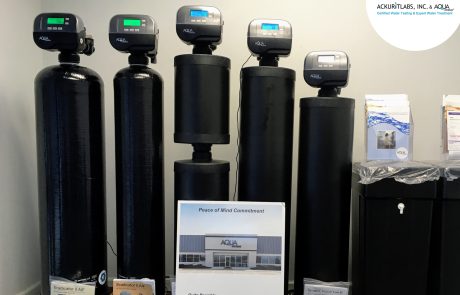
The core of a standard softener is a resin bed that exchanges hardness minerals for a softer ion, and a salt or potassium brine recharges the bed on a schedule. Scale buildup on heaters, kettles and shower heads slows down where hardness has been removed; other equipment handles those jobs.
Conditioning Instead of Softening – Setting Expectations
A salt-free unit does not remove calcium or magnesium; it alters how those minerals behave, which suits some households and some local rules. Expect scale to be reduced rather than eliminated, and expect no change in how soap lathers; being clear on this point prevents disputes later.
Carbon Filtration – Contact Time and Capacity
Carbon holds onto certain compounds as supply passes through, which cuts chlorine taste and some odors, and ordinary carbon handles free chlorine more easily than chloramine. Every carbon filter eventually fills up, so replacement or backwashing is part of owning one, and the maker's change interval is a guide, not a promise.
The Filter Under the Cap: Keeping Spare Elements
A housing on the line holds a cartridge that screens out particles above a chosen size; the rating, given in microns, states how small a particle the element is built to catch. Pressure falls as an element loads up, which is the practical signal to swap it; a wrench for the housing is a worthwhile purchase.
High-Pressure Polishing: Fair Expectations
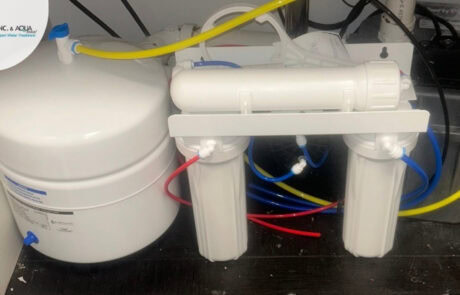
A membrane passes the liquid and rejects a large share of dissolved salts and other solids; the rejected stream runs to a drain, so a connection to the sink drain is part of the installation. Reverse osmosis units reduce many dissolved substances, though performance varies by model and by supply; a leak sensor is a sensible add-on.
Oxidation Systems: What the Installer Sets Up
The setup pairs a feed pump with a retention tank so the chlorine has time to work; the chlorine oxidizes iron and sulfide into forms that can be filtered out. The final stage polishes taste and removes what remains of the disinfectant; a wrong dose helps nobody.
Where the Equipment Sits – One Tap, One Sink, One Appliance
Whole-house layouts put one set of equipment ahead of every fixture, and the machinery needs floor space near the main shutoff. Smaller units at one sink target what people drink, leaving the rest of the plumbing alone; a layout on paper avoids surprises.
Choosing a Capacity: What Undersizing Looks Like
A unit has two numbers that matter: a peak flow rating and a capacity between cleanings; a bigger tank may be the practical answer. An undersized system forces flow past the media too fast, which weakens the result; ask to see the numbers behind the recommendation.
What the Job Requires: Bypass Valves, Drains and Outlets
A bypass lets the household isolate a unit without shutting off the whole supply; a drain line, an air gap and a nearby outlet come with a softener. Checking with the local office is sensible before anything is cut or glued, and access for servicing should be planned from the start.
Private Source or Public Main – Raw Groundwater Versus Treated
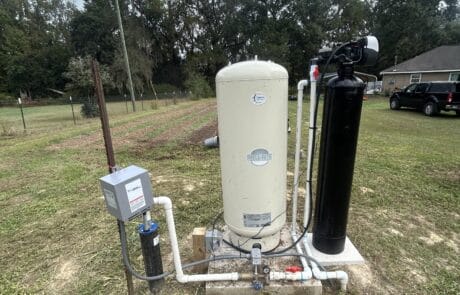
Private wells deliver untreated groundwater, which can carry iron, sulfur, hardness and microbes; sediment and iron tend to be the early concerns. Equipment picked from a neighbor's experience may not suit a different source, and a lab report removes most of the guesswork.
After an Outage: Planning Before the Season
Pumps, injectors and controllers all depend on electricity, and an outage pauses every one of them; a quick look at the salt level and the drain line completes the check. Equipment that sat in floodwater needs inspection before it goes back into service; keep manuals and settings notes together.
Noise, Space and Appearance: Keeping the Area Tidy
Pumps and metering equipment hum when they work, so placement matters for bedrooms and offices, and the location is chosen to keep lines short and service easy. Some owners build a small enclosure, though it must not block air or access, and the provider should ask about access.
An Older System in the Garage – Keep, Repair or Replace
Equipment bought long ago was chosen for a supply that may have changed since; the model number on the label usually leads to a manual and a parts list. Adding a stage to an existing setup requires attention to order, flow rate and pressure drop; ask for a plain list of what changes and what stays.
Commercial Systems: Written Specifications
Commercial installations are usually specified on paper, with flow rates and targets spelled out; a duplex arrangement keeps soft supply flowing through each recharge. Staff who run the building need to know where the valves are and what each one does, and the provider can supply those if asked.
Maintenance Rhythm: Salt, Cartridges and Media
Every type of equipment has a consumable: salt for softeners, cartridges for filters, membranes for osmosis units; a label on each housing with the install date helps. Noisy valves, salt bridges in the tank and slow flow are signs worth a look, and a service call beats a failed system.
Verifying What Changed: Before and After Side by Side
The most reliable verification is a fresh panel run on the same items as before; collecting at the same tap, in the same way, keeps the comparison fair. A result that falls short is information, and it points to what to add or change; store copies where they can be found.
What Equipment Cannot Do: Misuse and Misfit
Equipment performs within limits set by its design, the supply and the upkeep; compare the data sheet with your lab report. Honest answers sound specific, and vague answers sound like a sales line, and the same standard applies to anything written on this page.
What to Ask at the Door: Details That Separate Good Plans
- What does the proposal assume about hardness, iron and chlorine, and where did those figures come from; a specific answer is what you want.
- Where will the drain, the power and the bypass go, and what will be cut or moved; get the details itemized.
- What signs should prompt a call before the next scheduled check; write the answers down.
A Call Before a Purchase – One Call Sorts Out Next Steps
Dial Ackuritlabs And Aqua Systems at 850-616-2634 to find out how a system would be planned and sized.
In Plain Terms – the Sequence That Works
Matching a device to a lab result, sizing it to the building and keeping up with upkeep is the whole recipe, and for Water Softening Service in Madison Florida the first step is a conversation about the supply and the symptoms. To get started, reach Ackuritlabs And Aqua Systems at 850-616-2634, and share what the lab report shows.
Verified

Verified
Verified
Verified
Verified