Looking for Whole House Water Filtration Installation for a Property in Florida Panhandle?
A treatment system is a tool for one job, so the job has to be named before the tool is picked; read on for how the pieces fit together.
Speak with Ackuritlabs And Aqua Systems at 850-616-2634 to talk through what the tap has been doing.
Where Treatment Begins: a Lab Number Beats a Guess
Three households with the same complaint can need three different systems, because the underlying chemistry differs; a sample sent to a laboratory turns a guess into a figure. Even a brief description of the symptoms helps decide which measurements to order; the equipment decision waits until the numbers are in.
Resin Tanks: a Bed of Beads and a Brine Tank
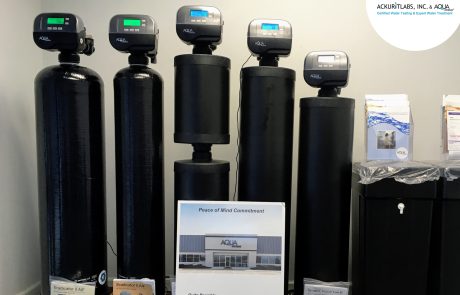
Inside the tank, tiny resin beads attract the minerals that cause scale and give up sodium or potassium in return, and the stored brine is topped up with salt as needed. Laundry and dishes tend to come out cleaner where the minerals have been removed; the lab result still decides what else belongs in the plan.
Conditioning Instead of Softening: an Honest Comparison
Nothing is exchanged, so the lab number for hardness reads the same before and after; people choose these devices to avoid salt, brine discharge and a drain connection. The results are described best as less crust, not no crust; being clear on this point prevents disputes later.
The Charcoal Option – Granular Beds and Blocks
Porous carbon traps many organic molecules and chlorine on its surfaces as flow moves across them, and ordinary carbon handles free chlorine more easily than chloramine. A saturated filter can release what it captured, which is why change schedules matter; a taste that creeps back is the usual reminder.
Spun, Pleated and Wound Media – Catching Grit Before It Travels On
Particle filters are the first stage in many systems, catching whatever would clog the rest; a series of coarse then fine elements spreads the load. Carbon cartridges, including carbon block types, often sit downstream of the sediment stage; keep a spare cartridge on a shelf.
Membrane Systems – Storage Tank, Faucet and Drain
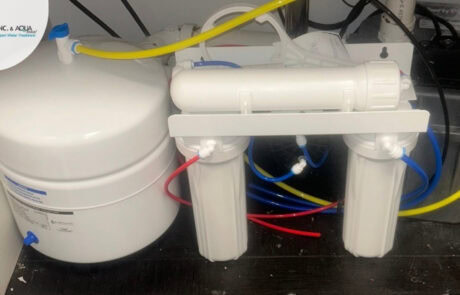
A membrane passes the liquid and rejects a large share of dissolved salts and other solids; the rejected stream runs to a drain, so a connection to the sink drain is part of the installation. Some units add minerals back after the membrane to adjust taste, and a membrane may last for a long stretch if it is protected.
Chlorination: What the Installer Sets Up
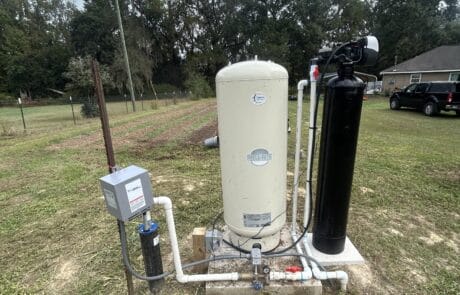
A pump, a tank and a backwashing filter form the heart of a chlorination setup; time in the tank is what makes the reaction complete. A backwashing filter often follows, clearing the particles the reaction produces; a wrong dose helps nobody.
Point of Entry Versus Point of Use: What Each Layout Covers
Equipment where the supply enters the building protects all the plumbing downstream, and the machinery needs floor space near the main shutoff. Many households combine both: a main-line device for scale and a sink model for taste; a layout on paper avoids surprises.
Matching the Unit to the House – People, Fixtures and Usage
A unit has two numbers that matter: a peak flow rating and a capacity between cleanings; a unit that is too small shortens the time between regenerations. A well-matched system suits the building rather than the biggest model on offer, and an installer should explain why a particular size was chosen.
Space and Connections – Codes and Neighbors
Shutoffs on both sides of a unit make servicing simple; the walk-through before work matters. Codes affect drain connections, backflow protection and the placement of equipment; a tidy install is easier to maintain.
Supply Source Matters: Chlorine Added or Not
Raw well supply brings the chemistry of the ground straight to the plumbing, whereas chlorine and chloramine lead the list on a city line. The provider needs to know which source feeds the house before suggesting anything; neighbors on the same aquifer can still differ.
Weather and the Equipment Room – Protecting Gear From Surge and Silt
Electronic valves keep time with the power, so a clock that resets can trigger recharges at odd hours, since a stuck valve is easier to catch early. Equipment that sat in floodwater needs inspection before it goes back into service; write down the shutoff locations.
Day-to-Day Presence: Tanks, Hums and Cabinets
Compressors and pumps are the noisiest parts of larger systems, and they normally sit in a mechanical space, which is worth thinking through before delivery. Equipment is easiest to live with when the controls and the drain sit where a person can reach them, and the installer can suggest a layout.
Upgrading What Is Already There – Keep, Repair or Replace
Older units may still work but have worn parts, such as seals, valves, resin or membranes, and the readings guide whether to repair, keep or replace. The simplest upgrade is often a fresh set of cartridges or media, not a new system, and old manuals are worth saving.
Treatment at Business Scale – Coordinating With Maintenance
Larger buildings may need several tanks and manifolds, not one household unit; a duplex arrangement keeps soft supply flowing through each recharge. Commercial owners usually want service records, so the system should make them easy to keep, and the provider can supply those if asked.
Keeping Equipment in Shape: Salt, Cartridges and Media
Soft supply depends on a brine tank that is kept stocked; a label on each housing with the install date helps. If stains come back, or the taste creeps back, something in the chain has used up its capacity; the provider can inspect and adjust.
The Second Sample: When to Retest
Nothing beats a repeat panel for showing whether the readings moved; a retest a few months in shows whether the system is holding. If a reading is still high, the report guides the next adjustment; dates on everything keep the record clear.
Honest Limits: Questions for Any Seller
Each technology removes some things and leaves others, so a layered setup is common; claims about results should point to a published test method. A provider unwilling to discuss limits is one to think twice about; clear explanations are the best sign.
Before You Sign: Details That Separate Good Plans
- Is the recommended size tied to the lab figures and the household's flow, and the proposal should say so on paper.
- How is the unit set up at the start, and what will you be shown before the crew leaves, and how can questions be raised afterward.
- What does a retest look like, and when is it scheduled; write the answers down.
Getting Advice – Share Your Lab Report
Phone Ackuritlabs And Aqua Systems at 850-616-2634 and ask what to collect before any equipment is chosen.
Pulling the Threads: Matching Hardware to the Finding
The reliable path runs from a lab figure, through a sensible choice of equipment, to a retest that shows the change, and for Whole House Water Filtration Installation in Florida Panhandle the first step is a conversation about the supply and the symptoms. To get started, reach Ackuritlabs And Aqua Systems at 850-616-2634; the call goes quickly.