Need Commercial Water Filtration for a Property in Blountstown Florida?
Matching the device to the finding is what separates a useful installation from a blind guess; the sections below describe what each option does and where it stops.
Speak with Ackuritlabs And Aqua Systems at 850-616-2634 and say whether the supply is a well or a city line.
The Step Ahead of the Purchase: a Lab Number Beats a Guess
Taste and appearance narrow the field, though only a lab report settles it, and the figure is what a provider uses to size and pick the unit. A first conversation commonly ends with advice on what to sample before the next step; patience at this stage tends to save money later.
Ion Exchange – Swapping Minerals for Sodium or Potassium
Inside the tank, tiny resin beads attract the minerals that cause scale and give up sodium or potassium in return; the unit needs a drain line and a power outlet. Scale buildup on heaters, kettles and shower heads slows down where hardness has been removed; other equipment handles those jobs.
Conditioning Instead of Softening – Setting Expectations
These devices work on how scale sticks, and they do not strip the minerals out, and maintenance is limited to replacing the media on a schedule. Because the minerals remain, soap and shampoo behave as they would on hard supply, and it helps compare options fairly.
Adsorption Media – Granular Beds and Blocks
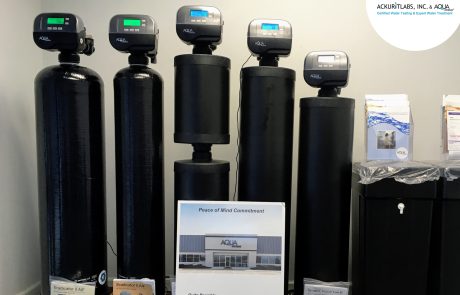
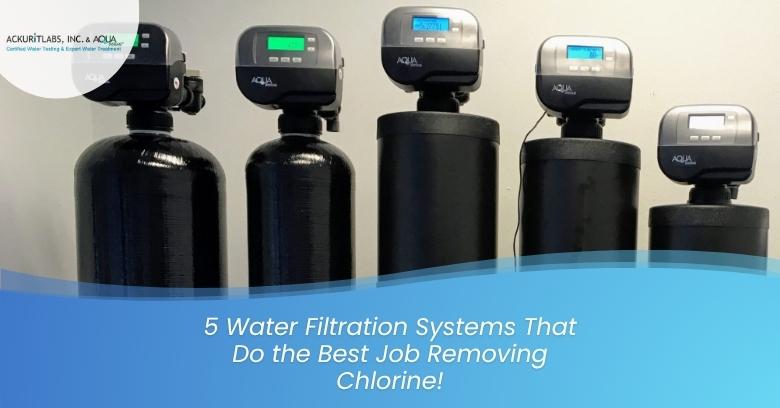
A carbon bed or block is the common answer when a city supply tastes or smells of disinfectant; it helps to know what the utility adds. Capacity depends on how much is in the supply and how much a household uses, and the maker's change interval is a guide, not a promise.
Canisters on the Line: Reading the Micron Number
Particle filters are the first stage in many systems, catching whatever would clog the rest; the rating, given in microns, states how small a particle the element is built to catch. Pressure falls as an element loads up, which is the practical signal to swap it; keep a spare cartridge on a shelf.
High-Pressure Polishing: Pressure, Membrane and Reject Stream
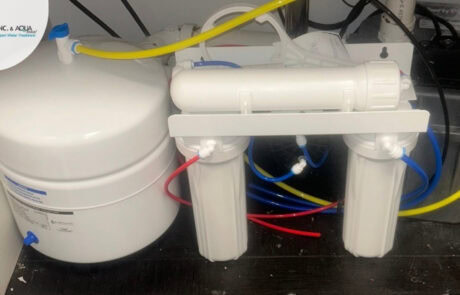
Dissolved solids stay on one side of the membrane and get flushed away; compact units fit under a sink and serve a single tap. Some units add minerals back after the membrane to adjust taste; ask for the maintenance schedule in writing.
Feeding Chlorine Into the Line: What the Installer Sets Up
Where a well carries iron, sulfur or microbes, injecting chlorine is a long-established approach; the chlorine oxidizes iron and sulfide into forms that can be filtered out. Residual chlorine has to be removed afterward, and a carbon filter normally takes that job; chemicals are stored and handled according to the label.
Whole-House or Single-Tap: Planning the Pipe Run
Whole-house layouts put one set of equipment ahead of every fixture, and the machinery needs floor space near the main shutoff. Smaller units at one sink target what people drink, leaving the rest of the plumbing alone, and it shows which walls and lines are involved.
Flow Rate and Capacity: What Undersizing Looks Like
Ratings printed on the label describe the equipment, and the installer matches them to the building; a bigger tank may be the practical answer. An undersized system forces flow past the media too fast, which weakens the result, and an installer should explain why a particular size was chosen.
Space and Connections: Bypass Valves, Drains and Outlets
Most systems need a bypass valve so the plumbing can keep flowing during service; the walk-through before work matters. Permits or inspections can be required in some jurisdictions, depending on the work, and clear labels on valves help the next person.
Private Source or Public Main: Different Problems, Different Gear
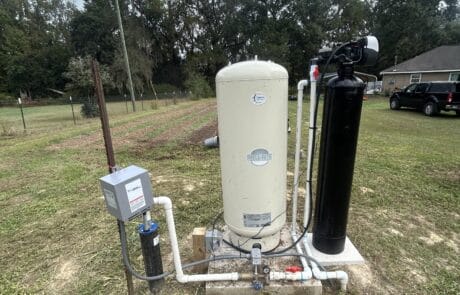
Raw well supply brings the chemistry of the ground straight to the plumbing, and the right system differs accordingly. A quick description of the plumbing path is enough to start the right conversation; mention the source on the first call.
Storms and Power Interruptions: Controllers, Pumps and Flooding
Softeners and filters with electronic controllers can lose their settings in a long outage unless a backup battery holds them, and a surge protector on the outlet is sensible protection for the electronics. If floodwater covered the wellhead, the supply itself needs a fresh lab sample; write down the shutoff locations.
Living With the Equipment – Reaching the Controls
Pumps and metering equipment hum when they work, so placement matters for bedrooms and offices; clear floor space around a tank makes salt loading simple. Some owners build a small enclosure, though it must not block air or access, and the installer can suggest a layout.
Replacement and Add-Ons: Compatibility With Present Plumbing
A house may come with equipment that nobody remembers installing, so a look at the labels is the first step; a fresh lab panel shows whether the present system is still doing its job. The simplest upgrade is often a fresh set of cartridges or media, not a new system; nothing is replaced without a reason.
Larger Buildings and Heavier Demand: Written Specifications
Larger buildings may need several tanks and manifolds, not one household unit; the existing mechanical room often decides what fits. A property manager benefits from a maintenance plan that lists tasks, intervals and who does them, because early warning beats a repair.
Keeping Equipment in Shape: Signs a Unit Needs Attention
Filters eventually clog, and carbon eventually saturates, so each has a replacement interval; adjust to what the supply actually does. Bad smells from a filter housing mean it has gone too long, and a service call beats a failed system.
Proof After Installation: Before and After Side by Side
Nothing beats a repeat panel for showing whether the readings moved; a retest a few months in shows whether the system is holding. Expect a number lower than before, not necessarily a number of zero, and keeping both reports together tells the story.
Where Hardware Stops: Questions for Any Seller
Equipment performs within limits set by its design, the supply and the upkeep; compare the data sheet with your lab report. Honest answers sound specific, and vague answers sound like a sales line; weigh each source on how specific it is.
A Short Interview – Written Answers Preferred
- Which readings on the report are meant to change, and which are not expected to; ask for the reasoning in writing.
- What parts and consumables are needed, and how often do they need replacing; a walk-through at the end is reasonable to ask for.
- Which items are checked on a routine visit, and which need special tools; each of these is worth asking.
Start the Conversation – One Call Sorts Out Next Steps
Dial Ackuritlabs And Aqua Systems at 850-616-2634 to go over the lab report and the symptoms at your tap.
Bringing It Together: Matching Hardware to the Finding
A dependable setup follows a sequence: measure the supply, pick equipment to suit, install it carefully and test again, and everything above about Commercial Water Filtration in Blountstown Florida is general background, not a verdict. Call 850-616-2634 to reach Ackuritlabs And Aqua Systems and talk over your situation; the call goes quickly.
Verified

Verified
Verified
Verified
Verified