Weighing Options for Water Treatment Throughout North Perry Area?
Matching the device to the finding is what separates a useful installation from a blind guess; the sections below put the options in plain language.
Dial Ackuritlabs And Aqua Systems at 850-616-2634 and describe the stains, scale or smells you want gone.
Where Treatment Begins: Why Skipping It Backfires
Equipment bought off a shelf may handle a different problem than the one at the tap; a sample sent to a laboratory turns a guess into a figure. Anyone without a recent report can usually be pointed to a suitable panel first; the equipment decision waits until the numbers are in.
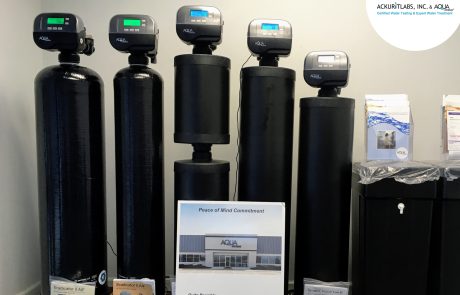
Softening: How the Resin Works
A conventional softener passes the supply through a bed of resin beads that grab calcium and magnesium; when the beads fill up, a brine rinse flushes the captured minerals to a drain. Where a softener is sized correctly, white crust becomes much less of a chore, though a softener does little for iron staining beyond a modest level.
Conditioning Instead of Softening: What They Do and Do Not Do
Conditioners leave the hardness figure unchanged and change the shape of the crystals that form; people choose these devices to avoid salt, brine discharge and a drain connection. A conditioner will not give the slick feel that a softened supply has in the shower, and it helps compare options fairly.
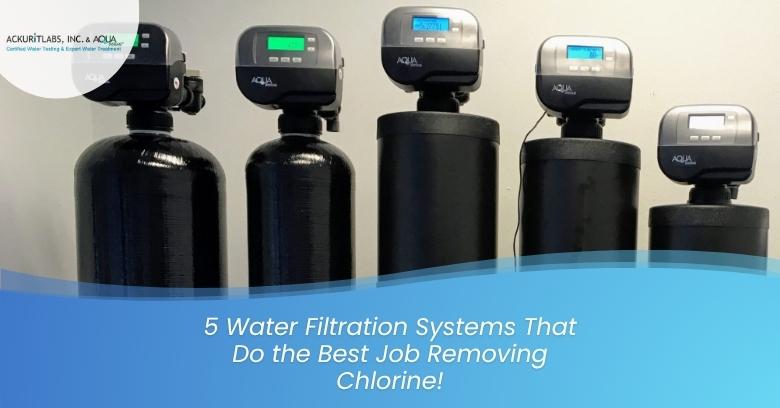
The Charcoal Option – Contact Time and Capacity
Surfaces inside the carbon grab onto particular chemicals, leaving a cleaner taste behind; a catalytic grade is often used where chloramine is the disinfectant. A saturated filter can release what it captured, which is why change schedules matter, and the maker's change interval is a guide, not a promise.
Canisters on the Line: Reading the Micron Number
Grit and flakes get stopped by a pleated or wound element sitting in a clear or opaque canister; the rating, given in microns, states how small a particle the element is built to catch. A carbon cartridge installed in the same housing style handles taste while the sediment unit handles grit; replacements are sold by size, so note the model.
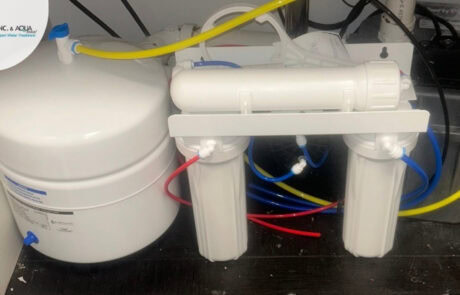
The Under-Sink Purifier – Storage Tank, Faucet and Drain
The membrane is the center of the system, flanked by pre-filters and a final carbon stage; compact units fit under a sink and serve a single tap. A lab test before and after is the reliable way to know what a particular system achieves; the provider can explain what to expect for your supply.
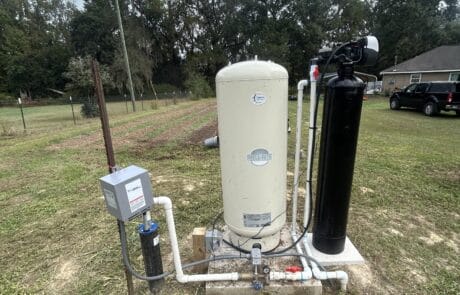
Oxidation Systems – Time, Dose and Cleanup
The setup pairs a feed pump with a retention tank so the chlorine has time to work; the tank is sized to the flow of the well. A backwashing filter often follows, clearing the particles the reaction produces, and the setup should be checked after the first weeks.
Treating Everything or Just the Faucet: What Each Layout Covers
Point-of-entry installations deal with problems that affect the entire plumbing system; larger tanks and brine cabinets take real room. Smaller units at one sink target what people drink, leaving the rest of the plumbing alone, and the two approaches work well together.
Sizing – Pressure Drop and Pace
A unit has two numbers that matter: a peak flow rating and a capacity between cleanings; the number of bathrooms and people is part of the calculation. When a unit is too small, pressure falls at fixtures during busy mornings, and an installer should explain why a particular size was chosen.
Practical Requirements – Codes and Neighbors
Most systems need a bypass valve so the plumbing can keep flowing during service; chlorine feed pumps and contact tanks add their own requirements. Permits or inspections can be required in some jurisdictions, depending on the work; a tidy install is easier to maintain.
What Changes by Source: Different Problems, Different Gear
Private wells deliver untreated groundwater, which can carry iron, sulfur, hardness and microbes, and equipment has to work with the pump's pressure and flow. Equipment picked from a neighbor's experience may not suit a different source; each property gets its own plan.
After an Outage: Controllers, Pumps and Flooding
Pumps, injectors and controllers all depend on electricity, and an outage pauses every one of them; checking the time and the settings after power returns takes a minute. A flooded system should be shut off and checked before use, since damage is not always visible; write down the shutoff locations.
Living With the Equipment: Keeping the Area Tidy
A recharge brings gurgling and flowing noises for a spell, usually at a scheduled hour; clear floor space around a tank makes salt loading simple. Some owners build a small enclosure, though it must not block air or access, and the installer can suggest a layout.
Working With Existing Equipment – Keep, Repair or Replace
A house may come with equipment that nobody remembers installing, so a look at the labels is the first step, and the readings guide whether to repair, keep or replace. New components usually have to fit the pipe sizes, the pressure and the drain already in place; ask for a plain list of what changes and what stays.
Larger Buildings and Heavier Demand: Boilers, Ice Machines and Kitchens
Boilers, cooling equipment and ice makers can be sensitive to scale, which shapes the design; the survey of the site comes first. Written procedures and a labeled schematic make handovers between staff smoother; a log of salt, media and filter changes helps.
Maintenance Rhythm: Signs a Unit Needs Attention
Every type of equipment has a consumable: salt for softeners, cartridges for filters, membranes for osmosis units; keep the paperwork in one place. Bad smells from a filter housing mean it has gone too long, and a retest confirms the numbers.
Closing the Loop – Numbers, Not Impressions
Nothing beats a repeat panel for showing whether the readings moved; schedule it when the system goes in. Expect a number lower than before, not necessarily a number of zero, and keeping both reports together tells the story.
Where Hardware Stops: No Single Device Fixes Everything
Marketing language tends to be broader than what a product actually does; ask how that is demonstrated. Honest answers sound specific, and vague answers sound like a sales line; nothing here replaces advice for your property.
What to Ask at the Door – Written Answers Preferred
- Does the plan name the substances it targets, rather than speaking in general terms; ask for the reasoning in writing.
- Who installs the equipment, and who services it after the job is done; ask for a copy of the manuals too.
- How will you know the equipment is working a few months from now; each of these is worth asking.
Talking It Through – One Call Sorts Out Next Steps
Speak with Ackuritlabs And Aqua Systems at 850-616-2634 to go over the lab report and the symptoms at your tap.
The Short Version: Matching Hardware to the Finding
A dependable setup follows a sequence: measure the supply, pick equipment to suit, install it carefully and test again, because each property in North Perry Area has its own story, whatever any page says about Water Treatment. Call 850-616-2634 to reach Ackuritlabs And Aqua Systems and talk over your situation; the call goes quickly.