Need Water Treatment in North Wakulla Area?
Each piece of hardware on the market answers a particular complaint, and none answers all of them, and the sections below cover sizing, setup and upkeep.
Contact Ackuritlabs And Aqua Systems at 850-616-2634 to ask which questions come before any equipment.
The Order of Operations – Reading the Problem Correctly
A smell, a stain or a taste is a symptom, and the symptom alone rarely identifies the cure; having a report on hand speeds everything up. Even a brief description of the symptoms helps decide which measurements to order; patience at this stage tends to save money later.
Ion Exchange – What It Fixes and What It Leaves
The beads in a softener hold hardness minerals until they are rinsed clean, and the stored brine is topped up with salt as needed. Softened supply leaves less scale on fixtures, glass and heating elements, though a softener does little for iron staining beyond a modest level.
Template-Assisted Units: an Honest Comparison
These devices work on how scale sticks, and they do not strip the minerals out; they need no electricity in many designs. Because the minerals remain, soap and shampoo behave as they would on hard supply; asking for a plain description of the outcome avoids disappointment.
Activated Carbon – Contact Time and Capacity
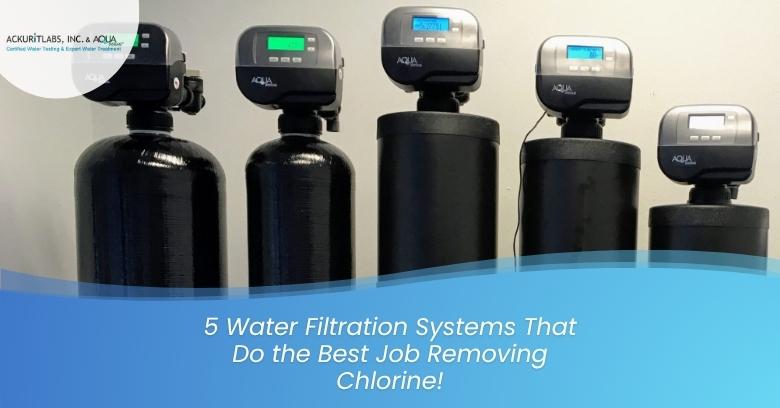
Surfaces inside the carbon grab onto particular chemicals, leaving a cleaner taste behind; a catalytic grade is often used where chloramine is the disinfectant. Contact time and flow rate affect results, and a unit pushed too hard performs worse, and the maker's change interval is a guide, not a promise.
Cartridges and Sediment Filters: Sizes, Ratings and Swaps
Grit and flakes get stopped by a pleated or wound element sitting in a clear or opaque canister, and a smaller rating catches finer particles but clogs sooner. Putting stages in the wrong order shortens the life of the costlier cartridge, and a pressure gauge on each side of the housing makes that visible.
Drinking Supply Upgrades: Where It Sits and What It Wastes
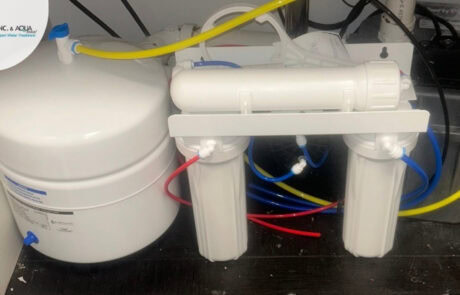
The membrane is the center of the system, flanked by pre-filters and a final carbon stage; compact units fit under a sink and serve a single tap. Reverse osmosis units reduce many dissolved substances, though performance varies by model and by supply, and the reject volume is worth asking about.
Treating Iron, Sulfur and Microbes: Why Dose Control Matters
A metering pump feeds sodium hypochlorite into the flow, and a tank gives it time to react, and it also acts on bacteria in the supply. After the contact tank, a carbon stage strips leftover chlorine so the tap smells clean; dosing is not a do-it-yourself guess.
Where the Equipment Sits: Choosing the Footprint
A unit at the main line treats every tap, the shower, the washer and the water heater; scale, iron and chlorine are the usual reasons to go this route. Where only one fixture matters, a compact installation avoids treating the whole house, and the two approaches work well together.
Flow Rate and Capacity – Pressure Drop and Pace
A unit has two numbers that matter: a peak flow rating and a capacity between cleanings, along with the hardness or iron level on the lab report. Equipment that is too small works harder and wears out sooner; ask to see the numbers behind the recommendation.
Installation Details: Tying Into Existing Lines
Most systems need a bypass valve so the plumbing can keep flowing during service; chlorine feed pumps and contact tanks add their own requirements. Checking with the local office is sensible before anything is cut or glued, and clear labels on valves help the next person.
What Changes by Source: Different Problems, Different Gear
Raw well supply brings the chemistry of the ground straight to the plumbing, whereas chlorine and chloramine lead the list on a city line. A quick description of the plumbing path is enough to start the right conversation, and a lab report removes most of the guesswork.
After an Outage – Protecting Gear From Surge and Silt
Many controllers keep their program in memory for a short while, and then need to be set again; checking the time and the settings after power returns takes a minute. A flooded system should be shut off and checked before use, since damage is not always visible; photographs taken before the season make later comparisons easier.
Day-to-Day Presence: Keeping the Area Tidy
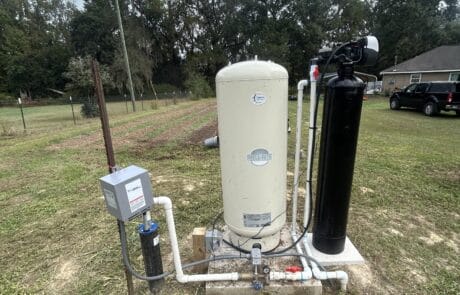
Compressors and pumps are the noisiest parts of larger systems, and they normally sit in a mechanical space; a garage, a utility closet or a pump house is the usual home. Sunlight can damage clear housings and warm the supply, so shade is sensible outdoors; a tank that cannot get through a doorway is a common surprise.
Inherited Hardware: Planning a Sensible Sequence
Many properties already have a tank, a filter housing or an under-sink unit, and the question is whether it still suits the supply; the model number on the label usually leads to a manual and a parts list. The simplest upgrade is often a fresh set of cartridges or media, not a new system, and old manuals are worth saving.
When a Property Has Many Users – Coordinating With Maintenance
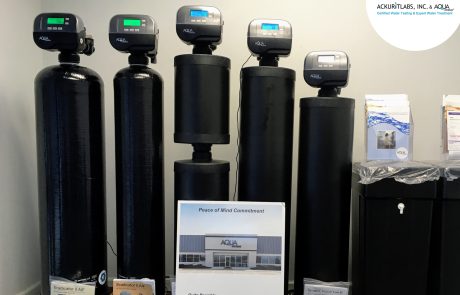
Business equipment is sized for higher flows and often arranged in pairs so one tank can work while the other recharges; the existing mechanical room often decides what fits. Training the people on site about shutoffs and alarms prevents small problems from growing, and the provider can supply those if asked.
Routine Care – Small Tasks That Protect Big Parts
Filters eventually clog, and carbon eventually saturates, so each has a replacement interval; a label on each housing with the install date helps. If stains come back, or the taste creeps back, something in the chain has used up its capacity; the provider can inspect and adjust.
Proof After Installation – Filing the Evidence
A sample collected after the system is running shows whether the problem was solved; a retest a few months in shows whether the system is holding. A result that falls short is information, and it points to what to add or change, and keeping both reports together tells the story.
What Equipment Cannot Do – Matching Promises to Physics
Marketing language tends to be broader than what a product actually does; compare the data sheet with your lab report. A fair provider will tell you when equipment is not the fix, or not the whole fix; weigh each source on how specific it is.
Before You Sign: Points Worth Raising
- Does the plan name the substances it targets, rather than speaking in general terms, and the proposal should say so on paper.
- Where will the drain, the power and the bypass go, and what will be cut or moved; ask for a copy of the manuals too.
- Which items are checked on a routine visit, and which need special tools; each of these is worth asking.
A Call Before a Purchase – Share Your Lab Report
Call Ackuritlabs And Aqua Systems at 850-616-2634 to ask what a sensible first step would be for your supply.
What to Remember – Upkeep Keeps It Working
A dependable setup follows a sequence: measure the supply, pick equipment to suit, install it carefully and test again, and everything above about Water Treatment in North Wakulla Area is general background, not a verdict. Questions are welcome at 850-616-2634, where Ackuritlabs And Aqua Systems can lay out the options; mention whether the supply is a well or a utility line.