Shopping for Water Treatment Throughout South Crawfordville Bay Area?
A treatment system is a tool for one job, so the job has to be named before the tool is picked, and the sections below cover sizing, setup and upkeep.
Contact Ackuritlabs And Aqua Systems at 850-616-2634 and say whether the supply is a well or a city line.
Where Treatment Begins: Naming the Target
Three households with the same complaint can need three different systems, because the underlying chemistry differs; a sample sent to a laboratory turns a guess into a figure. A first conversation commonly ends with advice on what to sample before the next step, and the choice of equipment follows once the numbers arrive.
Taking Out Hardness – What It Fixes and What It Leaves
The core of a standard softener is a resin bed that exchanges hardness minerals for a softer ion, and a salt or potassium brine recharges the bed on a schedule. Where a softener is sized correctly, white crust becomes much less of a chore; the lab result still decides what else belongs in the plan.
Conditioning Instead of Softening – Changing How Scale Forms
Conditioners leave the hardness figure unchanged and change the shape of the crystals that form; people choose these devices to avoid salt, brine discharge and a drain connection. A conditioner will not give the slick feel that a softened supply has in the shower; being clear on this point prevents disputes later.
The Charcoal Option – Contact Time and Capacity
Porous carbon traps many organic molecules and chlorine on its surfaces as flow moves across them; a catalytic grade is often used where chloramine is the disinfectant. A saturated filter can release what it captured, which is why change schedules matter; keeping a date on the housing is a good habit.
Canisters on the Line – Why Order Matters
The simplest way to protect a pump, a softener or a fixture is usually a sediment screen ahead of it, and a smaller rating catches finer particles but clogs sooner. Carbon cartridges, including carbon block types, often sit downstream of the sediment stage; write the swap date on the canister.
High-Pressure Polishing: Where It Sits and What It Wastes
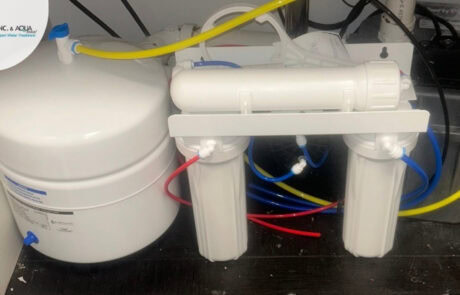
A small pump or the line pressure drives the flow through a membrane with extremely fine pores; most home units sit under a sink and serve one tap. Pre-filters protect the membrane, and replacing them on time protects the system, and the reject volume is worth asking about.
Oxidation Systems – Time, Dose and Cleanup
A chlorine injector meters a small amount of disinfectant into the line ahead of a holding tank; the tank is sized to the flow of the well. Where the supply is meant for drinking, the leftover chlorine is filtered off, and chemical equipment is installed and set up with care.
Where the Equipment Sits – Matching Scope to Need
Everything inside the building sees treated flow when equipment sits at the entry; larger tanks and brine cabinets take real room. Many households combine both: a main-line device for scale and a sink model for taste, and the two approaches work well together.
Flow Rate and Capacity – Pressure Drop and Pace
A unit has two numbers that matter: a peak flow rating and a capacity between cleanings; high readings use up capacity faster. An undersized system forces flow past the media too fast, which weakens the result; ask to see the numbers behind the recommendation.
Plumbing, Power and Drain Needs: the Checklist Behind a Clean Install
Shutoffs on both sides of a unit make servicing simple; the walk-through before work matters. Permits or inspections can be required in some jurisdictions, depending on the work, and clear labels on valves help the next person.
Private Source or Public Main – Pressure Tanks and Pumps
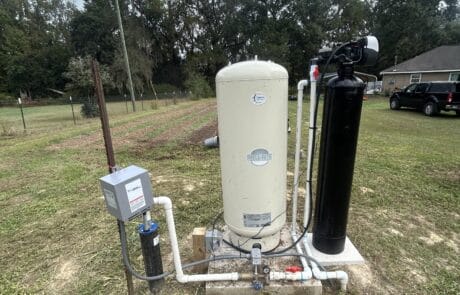
Raw well supply brings the chemistry of the ground straight to the plumbing; wells also bring a pump and a pressure tank into the plan. Equipment picked from a neighbor's experience may not suit a different source; photos of the existing equipment help.
Hurricane-Season Readiness: What to Check Afterward
Electronic valves keep time with the power, so a clock that resets can trigger recharges at odd hours, and a surge protector on the outlet is sensible protection for the electronics. If floodwater covered the wellhead, the supply itself needs a fresh lab sample, and the provider can describe what a post-storm check involves.
Practical Details Homeowners Ask About: Keeping the Area Tidy
Compressors and pumps are the noisiest parts of larger systems, and they normally sit in a mechanical space, and the location is chosen to keep lines short and service easy. Sunlight can damage clear housings and warm the supply, so shade is sensible outdoors; a tank that cannot get through a doorway is a common surprise.
An Older System in the Garage: Compatibility With Present Plumbing
Inherited hardware is worth examining before anything new is added, which helps weigh a repair against a new unit. The simplest upgrade is often a fresh set of cartridges or media, not a new system; photographs of the current setup speed up the first conversation.
Larger Buildings and Heavier Demand – Keeping Service Running
Restaurants, offices and apartment buildings draw far more than a house, and the gear is scaled to match; a duplex arrangement keeps soft supply flowing through each recharge. A property manager benefits from a maintenance plan that lists tasks, intervals and who does them; ask what monitoring the equipment offers.
Keeping Equipment in Shape: What Gets Neglected
Every type of equipment has a consumable: salt for softeners, cartridges for filters, membranes for osmosis units; a label on each housing with the install date helps. If stains come back, or the taste creeps back, something in the chain has used up its capacity, and a service call beats a failed system.
Verifying What Changed: When to Retest
Comparing a new lab report against the original is how a household confirms the hardware did its job, which matters for cartridges and media that wear. A result that falls short is information, and it points to what to add or change; the file is useful for a future sale.
Where Hardware Stops: Questions for Any Seller
A softener will not make a supply taste different, and a carbon filter will not soften it; ask how that is demonstrated. A provider unwilling to discuss limits is one to think twice about; nothing here replaces advice for your property.
A Short Interview: Details That Separate Good Plans
- Is the recommended size tied to the lab figures and the household's flow; ask for the reasoning in writing.
- What parts and consumables are needed, and how often do they need replacing; a walk-through at the end is reasonable to ask for.
- Where should the paperwork for the system be stored; ask about it before work starts.
A Call Before a Purchase – One Call Sorts Out Next Steps
Dial Ackuritlabs And Aqua Systems at 850-616-2634 to ask what a sensible first step would be for your supply.
Pulling the Threads: Matching Hardware to the Finding
Matching a device to a lab result, sizing it to the building and keeping up with upkeep is the whole recipe, because each property in South Crawfordville Bay Area has its own story, whatever any page says about Water Treatment. Call 850-616-2634 to reach Ackuritlabs And Aqua Systems and talk over your situation, and say what you would like to change.