Looking for Residential Water Softener Installation for a Property in Greenville Florida?
Good installations start from a lab result and work toward a device that suits it, and the sections below explain how the common options differ.
Call Ackuritlabs And Aqua Systems at 850-616-2634 and say whether the supply is a well or a city line.
The Order of Operations: Naming the Target
Taste and appearance narrow the field, though only a lab report settles it; having a report on hand speeds everything up. Even a brief description of the symptoms helps decide which measurements to order; the equipment decision waits until the numbers are in.
Taking Out Hardness: a Bed of Beads and a Brine Tank
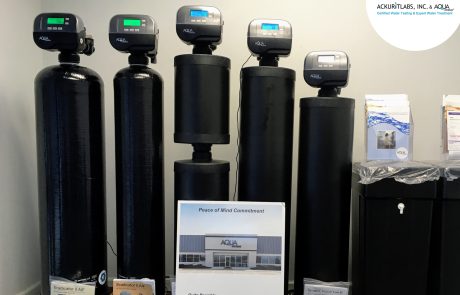
A conventional softener passes the supply through a bed of resin beads that grab calcium and magnesium, and a salt or potassium brine recharges the bed on a schedule. Laundry and dishes tend to come out cleaner where the minerals have been removed, and it will not change the taste of the supply on its own.
Salt-Free Conditioners: No Drain, No Salt, Different Results
Conditioners leave the hardness figure unchanged and change the shape of the crystals that form; they need no electricity in many designs. Anyone expecting the soft feel of a true softener should know the two are different things; being clear on this point prevents disputes later.
Activated Carbon – Contact Time and Capacity
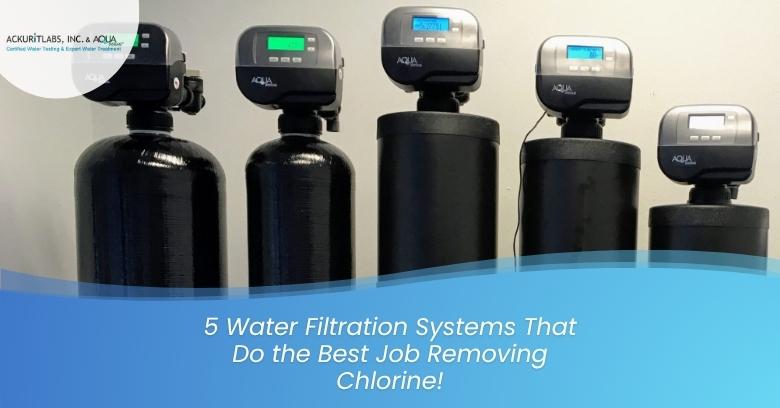
Porous carbon traps many organic molecules and chlorine on its surfaces as flow moves across them, and ordinary carbon handles free chlorine more easily than chloramine. Every carbon filter eventually fills up, so replacement or backwashing is part of owning one, and the maker's change interval is a guide, not a promise.
Cartridges and Sediment Filters – Why Order Matters
The simplest way to protect a pump, a softener or a fixture is usually a sediment screen ahead of it, which lets each cartridge last longer. Pressure falls as an element loads up, which is the practical signal to swap it; a wrench for the housing is a worthwhile purchase.
Drinking Supply Upgrades – Storage Tank, Faucet and Drain
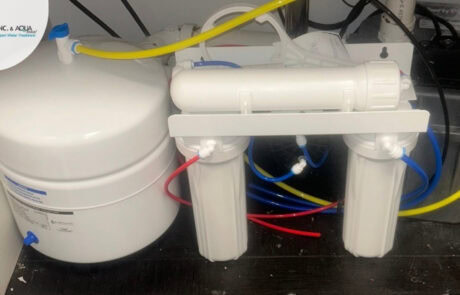
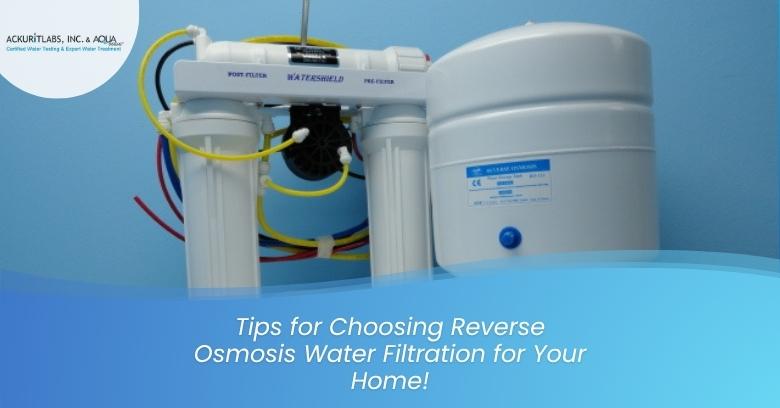
The membrane is the center of the system, flanked by pre-filters and a final carbon stage; the rejected stream runs to a drain, so a connection to the sink drain is part of the installation. Pre-filters protect the membrane, and replacing them on time protects the system; the provider can explain what to expect for your supply.
Injectors and Contact Tanks: a Metering Pump and a Retention Tank
A metering pump feeds sodium hypochlorite into the flow, and a tank gives it time to react, and the dose is set from lab readings. The final stage polishes taste and removes what remains of the disinfectant; chemicals are stored and handled according to the label.
Whole-House or Single-Tap – Matching Scope to Need
Everything inside the building sees treated flow when equipment sits at the entry; a garage or utility closet often becomes the home. Many households combine both: a main-line device for scale and a sink model for taste; a layout on paper avoids surprises.
Matching the Unit to the House – Pressure Drop and Pace
Ratings printed on the label describe the equipment, and the installer matches them to the building; the number of bathrooms and people is part of the calculation. A well-matched system suits the building rather than the biggest model on offer, and a vague one deserves a follow-up question.
What the Job Requires: Bypass Valves, Drains and Outlets
Shutoffs on both sides of a unit make servicing simple; the installer plans the route up front. Checking with the local office is sensible before anything is cut or glued, and access for servicing should be planned from the start.
Two Starting Points: Planning Around the Source
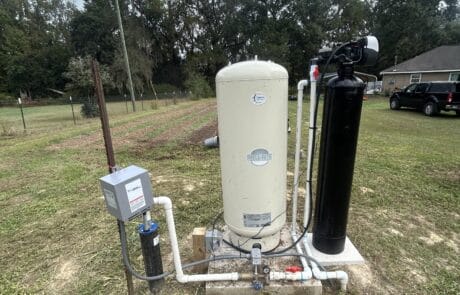
A well has no utility between it and the tap, so equipment often handles more of the load, whereas chlorine and chloramine lead the list on a city line. A carbon unit that suits a city line may be useless against the main problem of a well; each property gets its own plan.
Hurricane-Season Readiness: Planning Before the Season
Pumps, injectors and controllers all depend on electricity, and an outage pauses every one of them; checking the time and the settings after power returns takes a minute. Equipment that sat in floodwater needs inspection before it goes back into service, and the provider can describe what a post-storm check involves.
Living With the Equipment – Placement Decisions That Last
Noise from a unit tends to come from the drain line and the valve rather than the tanks, which is worth thinking through before delivery. Equipment is easiest to live with when the controls and the drain sit where a person can reach them; a tank that cannot get through a doorway is a common surprise.
Working With Existing Equipment – Keep, Repair or Replace
Many properties already have a tank, a filter housing or an under-sink unit, and the question is whether it still suits the supply; a fresh lab panel shows whether the present system is still doing its job. Adding a stage to an existing setup requires attention to order, flow rate and pressure drop; ask for a plain list of what changes and what stays.
Larger Buildings and Heavier Demand: Written Specifications
Commercial installations are usually specified on paper, with flow rates and targets spelled out; a duplex arrangement keeps soft supply flowing through each recharge. Training the people on site about shutoffs and alarms prevents small problems from growing, and it supports any later troubleshooting.
Routine Care: Signs a Unit Needs Attention
Every type of equipment has a consumable: salt for softeners, cartridges for filters, membranes for osmosis units; a simple calendar reminder prevents most lapses. If stains come back, or the taste creeps back, something in the chain has used up its capacity; an annual look at the controls is sensible.
Proof After Installation – Numbers, Not Impressions
Comparing a new lab report against the original is how a household confirms the hardware did its job; schedule it when the system goes in. Expect a number lower than before, not necessarily a number of zero; dates on everything keep the record clear.
Limits to Keep in Mind: Misuse and Misfit
A softener will not make a supply taste different, and a carbon filter will not soften it; read the data sheet, not just the front of the box. Honest answers sound specific, and vague answers sound like a sales line; weigh each source on how specific it is.
Questions for a Provider – Everything in Writing
- Does the plan name the substances it targets, rather than speaking in general terms; ask for the reasoning in writing.
- What parts and consumables are needed, and how often do they need replacing; a walk-through at the end is reasonable to ask for.
- What does a retest look like, and when is it scheduled; ask about it before work starts.
Getting Advice – Share Your Lab Report
Phone Ackuritlabs And Aqua Systems at 850-616-2634 to ask what a sensible first step would be for your supply.
Bringing It Together: Matching Hardware to the Finding
Matching a device to a lab result, sizing it to the building and keeping up with upkeep is the whole recipe, and everything above about Residential Water Softener Installation in Greenville Florida is general background, not a verdict. Questions are welcome at 850-616-2634, where Ackuritlabs And Aqua Systems can lay out the options, and share what the lab report shows.
Verified

Verified
Verified
Verified
Verified