Looking for Commercial Water Treatment Company in Saint Marks Florida?
Matching the device to the finding is what separates a useful installation from a blind guess; read on for how the pieces fit together.
Contact Ackuritlabs And Aqua Systems at 850-616-2634 to ask how an installation is planned.
Where Treatment Begins – Reading the Problem Correctly
Taste and appearance narrow the field, though only a lab report settles it, and the figure is what a provider uses to size and pick the unit. Anyone without a recent report can usually be pointed to a suitable panel first; patience at this stage tends to save money later.
Resin Tanks – What It Fixes and What It Leaves
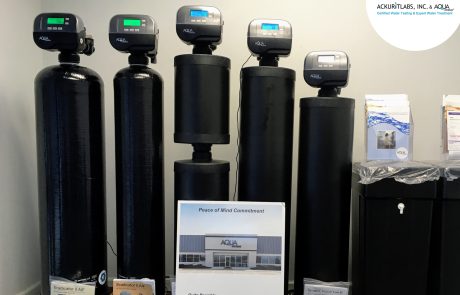
Hardness minerals stick to a charged resin, which swaps them for sodium or potassium ions; a control valve decides when to regenerate by clock or by usage. Less mineral reaching the pipes also means less deposit inside them; it is not meant to filter out bacteria or chemicals.
Conditioning Instead of Softening: No Drain, No Salt, Different Results
A salt-free unit does not remove calcium or magnesium; it alters how those minerals behave; they need no electricity in many designs. Because the minerals remain, soap and shampoo behave as they would on hard supply; asking for a plain description of the outcome avoids disappointment.
The Charcoal Option – Contact Time and Capacity
A carbon bed or block is the common answer when a city supply tastes or smells of disinfectant, and ordinary carbon handles free chlorine more easily than chloramine. A saturated filter can release what it captured, which is why change schedules matter, and the maker's change interval is a guide, not a promise.
Canisters on the Line – Catching Grit Before It Travels On
A housing on the line holds a cartridge that screens out particles above a chosen size, which lets each cartridge last longer. Putting stages in the wrong order shortens the life of the costlier cartridge; write the swap date on the canister.
Reverse Osmosis: Fair Expectations
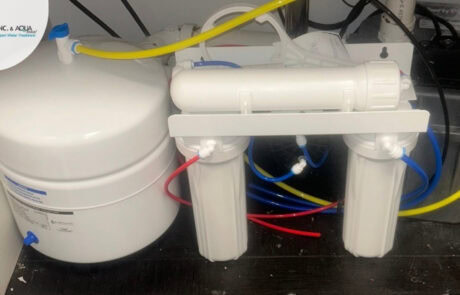
Dissolved solids stay on one side of the membrane and get flushed away, while larger units serve whole buildings. The reduction achieved depends on membrane condition, pressure and what is in the feed; a leak sensor is a sensible add-on.
Feeding Chlorine Into the Line: a Metering Pump and a Retention Tank
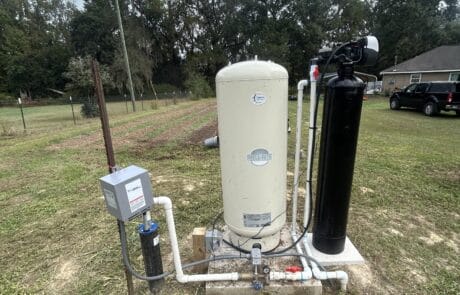
A pump, a tank and a backwashing filter form the heart of a chlorination setup; the chlorine oxidizes iron and sulfide into forms that can be filtered out. A backwashing filter often follows, clearing the particles the reaction produces, and the setup should be checked after the first weeks.
Scope of a System: What Each Layout Covers
A unit at the main line treats every tap, the shower, the washer and the water heater; scale, iron and chlorine are the usual reasons to go this route. A point-of-use unit serves a single faucet, usually the kitchen, and suits drinking and cooking; the provider can sketch where each unit would go.
Choosing a Capacity: Room to Grow
Equipment is rated by how fast supply can pass through it and by how much it can treat before servicing; high readings use up capacity faster. A well-matched system suits the building rather than the biggest model on offer; the sizing is not a mystery.
Practical Requirements: Tying Into Existing Lines
Most systems need a bypass valve so the plumbing can keep flowing during service; the installer plans the route up front. Codes affect drain connections, backflow protection and the placement of equipment, and clear labels on valves help the next person.
Wells Versus City Lines: Different Problems, Different Gear
Private wells deliver untreated groundwater, which can carry iron, sulfur, hardness and microbes, whereas chlorine and chloramine lead the list on a city line. Equipment picked from a neighbor's experience may not suit a different source; mention the source on the first call.
Weather and the Equipment Room: Controllers, Pumps and Flooding
Electronic valves keep time with the power, so a clock that resets can trigger recharges at odd hours, and a surge protector on the outlet is sensible protection for the electronics. Silt in a housing, a wet motor or a corroded joint can turn a repair into a replacement; ask the installer what to do before a storm.
Where Everything Goes – Reaching the Controls
A recharge brings gurgling and flowing noises for a spell, usually at a scheduled hour; a garage, a utility closet or a pump house is the usual home. A tidy installation labels valves, supports the plumbing and keeps the area dry, and the installer can suggest a layout.
Upgrading What Is Already There – Reading Old Labels
A house may come with equipment that nobody remembers installing, so a look at the labels is the first step; a fresh lab panel shows whether the present system is still doing its job. The simplest upgrade is often a fresh set of cartridges or media, not a new system; nothing is replaced without a reason.
When a Property Has Many Users: Boilers, Ice Machines and Kitchens
Business equipment is sized for higher flows and often arranged in pairs so one tank can work while the other recharges; a duplex arrangement keeps soft supply flowing through each recharge. Written procedures and a labeled schematic make handovers between staff smoother, because early warning beats a repair.
Routine Care – Small Tasks That Protect Big Parts
Filters eventually clog, and carbon eventually saturates, so each has a replacement interval; keep the paperwork in one place. Any change from how the system used to behave is the cue to check it; an annual look at the controls is sensible.
Verifying What Changed: Before and After Side by Side
Nothing beats a repeat panel for showing whether the readings moved; collecting at the same tap, in the same way, keeps the comparison fair. Some substances respond well and others hardly at all, which the new figures reveal, and keeping both reports together tells the story.
Limits to Keep in Mind: Misuse and Misfit
Equipment performs within limits set by its design, the supply and the upkeep; ask how that is demonstrated. A provider unwilling to discuss limits is one to think twice about, and the same standard applies to anything written on this page.
Questions for a Provider: Points Worth Raising
- Which readings on the report are meant to change, and which are not expected to, and what stays the same afterward.
- Which local rules apply to this installation, and who handles them; a walk-through at the end is reasonable to ask for.
- Which items are checked on a routine visit, and which need special tools, and what does it say about future servicing.
A Call Before a Purchase: Questions Are the Starting Point
Call Ackuritlabs And Aqua Systems at 850-616-2634 and ask what to collect before any equipment is chosen.
Bringing It Together: Matching Hardware to the Finding
A dependable setup follows a sequence: measure the supply, pick equipment to suit, install it carefully and test again, and everything above about Commercial Water Treatment Company in Saint Marks Florida is general background, not a verdict. You can speak with Ackuritlabs And Aqua Systems at 850-616-2634 about your plumbing and your goals, and share what the lab report shows.
Verified

Verified
Verified
Verified
Verified