Looking for Water Softening Service Throughout Greenville Florida?
Equipment gets chosen to fix a measured problem, and the fix is only as good as the diagnosis behind it; read on for how the pieces fit together.
Call Ackuritlabs And Aqua Systems at 850-616-2634 to talk through what the tap has been doing.
The Order of Operations – Results Decide the Hardware
Equipment bought off a shelf may handle a different problem than the one at the tap; a sample sent to a laboratory turns a guess into a figure. Even a brief description of the symptoms helps decide which measurements to order, and the choice of equipment follows once the numbers arrive.
Softening: How the Resin Works
A conventional softener passes the supply through a bed of resin beads that grab calcium and magnesium, and the stored brine is topped up with salt as needed. Where a softener is sized correctly, white crust becomes much less of a chore, though a softener does little for iron staining beyond a modest level.
Conditioning Instead of Softening – Setting Expectations
A salt-free unit does not remove calcium or magnesium; it alters how those minerals behave; people choose these devices to avoid salt, brine discharge and a drain connection. Expect scale to be reduced rather than eliminated, and expect no change in how soap lathers; being clear on this point prevents disputes later.
Carbon Filtration: Matching Carbon to the Target
Porous carbon traps many organic molecules and chlorine on its surfaces as flow moves across them; a catalytic grade is often used where chloramine is the disinfectant. Capacity depends on how much is in the supply and how much a household uses; a taste that creeps back is the usual reminder.
Canisters on the Line: Sizes, Ratings and Swaps
The simplest way to protect a pump, a softener or a fixture is usually a sediment screen ahead of it, and the sequence is part of the design. A carbon cartridge installed in the same housing style handles taste while the sediment unit handles grit; keep a spare cartridge on a shelf.
High-Pressure Polishing: Pressure, Membrane and Reject Stream
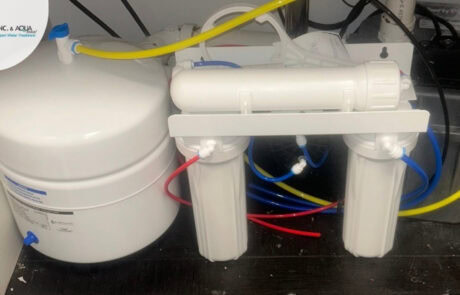
The membrane is the center of the system, flanked by pre-filters and a final carbon stage, while larger units serve whole buildings. Reverse osmosis units reduce many dissolved substances, though performance varies by model and by supply, and a membrane may last for a long stretch if it is protected.
Chlorination: What the Installer Sets Up
A chlorine injector meters a small amount of disinfectant into the line ahead of a holding tank; time in the tank is what makes the reaction complete. The final stage polishes taste and removes what remains of the disinfectant, and the setup should be checked after the first weeks.
Treating Everything or Just the Faucet – Matching Scope to Need
Point-of-entry installations deal with problems that affect the entire plumbing system; larger tanks and brine cabinets take real room. Many households combine both: a main-line device for scale and a sink model for taste, and the two approaches work well together.
Peak Demand Math: Gallons per Minute and Grains
Equipment is rated by how fast supply can pass through it and by how much it can treat before servicing, along with the hardness or iron level on the lab report. When a unit is too small, pressure falls at fixtures during busy mornings; ask to see the numbers behind the recommendation.
Space and Connections – Codes and Neighbors
Shutoffs on both sides of a unit make servicing simple, and electrical needs vary from a plug-in transformer to a dedicated circuit. Permits or inspections can be required in some jurisdictions, depending on the work, and clear labels on valves help the next person.
Supply Source Matters: Different Problems, Different Gear
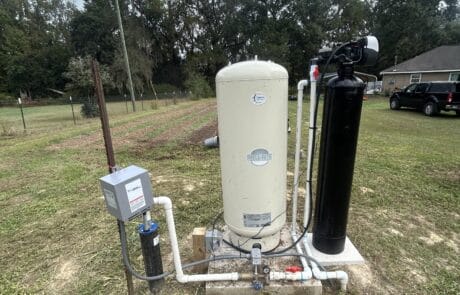
Private wells deliver untreated groundwater, which can carry iron, sulfur, hardness and microbes, whereas chlorine and chloramine lead the list on a city line. Because the two sources differ, the same product can be a great fit on one and wasted on the other, and a lab report removes most of the guesswork.
After an Outage: Controllers, Pumps and Flooding
Pumps, injectors and controllers all depend on electricity, and an outage pauses every one of them; checking the time and the settings after power returns takes a minute. Equipment that sat in floodwater needs inspection before it goes back into service; ask the installer what to do before a storm.
Where Everything Goes – Reaching the Controls
Most residential units are quiet, and the sounds they make are short bursts when a valve cycles or a recharge runs; clear floor space around a tank makes salt loading simple. Sunlight can damage clear housings and warm the supply, so shade is sensible outdoors, and the installer can suggest a layout.
Replacement and Add-Ons – Keep, Repair or Replace
A house may come with equipment that nobody remembers installing, so a look at the labels is the first step, which helps weigh a repair against a new unit. New components usually have to fit the pipe sizes, the pressure and the drain already in place, and old manuals are worth saving.
Treatment at Business Scale – Keeping Service Running
Larger buildings may need several tanks and manifolds, not one household unit; the existing mechanical room often decides what fits. A property manager benefits from a maintenance plan that lists tasks, intervals and who does them; ask what monitoring the equipment offers.
Keeping Equipment in Shape – Setting Reminders
Soft supply depends on a brine tank that is kept stocked; a label on each housing with the install date helps. If stains come back, or the taste creeps back, something in the chain has used up its capacity; do not wait for a complete failure.
Closing the Loop: Before and After Side by Side
The most reliable verification is a fresh panel run on the same items as before; collecting at the same tap, in the same way, keeps the comparison fair. Expect a number lower than before, not necessarily a number of zero; store copies where they can be found.
Honest Limits – Read the Fine Print
No single device removes every substance, and a pitch that one box covers everything deserves doubt; claims about results should point to a published test method. A provider unwilling to discuss limits is one to think twice about; clear explanations are the best sign.
Before You Sign – Written Answers Preferred
- Does the plan name the substances it targets, rather than speaking in general terms; a specific answer is what you want.
- How is the unit set up at the start, and what will you be shown before the crew leaves; ask for a copy of the manuals too.
- What signs should prompt a call before the next scheduled check; ask about it before work starts.
Start the Conversation: Describe the Problem First
Phone Ackuritlabs And Aqua Systems at 850-616-2634 to find out how a system would be planned and sized.
In Plain Terms – Upkeep Keeps It Working
A dependable setup follows a sequence: measure the supply, pick equipment to suit, install it carefully and test again, and for Water Softening Service in Greenville Florida the first step is a conversation about the supply and the symptoms. The number to call is 850-616-2634, and the conversation is the first step; mention whether the supply is a well or a utility line.
Verified

Verified
Verified
Verified
Verified