Need Water Treatment Company Around Greenville Florida?
A treatment system is a tool for one job, so the job has to be named before the tool is picked, and the sections below cover sizing, setup and upkeep.
Dial Ackuritlabs And Aqua Systems at 850-616-2634 to talk through what the tap has been doing.
Where Treatment Begins – Reading the Problem Correctly
A smell, a stain or a taste is a symptom, and the symptom alone rarely identifies the cure; most reputable providers ask for results before quoting a system. A first conversation commonly ends with advice on what to sample before the next step; the equipment decision waits until the numbers are in.
Ion Exchange: a Bed of Beads and a Brine Tank
Hardness minerals stick to a charged resin, which swaps them for sodium or potassium ions, and the stored brine is topped up with salt as needed. Laundry and dishes tend to come out cleaner where the minerals have been removed, though a softener does little for iron staining beyond a modest level.
Salt-Free Conditioners: an Honest Comparison
Conditioners leave the hardness figure unchanged and change the shape of the crystals that form; they need no electricity in many designs. The results are described best as less crust, not no crust, and a good provider explains that before the purchase.
Carbon Filtration: Chlorine, Odors and Organic Traces
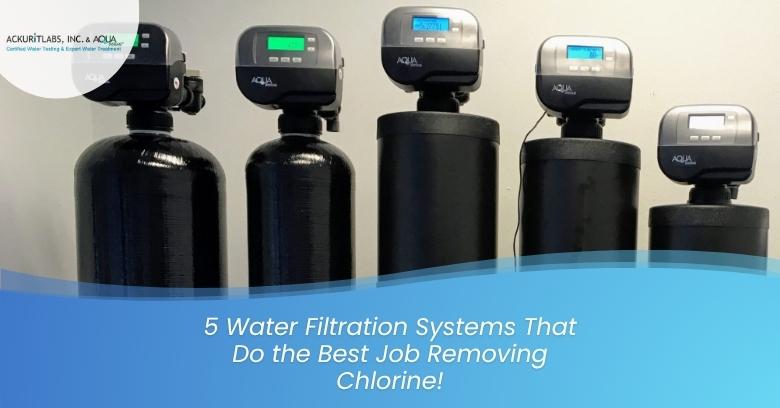
Porous carbon traps many organic molecules and chlorine on its surfaces as flow moves across them; it helps to know what the utility adds. Every carbon filter eventually fills up, so replacement or backwashing is part of owning one, and the maker's change interval is a guide, not a promise.
The Filter Under the Cap: Reading the Micron Number
The simplest way to protect a pump, a softener or a fixture is usually a sediment screen ahead of it; a series of coarse then fine elements spreads the load. Putting stages in the wrong order shortens the life of the costlier cartridge; a wrench for the housing is a worthwhile purchase.
Drinking Supply Upgrades: Where It Sits and What It Wastes
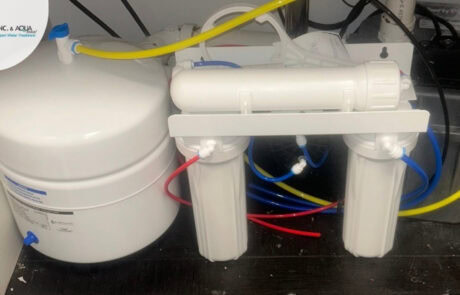
A small pump or the line pressure drives the flow through a membrane with extremely fine pores; the rejected stream runs to a drain, so a connection to the sink drain is part of the installation. A lab test before and after is the reliable way to know what a particular system achieves, and the reject volume is worth asking about.
Chlorination: What the Installer Sets Up
Where a well carries iron, sulfur or microbes, injecting chlorine is a long-established approach; time in the tank is what makes the reaction complete. The final stage polishes taste and removes what remains of the disinfectant; dosing is not a do-it-yourself guess.
Scope of a System: Choosing the Footprint
Everything inside the building sees treated flow when equipment sits at the entry; the flow at the entry is worth measuring before ordering. Many households combine both: a main-line device for scale and a sink model for taste, and the two approaches work well together.
Peak Demand Math: What Undersizing Looks Like
The size of the housing and the volume of media set how much a system can handle, along with the hardness or iron level on the lab report. Equipment that is too small works harder and wears out sooner; ask to see the numbers behind the recommendation.
Space and Connections – Planning for Service Access
A bypass lets the household isolate a unit without shutting off the whole supply; chlorine feed pumps and contact tanks add their own requirements. Checking with the local office is sensible before anything is cut or glued, and clear labels on valves help the next person.
Two Starting Points – Raw Groundwater Versus Treated
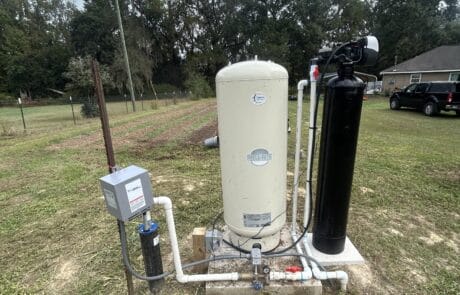
City lines usually deliver a steady, disinfected supply, so the complaints tend to be taste and scale; wells also bring a pump and a pressure tank into the plan. A quick description of the plumbing path is enough to start the right conversation; mention the source on the first call.
Weather and the Equipment Room: Planning Before the Season
Electronic valves keep time with the power, so a clock that resets can trigger recharges at odd hours, and a surge protector on the outlet is sensible protection for the electronics. Silt in a housing, a wet motor or a corroded joint can turn a repair into a replacement; write down the shutoff locations.
Living With the Equipment – Reaching the Controls
A recharge brings gurgling and flowing noises for a spell, usually at a scheduled hour, and a level pad keeps tanks from shifting. Some owners build a small enclosure, though it must not block air or access, and the installer can suggest a layout.
Upgrading What Is Already There: Planning a Sensible Sequence
Inherited hardware is worth examining before anything new is added, which helps weigh a repair against a new unit. Mixing parts from different makers is possible, though compatibility needs checking, and old manuals are worth saving.
Equipment for Operations – Coordinating With Maintenance
Larger buildings may need several tanks and manifolds, not one household unit; a duplex arrangement keeps soft supply flowing through each recharge. Commercial owners usually want service records, so the system should make them easy to keep, and the provider can supply those if asked.
Routine Care: What Gets Neglected
Resin beads age slowly, and cartridges and pre-filters age quickly; keep the paperwork in one place. Any change from how the system used to behave is the cue to check it, and a retest confirms the numbers.
The Second Sample: Tracking Performance
A sample collected after the system is running shows whether the problem was solved; schedule it when the system goes in. A result that falls short is information, and it points to what to add or change; dates on everything keep the record clear.
Where Hardware Stops: Misuse and Misfit
No single device removes every substance, and a pitch that one box covers everything deserves doubt; read the data sheet, not just the front of the box. A provider unwilling to discuss limits is one to think twice about, and a plain no is sometimes the most useful answer.
Comparing Proposals – Everything in Writing
- Which readings on the report are meant to change, and which are not expected to, and what stays the same afterward.
- Where will the drain, the power and the bypass go, and what will be cut or moved, and how can questions be raised afterward.
- What does a retest look like, and when is it scheduled, and what does it say about future servicing.
Talking It Through: Describe the Problem First
Phone Ackuritlabs And Aqua Systems at 850-616-2634 to ask what a sensible first step would be for your supply.
Bringing It Together – Upkeep Keeps It Working
Good outcomes come from habits worth repeating: testing first, buying second and checking afterward; this page on Water Treatment Company in Greenville Florida is a starting point, and the details of each property decide the rest. The number to call is 850-616-2634, and the conversation is the first step; the call goes quickly.
Verified

Verified
Verified
Verified
Verified