Shopping for Water Filtration in Blountstown Florida?
Equipment gets chosen to fix a measured problem, and the fix is only as good as the diagnosis behind it; the sections below put the options in plain language.
Phone Ackuritlabs And Aqua Systems at 850-616-2634 to ask how an installation is planned.
Diagnosis First: a Lab Number Beats a Guess
A smell, a stain or a taste is a symptom, and the symptom alone rarely identifies the cure; a sample sent to a laboratory turns a guess into a figure. Anyone without a recent report can usually be pointed to a suitable panel first; skipping ahead is where most mismatches begin.
Resin Tanks: a Bed of Beads and a Brine Tank
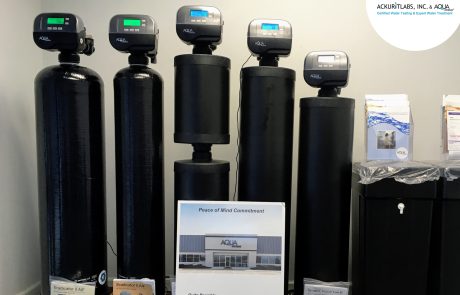
Hardness minerals stick to a charged resin, which swaps them for sodium or potassium ions, and the stored brine is topped up with salt as needed. Scale buildup on heaters, kettles and shower heads slows down where hardness has been removed, and it will not change the taste of the supply on its own.
Salt-Free Conditioners: No Drain, No Salt, Different Results
The minerals stay in the supply, but the device nudges them toward forming less scale on surfaces; people choose these devices to avoid salt, brine discharge and a drain connection. Expect scale to be reduced rather than eliminated, and expect no change in how soap lathers; asking for a plain description of the outcome avoids disappointment.
Activated Carbon – Contact Time and Capacity
Carbon holds onto certain compounds as supply passes through, which cuts chlorine taste and some odors, and the lab or the utility report can say. Contact time and flow rate affect results, and a unit pushed too hard performs worse; a pre-filter often extends the life of the carbon.
Housings and Replaceable Elements: Reading the Micron Number
Particle filters are the first stage in many systems, catching whatever would clog the rest; the rating, given in microns, states how small a particle the element is built to catch. A carbon cartridge installed in the same housing style handles taste while the sediment unit handles grit, and a pressure gauge on each side of the housing makes that visible.
Drinking Supply Upgrades – Storage Tank, Faucet and Drain
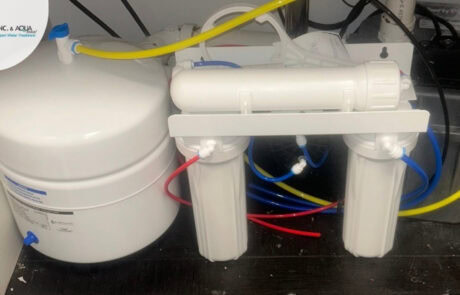
Dissolved solids stay on one side of the membrane and get flushed away; compact units fit under a sink and serve a single tap. The reduction achieved depends on membrane condition, pressure and what is in the feed, and a membrane may last for a long stretch if it is protected.
Chlorination: Why Dose Control Matters
A chlorine injector meters a small amount of disinfectant into the line ahead of a holding tank; time in the tank is what makes the reaction complete. The final stage polishes taste and removes what remains of the disinfectant, and chemical equipment is installed and set up with care.
Point of Entry Versus Point of Use – Matching Scope to Need
Equipment where the supply enters the building protects all the plumbing downstream, and the machinery needs floor space near the main shutoff. Where only one fixture matters, a compact installation avoids treating the whole house; ask for a simple diagram of the plan.
Choosing a Capacity – Pressure Drop and Pace
Treating the household's peak demand, not its average, keeps pressure from dropping; a unit that is too small shortens the time between regenerations. Oversizing has drawbacks too, since idle media can foul and extra tanks need space, and an installer should explain why a particular size was chosen.
Space and Connections: Tying Into Existing Lines
Shutoffs on both sides of a unit make servicing simple; the installer plans the route up front. Whoever does the installation should be able to say what the local rules ask for; a tidy install is easier to maintain.
What Changes by Source: Planning Around the Source
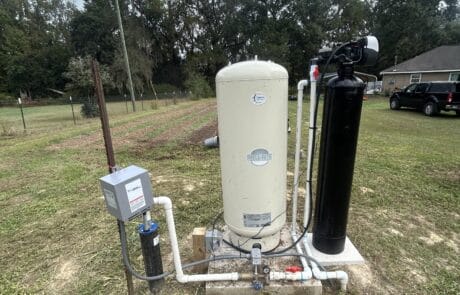
A well has no utility between it and the tap, so equipment often handles more of the load, and equipment has to work with the pump's pressure and flow. A quick description of the plumbing path is enough to start the right conversation, and a lab report removes most of the guesswork.
Weather and the Equipment Room: What to Check Afterward
Electronic valves keep time with the power, so a clock that resets can trigger recharges at odd hours, and a surge protector on the outlet is sensible protection for the electronics. If floodwater covered the wellhead, the supply itself needs a fresh lab sample; write down the shutoff locations.
Living With the Equipment – Reaching the Controls
Pumps and metering equipment hum when they work, so placement matters for bedrooms and offices; a garage, a utility closet or a pump house is the usual home. Leaving room to open lids, change cartridges and read gauges makes upkeep a quick job, and the installer can suggest a layout.
Replacement and Add-Ons: Planning a Sensible Sequence
Equipment bought long ago was chosen for a supply that may have changed since, and the readings guide whether to repair, keep or replace. New components usually have to fit the pipe sizes, the pressure and the drain already in place; ask for a plain list of what changes and what stays.
Larger Buildings and Heavier Demand – Keeping Service Running
Business equipment is sized for higher flows and often arranged in pairs so one tank can work while the other recharges; the survey of the site comes first. Written procedures and a labeled schematic make handovers between staff smoother; ask what monitoring the equipment offers.
Routine Care: What Gets Neglected
Resin beads age slowly, and cartridges and pre-filters age quickly; the manual lists intervals, though a heavy load shortens them. Bad smells from a filter housing mean it has gone too long, and a retest confirms the numbers.
Verifying What Changed: Before and After Side by Side
Nothing beats a repeat panel for showing whether the readings moved, which matters for cartridges and media that wear. If a reading is still high, the report guides the next adjustment; store copies where they can be found.
What Equipment Cannot Do – Read the Fine Print
Marketing language tends to be broader than what a product actually does; read the data sheet, not just the front of the box. A fair provider will tell you when equipment is not the fix, or not the whole fix, and a plain no is sometimes the most useful answer.
What to Ask at the Door: Scope, Parts and Follow-Up
- What does the proposal assume about hardness, iron and chlorine, and where did those figures come from, and the proposal should say so on paper.
- Who installs the equipment, and who services it after the job is done; ask for a copy of the manuals too.
- Where should the paperwork for the system be stored; each of these is worth asking.
Talking It Through: Describe the Problem First
Contact Ackuritlabs And Aqua Systems at 850-616-2634 and describe the house, the plumbing and what you want changed.
What to Remember: Test, Choose, Install, Confirm
The reliable path runs from a lab figure, through a sensible choice of equipment, to a retest that shows the change, because each property in Blountstown Florida has its own story, whatever any page says about Water Filtration. The number to call is 850-616-2634, and the conversation is the first step; mention whether the supply is a well or a utility line.
Verified

Verified
Verified
Verified
Verified