Weighing Options for Commercial Water Softener Installation for a Property in Florida Panhandle?
A treatment system is a tool for one job, so the job has to be named before the tool is picked; read on for how the pieces fit together.
Call Ackuritlabs And Aqua Systems at 850-616-2634 to talk through what the tap has been doing.
Where Treatment Begins: a Lab Number Beats a Guess
Orange stains, chalky scale and a swampy smell can each have a separate cause, and each calls for different gear, and the figure is what a provider uses to size and pick the unit. Anyone without a recent report can usually be pointed to a suitable panel first; the equipment decision waits until the numbers are in.
Taking Out Hardness: Regeneration in Plain Terms
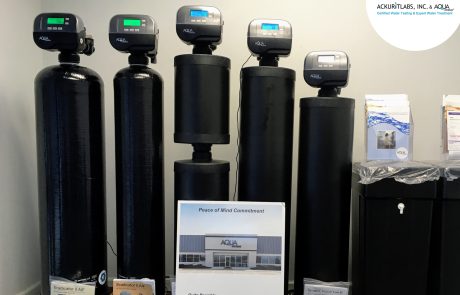
The core of a standard softener is a resin bed that exchanges hardness minerals for a softer ion; a control valve decides when to regenerate by clock or by usage. Softened supply leaves less scale on fixtures, glass and heating elements; it is not meant to filter out bacteria or chemicals.
Salt-Free Conditioners: an Honest Comparison
These devices work on how scale sticks, and they do not strip the minerals out, which suits some households and some local rules. Because the minerals remain, soap and shampoo behave as they would on hard supply; ask what the device will not do.
The Charcoal Option: Chlorine, Odors and Organic Traces
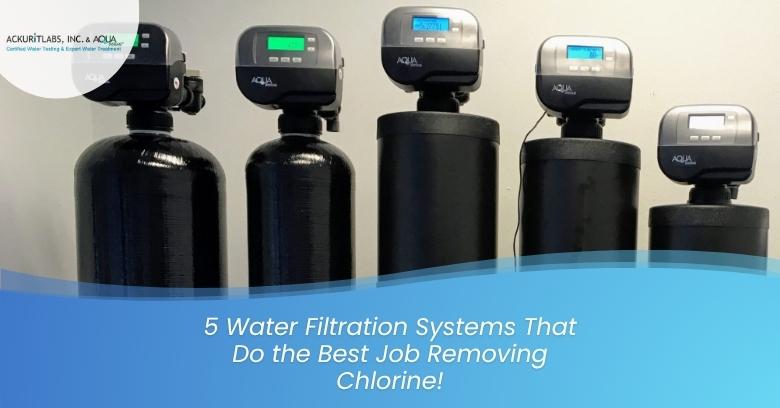
Porous carbon traps many organic molecules and chlorine on its surfaces as flow moves across them; it helps to know what the utility adds. A saturated filter can release what it captured, which is why change schedules matter, and the provider can estimate a schedule.
The Filter Under the Cap – Catching Grit Before It Travels On
A housing on the line holds a cartridge that screens out particles above a chosen size; a series of coarse then fine elements spreads the load. Carbon cartridges, including carbon block types, often sit downstream of the sediment stage; replacements are sold by size, so note the model.
Reverse Osmosis: Where It Sits and What It Wastes
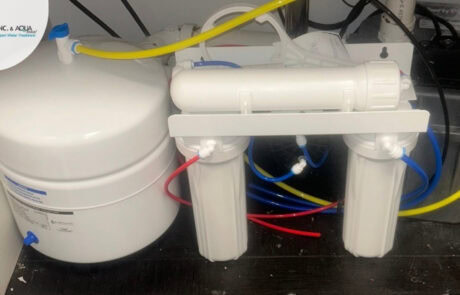
Pressure pushes the supply against a semipermeable membrane, and most dissolved material is held back, while larger units serve whole buildings. A lab test before and after is the reliable way to know what a particular system achieves; a leak sensor is a sensible add-on.
Treating Iron, Sulfur and Microbes: a Metering Pump and a Retention Tank
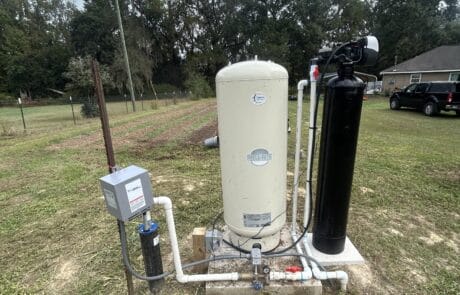
A chlorine injector meters a small amount of disinfectant into the line ahead of a holding tank; the chlorine oxidizes iron and sulfide into forms that can be filtered out. Residual chlorine has to be removed afterward, and a carbon filter normally takes that job; chemicals are stored and handled according to the label.
Scope of a System: Planning the Pipe Run
Everything inside the building sees treated flow when equipment sits at the entry; scale, iron and chlorine are the usual reasons to go this route. Where only one fixture matters, a compact installation avoids treating the whole house; a layout on paper avoids surprises.
Flow Rate and Capacity: What Undersizing Looks Like
Ratings printed on the label describe the equipment, and the installer matches them to the building; a unit that is too small shortens the time between regenerations. Oversizing has drawbacks too, since idle media can foul and extra tanks need space, and an installer should explain why a particular size was chosen.
Practical Requirements – Planning for Service Access
Shutoffs on both sides of a unit make servicing simple, and electrical needs vary from a plug-in transformer to a dedicated circuit. Checking with the local office is sensible before anything is cut or glued, and clear labels on valves help the next person.
Wells Versus City Lines: Planning Around the Source
A well has no utility between it and the tap, so equipment often handles more of the load, and equipment has to work with the pump's pressure and flow. Equipment picked from a neighbor's experience may not suit a different source; neighbors on the same aquifer can still differ.
Storms and Power Interruptions – Resetting the Clock and the Valve
Electronic valves keep time with the power, so a clock that resets can trigger recharges at odd hours; checking the time and the settings after power returns takes a minute. Silt in a housing, a wet motor or a corroded joint can turn a repair into a replacement; write down the shutoff locations.
Living With the Equipment – Reaching the Controls
Compressors and pumps are the noisiest parts of larger systems, and they normally sit in a mechanical space, and a level pad keeps tanks from shifting. Sunlight can damage clear housings and warm the supply, so shade is sensible outdoors; a tank that cannot get through a doorway is a common surprise.
Inherited Hardware – Keep, Repair or Replace
Older units may still work but have worn parts, such as seals, valves, resin or membranes, which helps weigh a repair against a new unit. Adding a stage to an existing setup requires attention to order, flow rate and pressure drop; photographs of the current setup speed up the first conversation.
When a Property Has Many Users – Keeping Service Running
Commercial installations are usually specified on paper, with flow rates and targets spelled out; a duplex arrangement keeps soft supply flowing through each recharge. A property manager benefits from a maintenance plan that lists tasks, intervals and who does them; ask what monitoring the equipment offers.
Upkeep: What Gets Neglected
Treatment is not a one-time purchase, since something wears out or runs low on every system; a label on each housing with the install date helps. Any change from how the system used to behave is the cue to check it, and a service call beats a failed system.
Closing the Loop: When to Retest
Comparing a new lab report against the original is how a household confirms the hardware did its job, and the lab can run the identical methods again. Treatment can reduce certain items without eliminating them, and the report shows by how much; a short note on the equipment installed completes the record.
What Equipment Cannot Do: No Single Device Fixes Everything
No single device removes every substance, and a pitch that one box covers everything deserves doubt; ask for the specific substances a product addresses. A fair provider will tell you when equipment is not the fix, or not the whole fix, and the same standard applies to anything written on this page.
Questions for a Provider: Details That Separate Good Plans
- What does the proposal assume about hardness, iron and chlorine, and where did those figures come from; ask for the reasoning in writing.
- Where will the drain, the power and the bypass go, and what will be cut or moved; get the details itemized.
- What signs should prompt a call before the next scheduled check; each of these is worth asking.
Planning a System: Bring What You Know
Dial Ackuritlabs And Aqua Systems at 850-616-2634 to go over the lab report and the symptoms at your tap.
Pulling the Threads: Test, Choose, Install, Confirm
A dependable setup follows a sequence: measure the supply, pick equipment to suit, install it carefully and test again; this page on Commercial Water Softener Installation in Florida Panhandle is a starting point, and the details of each property decide the rest. Call 850-616-2634 to reach Ackuritlabs And Aqua Systems and talk over your situation, and share what the lab report shows.