Need Water Softening Service in Gadsden County Florida?
A treatment system is a tool for one job, so the job has to be named before the tool is picked, and the sections below explain how the common options differ.
Speak with Ackuritlabs And Aqua Systems at 850-616-2634 and describe the stains, scale or smells you want gone.
The Step Ahead of the Purchase: a Lab Number Beats a Guess
Three households with the same complaint can need three different systems, because the underlying chemistry differs, which keeps the proposal tied to evidence. A first conversation commonly ends with advice on what to sample before the next step, and the choice of equipment follows once the numbers arrive.
Ion Exchange: a Bed of Beads and a Brine Tank
Inside the tank, tiny resin beads attract the minerals that cause scale and give up sodium or potassium in return; when the beads fill up, a brine rinse flushes the captured minerals to a drain. Less mineral reaching the pipes also means less deposit inside them; it is not meant to filter out bacteria or chemicals.
Scale Control Without Salt – Setting Expectations
A salt-free unit does not remove calcium or magnesium; it alters how those minerals behave; people choose these devices to avoid salt, brine discharge and a drain connection. Anyone expecting the soft feel of a true softener should know the two are different things; ask what the device will not do.
The Charcoal Option: Matching Carbon to the Target
Surfaces inside the carbon grab onto particular chemicals, leaving a cleaner taste behind; it helps to know what the utility adds. Contact time and flow rate affect results, and a unit pushed too hard performs worse; a taste that creeps back is the usual reminder.
Housings and Replaceable Elements – Catching Grit Before It Travels On
The simplest way to protect a pump, a softener or a fixture is usually a sediment screen ahead of it, and the sequence is part of the design. The installer chooses which element goes first, because a clogged first stage starves the rest, and a pressure gauge on each side of the housing makes that visible.
Drinking Supply Upgrades – Storage Tank, Faucet and Drain
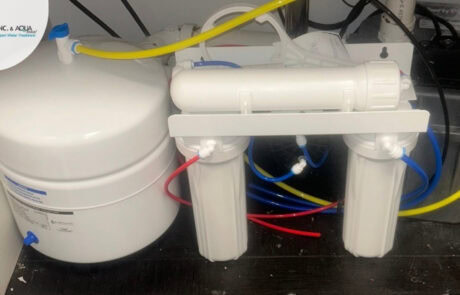
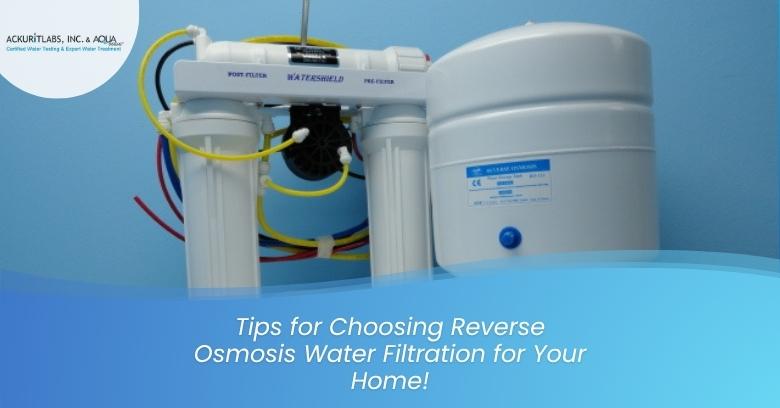
Dissolved solids stay on one side of the membrane and get flushed away; the rejected stream runs to a drain, so a connection to the sink drain is part of the installation. Reverse osmosis units reduce many dissolved substances, though performance varies by model and by supply; ask for the maintenance schedule in writing.
Treating Iron, Sulfur and Microbes – the Carbon Stage Afterward
A metering pump feeds sodium hypochlorite into the flow, and a tank gives it time to react, and the dose is set from lab readings. After the contact tank, a carbon stage strips leftover chlorine so the tap smells clean, and chemical equipment is installed and set up with care.
Treating Everything or Just the Faucet: What Each Layout Covers
Everything inside the building sees treated flow when equipment sits at the entry; scale, iron and chlorine are the usual reasons to go this route. Where only one fixture matters, a compact installation avoids treating the whole house; a layout on paper avoids surprises.
Sizing: Gallons per Minute and Grains
Ratings printed on the label describe the equipment, and the installer matches them to the building; a bigger tank may be the practical answer. Equipment that is too small works harder and wears out sooner, and an installer should explain why a particular size was chosen.
Practical Requirements: Bypass Valves, Drains and Outlets
Shutoffs on both sides of a unit make servicing simple; a drain line, an air gap and a nearby outlet come with a softener. Permits or inspections can be required in some jurisdictions, depending on the work; leave room to open the tank lid and swap a cartridge.
Supply Source Matters – Pressure Tanks and Pumps
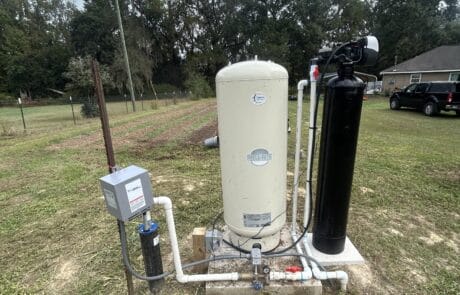
City lines usually deliver a steady, disinfected supply, so the complaints tend to be taste and scale, and equipment has to work with the pump's pressure and flow. Because the two sources differ, the same product can be a great fit on one and wasted on the other; photos of the existing equipment help.
Hurricane-Season Readiness – Resetting the Clock and the Valve
Pumps, injectors and controllers all depend on electricity, and an outage pauses every one of them; a quick look at the salt level and the drain line completes the check. Anything touched by flooding, including a well pump and chemical feed gear, deserves a professional look; photographs taken before the season make later comparisons easier.
Noise, Space and Appearance: Keeping the Area Tidy
Pumps and metering equipment hum when they work, so placement matters for bedrooms and offices; clear floor space around a tank makes salt loading simple. Equipment is easiest to live with when the controls and the drain sit where a person can reach them, and the installer can suggest a layout.
Replacement and Add-Ons: Test Before Deciding
Older units may still work but have worn parts, such as seals, valves, resin or membranes; a fresh lab panel shows whether the present system is still doing its job. Mixing parts from different makers is possible, though compatibility needs checking; nothing is replaced without a reason.
Commercial Systems: Duplex Tanks and Bigger Flows
Restaurants, offices and apartment buildings draw far more than a house, and the gear is scaled to match; the existing mechanical room often decides what fits. Commercial owners usually want service records, so the system should make them easy to keep, and the provider can supply those if asked.
Upkeep – Setting Reminders
Treatment is not a one-time purchase, since something wears out or runs low on every system; keep the paperwork in one place. Bad smells from a filter housing mean it has gone too long, and a service call beats a failed system.
Confirming the Result – Numbers, Not Impressions
Comparing a new lab report against the original is how a household confirms the hardware did its job, which matters for cartridges and media that wear. If a reading is still high, the report guides the next adjustment; store copies where they can be found.
What Equipment Cannot Do – Read the Fine Print
A softener will not make a supply taste different, and a carbon filter will not soften it; read the data sheet, not just the front of the box. Honest answers sound specific, and vague answers sound like a sales line; weigh each source on how specific it is.
What to Ask at the Door – Written Answers Preferred
- Which lab results is the proposal based on, and which items does it address, and the proposal should say so on paper.
- Which local rules apply to this installation, and who handles them; clear scope prevents surprises.
- Where should the paperwork for the system be stored, and what does it say about future servicing.
Getting Advice – Share Your Lab Report
Phone Ackuritlabs And Aqua Systems at 850-616-2634 to go over the lab report and the symptoms at your tap.
Pulling the Threads: Test, Choose, Install, Confirm
A dependable setup follows a sequence: measure the supply, pick equipment to suit, install it carefully and test again, and for Water Softening Service in Gadsden County Florida the first step is a conversation about the supply and the symptoms. The number to call is 850-616-2634, and the conversation is the first step; the details you share shape the advice.
Verified

Verified
Verified
Verified
Verified