Need Cartridge Filter Installation Throughout Greensboro Florida?
A treatment system is a tool for one job, so the job has to be named before the tool is picked, and the sections below cover sizing, setup and upkeep.
Dial Ackuritlabs And Aqua Systems at 850-616-2634 and describe the stains, scale or smells you want gone.
The Step Ahead of the Purchase: Why Skipping It Backfires
Equipment bought off a shelf may handle a different problem than the one at the tap; a sample sent to a laboratory turns a guess into a figure. Anyone without a recent report can usually be pointed to a suitable panel first, and the choice of equipment follows once the numbers arrive.
The Salt-Based Softener – What It Fixes and What It Leaves
Hardness minerals stick to a charged resin, which swaps them for sodium or potassium ions; when the beads fill up, a brine rinse flushes the captured minerals to a drain. Laundry and dishes tend to come out cleaner where the minerals have been removed; other equipment handles those jobs.
Scale Control Without Salt: an Honest Comparison
These devices work on how scale sticks, and they do not strip the minerals out; people choose these devices to avoid salt, brine discharge and a drain connection. Expect scale to be reduced rather than eliminated, and expect no change in how soap lathers; asking for a plain description of the outcome avoids disappointment.
Carbon Filtration – Granular Beds and Blocks
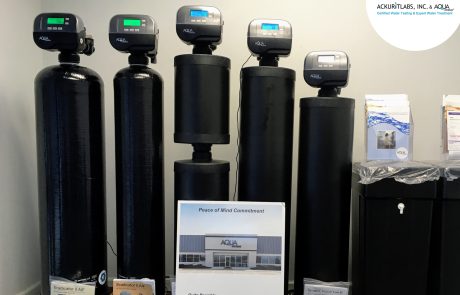
Porous carbon traps many organic molecules and chlorine on its surfaces as flow moves across them; each type of carbon targets specific compounds, so the media is picked to suit the finding. Contact time and flow rate affect results, and a unit pushed too hard performs worse; keeping a date on the housing is a good habit.
Housings and Replaceable Elements: Reading the Micron Number
A housing on the line holds a cartridge that screens out particles above a chosen size; the rating, given in microns, states how small a particle the element is built to catch. Putting stages in the wrong order shortens the life of the costlier cartridge; keep a spare cartridge on a shelf.
High-Pressure Polishing – Dissolved Solids Reduced
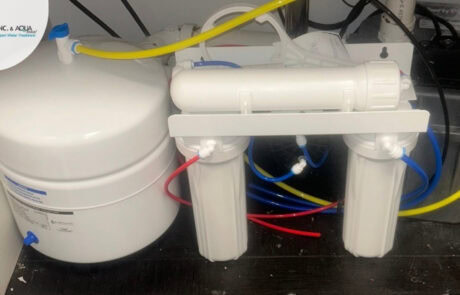
A membrane passes the liquid and rejects a large share of dissolved salts and other solids, and a small storage tank holds finished supply for the dedicated faucet. Pre-filters protect the membrane, and replacing them on time protects the system; ask for the maintenance schedule in writing.
Chlorination – Time, Dose and Cleanup
Where a well carries iron, sulfur or microbes, injecting chlorine is a long-established approach; time in the tank is what makes the reaction complete. After the contact tank, a carbon stage strips leftover chlorine so the tap smells clean; chemicals are stored and handled according to the label.
Where the Equipment Sits: What Each Layout Covers
Everything inside the building sees treated flow when equipment sits at the entry; scale, iron and chlorine are the usual reasons to go this route. Smaller units at one sink target what people drink, leaving the rest of the plumbing alone; a layout on paper avoids surprises.
Choosing a Capacity: Gallons per Minute and Grains
A unit has two numbers that matter: a peak flow rating and a capacity between cleanings; a bigger tank may be the practical answer. Equipment that is too small works harder and wears out sooner, and a vague one deserves a follow-up question.
Practical Requirements: Tying Into Existing Lines
Valves around the equipment allow it to be taken out of service in minutes; a drain line, an air gap and a nearby outlet come with a softener. Whoever does the installation should be able to say what the local rules ask for, and clear labels on valves help the next person.
What Changes by Source: Chlorine Added or Not
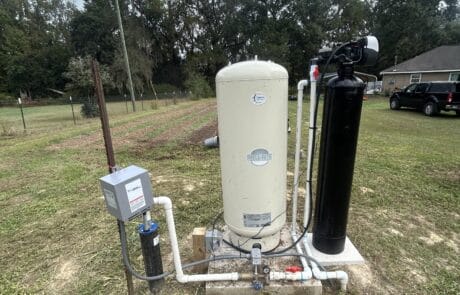
Raw well supply brings the chemistry of the ground straight to the plumbing; wells also bring a pump and a pressure tank into the plan. A carbon unit that suits a city line may be useless against the main problem of a well; mention the source on the first call.
Hurricane-Season Readiness: Planning Before the Season
Softeners and filters with electronic controllers can lose their settings in a long outage unless a backup battery holds them, and a surge protector on the outlet is sensible protection for the electronics. If floodwater covered the wellhead, the supply itself needs a fresh lab sample; photographs taken before the season make later comparisons easier.
Practical Details Homeowners Ask About – Reaching the Controls
A recharge brings gurgling and flowing noises for a spell, usually at a scheduled hour, which is worth thinking through before delivery. Leaving room to open lids, change cartridges and read gauges makes upkeep a quick job; a sketch of the space helps the planning.
An Older System in the Garage – Keep, Repair or Replace
A house may come with equipment that nobody remembers installing, so a look at the labels is the first step; the model number on the label usually leads to a manual and a parts list. Adding a stage to an existing setup requires attention to order, flow rate and pressure drop; ask for a plain list of what changes and what stays.
Treatment at Business Scale: Written Specifications
Larger buildings may need several tanks and manifolds, not one household unit; the existing mechanical room often decides what fits. Commercial owners usually want service records, so the system should make them easy to keep, and it supports any later troubleshooting.
Service Schedule: Salt, Cartridges and Media
Soft supply depends on a brine tank that is kept stocked; keep the paperwork in one place. Bad smells from a filter housing mean it has gone too long, and a retest confirms the numbers.
Confirming the Result: When to Retest
Comparing a new lab report against the original is how a household confirms the hardware did its job, which matters for cartridges and media that wear. If a reading is still high, the report guides the next adjustment; the file is useful for a future sale.
Where Hardware Stops: Misuse and Misfit
Each technology removes some things and leaves others, so a layered setup is common; compare the data sheet with your lab report. Anyone selling treatment equipment should be able to explain what it reduces and what it leaves alone, and a plain no is sometimes the most useful answer.
What to Ask at the Door – Written Answers Preferred
- What does the proposal assume about hardness, iron and chlorine, and where did those figures come from, and the proposal should say so on paper.
- What parts and consumables are needed, and how often do they need replacing; get the details itemized.
- What signs should prompt a call before the next scheduled check; follow-up is as important as the install.
A Call Before a Purchase: Bring What You Know
Contact Ackuritlabs And Aqua Systems at 850-616-2634 to ask what a sensible first step would be for your supply.
Bringing It Together: Test, Choose, Install, Confirm
The reliable path runs from a lab figure, through a sensible choice of equipment, to a retest that shows the change; this page on Cartridge Filter Installation in Greensboro Florida is a starting point, and the details of each property decide the rest. The number to call is 850-616-2634, and the conversation is the first step; the call goes quickly.
Verified

Verified
Verified
Verified
Verified