Weighing Options for Commercial Water Treatment Company Around Havana Florida?
A treatment system is a tool for one job, so the job has to be named before the tool is picked; the sections below describe what each option does and where it stops.
Call Ackuritlabs And Aqua Systems at 850-616-2634 to talk through what the tap has been doing.
The Step Ahead of the Purchase – Results Decide the Hardware
Orange stains, chalky scale and a swampy smell can each have a separate cause, and each calls for different gear; most reputable providers ask for results before quoting a system. Where no result exists yet, a provider can often suggest what to measure, and the choice of equipment follows once the numbers arrive.
Ion Exchange: Regeneration in Plain Terms
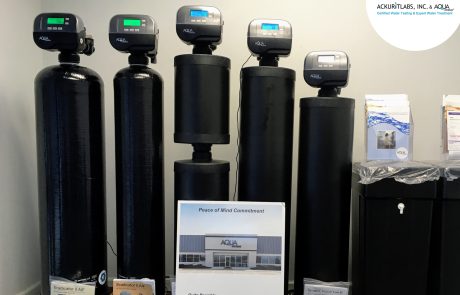
The beads in a softener hold hardness minerals until they are rinsed clean, and the stored brine is topped up with salt as needed. Softened supply leaves less scale on fixtures, glass and heating elements; it is not meant to filter out bacteria or chemicals.
Conditioning Instead of Softening – Changing How Scale Forms
These devices work on how scale sticks, and they do not strip the minerals out, and maintenance is limited to replacing the media on a schedule. The results are described best as less crust, not no crust; ask what the device will not do.
Activated Carbon: Chlorine, Odors and Organic Traces
Porous carbon traps many organic molecules and chlorine on its surfaces as flow moves across them, and the lab or the utility report can say. Contact time and flow rate affect results, and a unit pushed too hard performs worse; a taste that creeps back is the usual reminder.
Housings and Replaceable Elements: Sizes, Ratings and Swaps
The simplest way to protect a pump, a softener or a fixture is usually a sediment screen ahead of it; the rating, given in microns, states how small a particle the element is built to catch. Pressure falls as an element loads up, which is the practical signal to swap it; replacements are sold by size, so note the model.
Reverse Osmosis: Where It Sits and What It Wastes
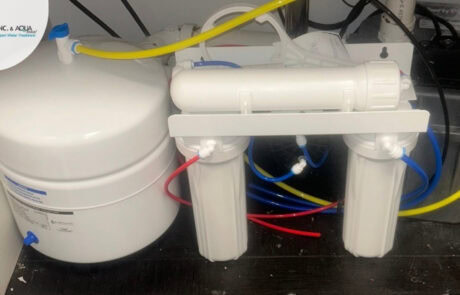
A small pump or the line pressure drives the flow through a membrane with extremely fine pores; compact units fit under a sink and serve a single tap. Pre-filters protect the membrane, and replacing them on time protects the system; the provider can explain what to expect for your supply.
Feeding Chlorine Into the Line: What the Installer Sets Up
A pump, a tank and a backwashing filter form the heart of a chlorination setup; the chlorine oxidizes iron and sulfide into forms that can be filtered out. Where the supply is meant for drinking, the leftover chlorine is filtered off; chemicals are stored and handled according to the label.
Whole-House or Single-Tap – Matching Scope to Need
Everything inside the building sees treated flow when equipment sits at the entry; scale, iron and chlorine are the usual reasons to go this route. Single-tap filters and membranes work where only drinking supply needs the extra step, and the two approaches work well together.
Peak Demand Math: Gallons per Minute and Grains
The size of the housing and the volume of media set how much a system can handle; a bigger tank may be the practical answer. Oversizing has drawbacks too, since idle media can foul and extra tanks need space, and an installer should explain why a particular size was chosen.
Space and Connections: Bypass Valves, Drains and Outlets
Valves around the equipment allow it to be taken out of service in minutes; the walk-through before work matters. Permits or inspections can be required in some jurisdictions, depending on the work, and clear labels on valves help the next person.
Private Source or Public Main – Pressure Tanks and Pumps
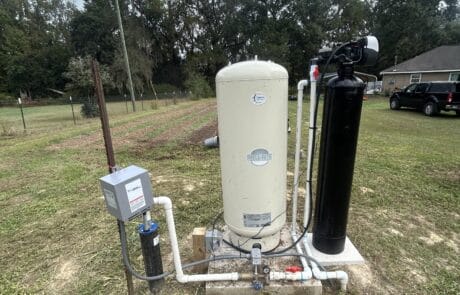
City lines usually deliver a steady, disinfected supply, so the complaints tend to be taste and scale; wells also bring a pump and a pressure tank into the plan. A quick description of the plumbing path is enough to start the right conversation, and a lab report removes most of the guesswork.
When the Lights Go Out – Resetting the Clock and the Valve
Pumps, injectors and controllers all depend on electricity, and an outage pauses every one of them, since a stuck valve is easier to catch early. A flooded system should be shut off and checked before use, since damage is not always visible; ask the installer what to do before a storm.
Practical Details Homeowners Ask About – Placement Decisions That Last
Pumps and metering equipment hum when they work, so placement matters for bedrooms and offices, and a level pad keeps tanks from shifting. Some owners build a small enclosure, though it must not block air or access, and the provider should ask about access.
Working With Existing Equipment: Test Before Deciding
Older units may still work but have worn parts, such as seals, valves, resin or membranes; the model number on the label usually leads to a manual and a parts list. Adding a stage to an existing setup requires attention to order, flow rate and pressure drop; photographs of the current setup speed up the first conversation.
Commercial Systems – Keeping Service Running
Commercial installations are usually specified on paper, with flow rates and targets spelled out, and a controller can log regeneration cycles. Written procedures and a labeled schematic make handovers between staff smoother, and it supports any later troubleshooting.
Keeping Equipment in Shape: Salt, Cartridges and Media
Filters eventually clog, and carbon eventually saturates, so each has a replacement interval; keep the paperwork in one place. Bad smells from a filter housing mean it has gone too long; the provider can inspect and adjust.
The Second Sample: Before and After Side by Side
Nothing beats a repeat panel for showing whether the readings moved, and the lab can run the identical methods again. Expect a number lower than before, not necessarily a number of zero; the file is useful for a future sale.
Where Hardware Stops: No Single Device Fixes Everything
Equipment performs within limits set by its design, the supply and the upkeep; read the data sheet, not just the front of the box. A fair provider will tell you when equipment is not the fix, or not the whole fix; weigh each source on how specific it is.
A Short Interview – Everything in Writing
- What does the proposal assume about hardness, iron and chlorine, and where did those figures come from; vague answers deserve a follow-up.
- Where will the drain, the power and the bypass go, and what will be cut or moved, and how can questions be raised afterward.
- What signs should prompt a call before the next scheduled check; write the answers down.
Talking It Through – Share Your Lab Report
Speak with Ackuritlabs And Aqua Systems at 850-616-2634 to find out how a system would be planned and sized.
Pulling the Threads: Matching Hardware to the Finding
Matching a device to a lab result, sizing it to the building and keeping up with upkeep is the whole recipe; whatever has brought you to read about Commercial Water Treatment Company near Havana Florida, a short call sorts out where to begin. To get started, reach Ackuritlabs And Aqua Systems at 850-616-2634; the details you share shape the advice.
Verified

Verified
Verified
Verified
Verified