Need Residential Water Softener Installation in Midway Florida?
Each piece of hardware on the market answers a particular complaint, and none answers all of them; read on for how the pieces fit together.
Phone Ackuritlabs And Aqua Systems at 850-616-2634 and say whether the supply is a well or a city line.
Diagnosis First: Naming the Target
Orange stains, chalky scale and a swampy smell can each have a separate cause, and each calls for different gear, and the figure is what a provider uses to size and pick the unit. If the history of the supply is unknown, a baseline panel is the sensible opener, and a short delay beats replacing the wrong unit.
Resin Tanks – What It Fixes and What It Leaves
The beads in a softener hold hardness minerals until they are rinsed clean, and a salt or potassium brine recharges the bed on a schedule. Where a softener is sized correctly, white crust becomes much less of a chore; it is not meant to filter out bacteria or chemicals.
Scale Control Without Salt: What They Do and Do Not Do
The minerals stay in the supply, but the device nudges them toward forming less scale on surfaces, though results vary with the water and the model. Because the minerals remain, soap and shampoo behave as they would on hard supply, and a good provider explains that before the purchase.
The Charcoal Option – Contact Time and Capacity
Surfaces inside the carbon grab onto particular chemicals, leaving a cleaner taste behind, and ordinary carbon handles free chlorine more easily than chloramine. A saturated filter can release what it captured, which is why change schedules matter, and the maker's change interval is a guide, not a promise.
Canisters on the Line: Reading the Micron Number
Grit and flakes get stopped by a pleated or wound element sitting in a clear or opaque canister; a series of coarse then fine elements spreads the load. The installer chooses which element goes first, because a clogged first stage starves the rest, and a pressure gauge on each side of the housing makes that visible.
Membrane Systems: Pressure, Membrane and Reject Stream
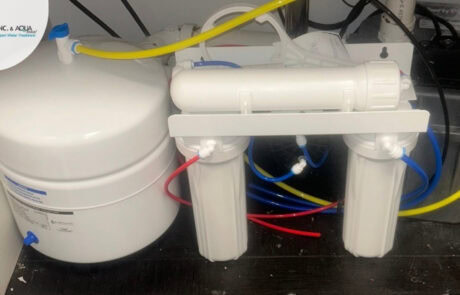
A small pump or the line pressure drives the flow through a membrane with extremely fine pores, while larger units serve whole buildings. A lab test before and after is the reliable way to know what a particular system achieves, and the reject volume is worth asking about.
Injectors and Contact Tanks: a Metering Pump and a Retention Tank
Where a well carries iron, sulfur or microbes, injecting chlorine is a long-established approach; the chlorine oxidizes iron and sulfide into forms that can be filtered out. Where the supply is meant for drinking, the leftover chlorine is filtered off; dosing is not a do-it-yourself guess.
Treating Everything or Just the Faucet: Planning the Pipe Run
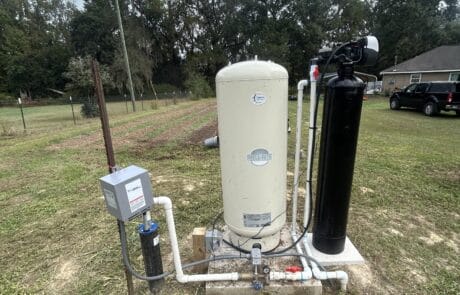
Point-of-entry installations deal with problems that affect the entire plumbing system, and the machinery needs floor space near the main shutoff. Single-tap filters and membranes work where only drinking supply needs the extra step; ask for a simple diagram of the plan.
Peak Demand Math: Gallons per Minute and Grains
A unit has two numbers that matter: a peak flow rating and a capacity between cleanings, along with the hardness or iron level on the lab report. Oversizing has drawbacks too, since idle media can foul and extra tanks need space, and a vague one deserves a follow-up question.
Plumbing, Power and Drain Needs: the Checklist Behind a Clean Install
Shutoffs on both sides of a unit make servicing simple; a drain line, an air gap and a nearby outlet come with a softener. Codes affect drain connections, backflow protection and the placement of equipment; leave room to open the tank lid and swap a cartridge.
Supply Source Matters: Chlorine Added or Not
Private wells deliver untreated groundwater, which can carry iron, sulfur, hardness and microbes; sediment and iron tend to be the early concerns. Because the two sources differ, the same product can be a great fit on one and wasted on the other; neighbors on the same aquifer can still differ.
When the Lights Go Out – Resetting the Clock and the Valve
A unit left without power may skip a scheduled recharge, which leaves the media tired when flow resumes; a quick look at the salt level and the drain line completes the check. Silt in a housing, a wet motor or a corroded joint can turn a repair into a replacement; write down the shutoff locations.
Where Everything Goes: Garages, Closets and Mechanical Rooms
Compressors and pumps are the noisiest parts of larger systems, and they normally sit in a mechanical space, and the location is chosen to keep lines short and service easy. Some owners build a small enclosure, though it must not block air or access; measure doors and hallways as well.
Working With Existing Equipment – Reading Old Labels
Inherited hardware is worth examining before anything new is added, and the provider can often read the date code. Mixing parts from different makers is possible, though compatibility needs checking; nothing is replaced without a reason.
Equipment for Operations: Written Specifications
Restaurants, offices and apartment buildings draw far more than a house, and the gear is scaled to match; the existing mechanical room often decides what fits. Training the people on site about shutoffs and alarms prevents small problems from growing, and the provider can supply those if asked.
Keeping Equipment in Shape: What Gets Neglected
Soft supply depends on a brine tank that is kept stocked; the manual lists intervals, though a heavy load shortens them. Bad smells from a filter housing mean it has gone too long, and a service call beats a failed system.
Confirming the Result: Before and After Side by Side
The most reliable verification is a fresh panel run on the same items as before; schedule it when the system goes in. Expect a number lower than before, not necessarily a number of zero, and keeping both reports together tells the story.
Expectations Worth Setting – Matching Promises to Physics
A softener will not make a supply taste different, and a carbon filter will not soften it; ask how that is demonstrated. A provider unwilling to discuss limits is one to think twice about, and the same standard applies to anything written on this page.
Questions for a Provider: Points Worth Raising
- Does the plan name the substances it targets, rather than speaking in general terms; ask for the reasoning in writing.
- Which local rules apply to this installation, and who handles them; a walk-through at the end is reasonable to ask for.
- How will you know the equipment is working a few months from now; each of these is worth asking.
Talking It Through: Questions Are the Starting Point
Contact Ackuritlabs And Aqua Systems at 850-616-2634 to ask what a sensible first step would be for your supply.
What to Remember – the Sequence That Works
Good outcomes come from habits worth repeating: testing first, buying second and checking afterward, and everything above about Residential Water Softener Installation in Midway Florida is general background, not a verdict. To get started, reach Ackuritlabs And Aqua Systems at 850-616-2634; the call goes quickly.
Verified

Verified
Verified
Verified
Verified