Weighing Options for Water Treatment Company for a Property in Midway Florida?
Each piece of hardware on the market answers a particular complaint, and none answers all of them; read on for how the pieces fit together.
Phone Ackuritlabs And Aqua Systems at 850-616-2634 and say whether the supply is a well or a city line.
Where Treatment Begins – Reading the Problem Correctly
A smell, a stain or a taste is a symptom, and the symptom alone rarely identifies the cure, and the figure is what a provider uses to size and pick the unit. Even a brief description of the symptoms helps decide which measurements to order, and the choice of equipment follows once the numbers arrive.
Taking Out Hardness – What It Fixes and What It Leaves
A conventional softener passes the supply through a bed of resin beads that grab calcium and magnesium, and a salt or potassium brine recharges the bed on a schedule. Where a softener is sized correctly, white crust becomes much less of a chore, and it will not change the taste of the supply on its own.
Conditioning Instead of Softening – Changing How Scale Forms
Nothing is exchanged, so the lab number for hardness reads the same before and after; people choose these devices to avoid salt, brine discharge and a drain connection. A conditioner will not give the slick feel that a softened supply has in the shower; asking for a plain description of the outcome avoids disappointment.
The Charcoal Option – Granular Beds and Blocks
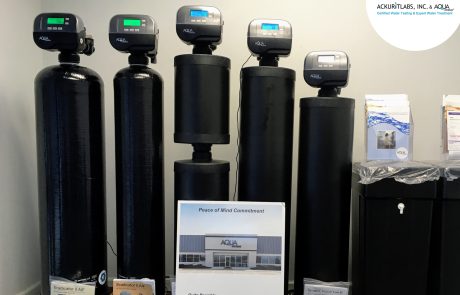
Surfaces inside the carbon grab onto particular chemicals, leaving a cleaner taste behind, and the lab or the utility report can say. Every carbon filter eventually fills up, so replacement or backwashing is part of owning one; keeping a date on the housing is a good habit.
The Filter Under the Cap: Keeping Spare Elements
Grit and flakes get stopped by a pleated or wound element sitting in a clear or opaque canister; the rating, given in microns, states how small a particle the element is built to catch. Pressure falls as an element loads up, which is the practical signal to swap it; replacements are sold by size, so note the model.
High-Pressure Polishing – Storage Tank, Faucet and Drain
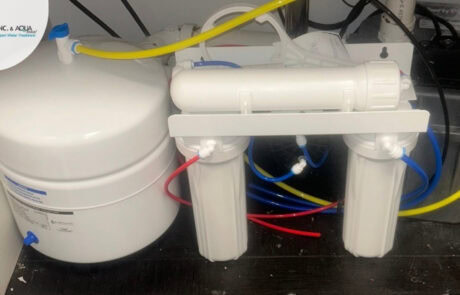
Pressure pushes the supply against a semipermeable membrane, and most dissolved material is held back; the rejected stream runs to a drain, so a connection to the sink drain is part of the installation. A lab test before and after is the reliable way to know what a particular system achieves, and the reject volume is worth asking about.
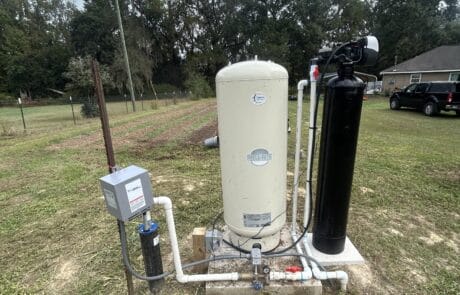
Treating Iron, Sulfur and Microbes: a Metering Pump and a Retention Tank
Where a well carries iron, sulfur or microbes, injecting chlorine is a long-established approach; the chlorine oxidizes iron and sulfide into forms that can be filtered out. After the contact tank, a carbon stage strips leftover chlorine so the tap smells clean, and chemical equipment is installed and set up with care.
Where the Equipment Sits: Planning the Pipe Run
Whole-house layouts put one set of equipment ahead of every fixture; scale, iron and chlorine are the usual reasons to go this route. A point-of-use unit serves a single faucet, usually the kitchen, and suits drinking and cooking; the provider can sketch where each unit would go.
Peak Demand Math: Room to Grow
Treating the household's peak demand, not its average, keeps pressure from dropping; the number of bathrooms and people is part of the calculation. A well-matched system suits the building rather than the biggest model on offer; a reasoned answer is a good sign.
Installation Details: Bypass Valves, Drains and Outlets
A bypass lets the household isolate a unit without shutting off the whole supply; the walk-through before work matters. Checking with the local office is sensible before anything is cut or glued, and access for servicing should be planned from the start.
Two Starting Points: Chlorine Added or Not
Supply from a public system arrives already disinfected, which changes what is left to fix; sediment and iron tend to be the early concerns. The provider needs to know which source feeds the house before suggesting anything; mention the source on the first call.
After an Outage: Planning Before the Season
Many controllers keep their program in memory for a short while, and then need to be set again, and the manual shows how to reset the controller. Anything touched by flooding, including a well pump and chemical feed gear, deserves a professional look, and the provider can describe what a post-storm check involves.
Practical Details Homeowners Ask About: Garages, Closets and Mechanical Rooms
Pumps and metering equipment hum when they work, so placement matters for bedrooms and offices, and the location is chosen to keep lines short and service easy. A tidy installation labels valves, supports the plumbing and keeps the area dry; a sketch of the space helps the planning.
Upgrading What Is Already There: Compatibility With Present Plumbing
Equipment bought long ago was chosen for a supply that may have changed since; a fresh lab panel shows whether the present system is still doing its job. Adding a stage to an existing setup requires attention to order, flow rate and pressure drop, and the installer should explain what is being kept.
Equipment for Operations: Boilers, Ice Machines and Kitchens
Commercial installations are usually specified on paper, with flow rates and targets spelled out; the existing mechanical room often decides what fits. Written procedures and a labeled schematic make handovers between staff smoother; ask what monitoring the equipment offers.
Keeping Equipment in Shape: Signs a Unit Needs Attention
Treatment is not a one-time purchase, since something wears out or runs low on every system; the manual lists intervals, though a heavy load shortens them. If stains come back, or the taste creeps back, something in the chain has used up its capacity; an annual look at the controls is sensible.
The Second Sample: Before and After Side by Side
A sample collected after the system is running shows whether the problem was solved, and the lab can run the identical methods again. If a reading is still high, the report guides the next adjustment; the file is useful for a future sale.
What Equipment Cannot Do: Questions for Any Seller
Equipment performs within limits set by its design, the supply and the upkeep; read the data sheet, not just the front of the box. If a proposal does not mention the lab results, ask how it was reached; nothing here replaces advice for your property.
Questions for a Provider: Points Worth Raising
- Is the recommended size tied to the lab figures and the household's flow; ask for the reasoning in writing.
- Which local rules apply to this installation, and who handles them; clear scope prevents surprises.
- What signs should prompt a call before the next scheduled check; each of these is worth asking.
Start the Conversation: Questions Are the Starting Point
Dial Ackuritlabs And Aqua Systems at 850-616-2634 to ask what a sensible first step would be for your supply.
The Short Version – Upkeep Keeps It Working
Every lasting installation rests on a clear diagnosis, a suitable size and regular care; whatever has brought you to read about Water Treatment Company near Midway Florida, a short call sorts out where to begin. The number to call is 850-616-2634, and the conversation is the first step, and say what you would like to change.
Verified

Verified
Verified
Verified
Verified