Looking for Water Treatment Across Waukeenah Corridor Area?
Matching the device to the finding is what separates a useful installation from a blind guess; the sections below describe what each option does and where it stops.
Dial Ackuritlabs And Aqua Systems at 850-616-2634 and say whether the supply is a well or a city line.
The Order of Operations: Naming the Target
Three households with the same complaint can need three different systems, because the underlying chemistry differs, and the figure is what a provider uses to size and pick the unit. Where no result exists yet, a provider can often suggest what to measure; the equipment decision waits until the numbers are in.
Taking Out Hardness: How the Resin Works
The beads in a softener hold hardness minerals until they are rinsed clean; when the beads fill up, a brine rinse flushes the captured minerals to a drain. Where a softener is sized correctly, white crust becomes much less of a chore; it is not meant to filter out bacteria or chemicals.
Conditioning Instead of Softening: No Drain, No Salt, Different Results
The minerals stay in the supply, but the device nudges them toward forming less scale on surfaces, which suits some households and some local rules. Expect scale to be reduced rather than eliminated, and expect no change in how soap lathers; ask what the device will not do.
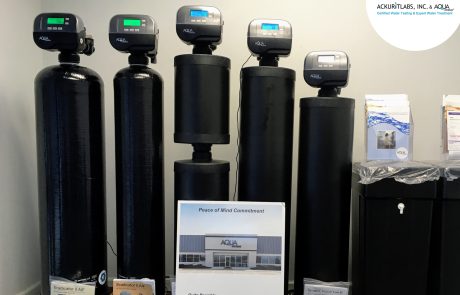
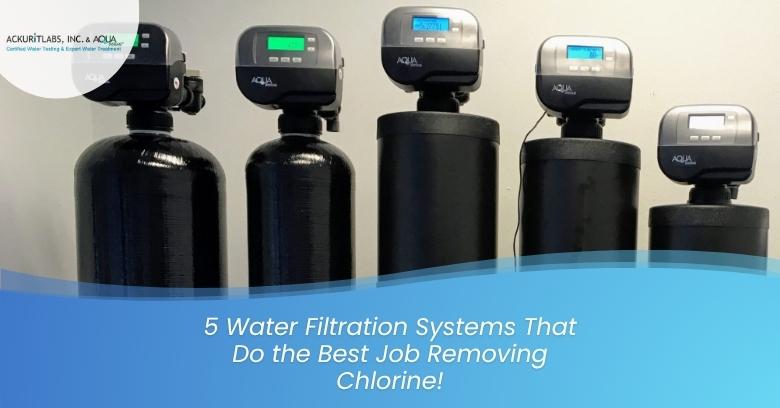
Activated Carbon: Chlorine, Odors and Organic Traces
Carbon holds onto certain compounds as supply passes through, which cuts chlorine taste and some odors, and ordinary carbon handles free chlorine more easily than chloramine. Carbon has a limited capacity, and once it is spent, it stops doing its job, and the provider can estimate a schedule.
Housings and Replaceable Elements: Keeping Spare Elements
The simplest way to protect a pump, a softener or a fixture is usually a sediment screen ahead of it, which lets each cartridge last longer. A carbon cartridge installed in the same housing style handles taste while the sediment unit handles grit; keep a spare cartridge on a shelf.
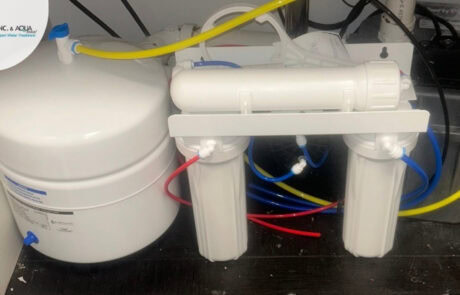
Reverse Osmosis: Pressure, Membrane and Reject Stream
A small pump or the line pressure drives the flow through a membrane with extremely fine pores; compact units fit under a sink and serve a single tap. The reduction achieved depends on membrane condition, pressure and what is in the feed, and a membrane may last for a long stretch if it is protected.
Chlorination: What the Installer Sets Up
The setup pairs a feed pump with a retention tank so the chlorine has time to work; time in the tank is what makes the reaction complete. Residual chlorine has to be removed afterward, and a carbon filter normally takes that job; dosing is not a do-it-yourself guess.
Whole-House or Single-Tap: What Each Layout Covers
A unit at the main line treats every tap, the shower, the washer and the water heater; scale, iron and chlorine are the usual reasons to go this route. Many households combine both: a main-line device for scale and a sink model for taste; ask for a simple diagram of the plan.
Peak Demand Math: Room to Grow
Equipment is rated by how fast supply can pass through it and by how much it can treat before servicing; high readings use up capacity faster. A well-matched system suits the building rather than the biggest model on offer; the sizing is not a mystery.
Space and Connections: Tying Into Existing Lines
Valves around the equipment allow it to be taken out of service in minutes; chlorine feed pumps and contact tanks add their own requirements. Local plumbing and electrical rules may apply, and the installer is the one to know them, and access for servicing should be planned from the start.
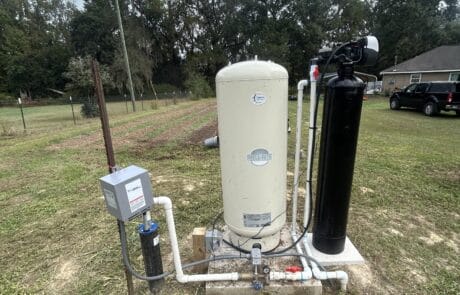
Two Starting Points – Raw Groundwater Versus Treated
City lines usually deliver a steady, disinfected supply, so the complaints tend to be taste and scale, and equipment has to work with the pump's pressure and flow. A quick description of the plumbing path is enough to start the right conversation, and a lab report removes most of the guesswork.
Weather and the Equipment Room – Resetting the Clock and the Valve
Electronic valves keep time with the power, so a clock that resets can trigger recharges at odd hours, and a surge protector on the outlet is sensible protection for the electronics. Anything touched by flooding, including a well pump and chemical feed gear, deserves a professional look; keep manuals and settings notes together.
Day-to-Day Presence: Keeping the Area Tidy
Compressors and pumps are the noisiest parts of larger systems, and they normally sit in a mechanical space, which is worth thinking through before delivery. A tidy installation labels valves, supports the plumbing and keeps the area dry; a tank that cannot get through a doorway is a common surprise.
An Older System in the Garage – Keep, Repair or Replace
A house may come with equipment that nobody remembers installing, so a look at the labels is the first step; a fresh lab panel shows whether the present system is still doing its job. New components usually have to fit the pipe sizes, the pressure and the drain already in place, and the installer should explain what is being kept.
Larger Buildings and Heavier Demand – Coordinating With Maintenance
Restaurants, offices and apartment buildings draw far more than a house, and the gear is scaled to match, and a drawing of the proposed layout is a reasonable request. Written procedures and a labeled schematic make handovers between staff smoother; ask what monitoring the equipment offers.
Maintenance Rhythm: What Gets Neglected
Resin beads age slowly, and cartridges and pre-filters age quickly; the manual lists intervals, though a heavy load shortens them. Bad smells from a filter housing mean it has gone too long; the provider can inspect and adjust.
The Second Sample: Tracking Performance
Measurements taken after setup show the change in black and white; a retest a few months in shows whether the system is holding. Expect a number lower than before, not necessarily a number of zero; store copies where they can be found.
What Equipment Cannot Do – Matching Promises to Physics
Equipment performs within limits set by its design, the supply and the upkeep; read the data sheet, not just the front of the box. If a proposal does not mention the lab results, ask how it was reached, and the same standard applies to anything written on this page.
A Short Interview: Points Worth Raising
- Is the recommended size tied to the lab figures and the household's flow, and what stays the same afterward.
- Which local rules apply to this installation, and who handles them; ask for a copy of the manuals too.
- Where should the paperwork for the system be stored; each of these is worth asking.
Getting Advice – One Call Sorts Out Next Steps
Contact Ackuritlabs And Aqua Systems at 850-616-2634 to ask what a sensible first step would be for your supply.
The Short Version: Next Steps
Matching a device to a lab result, sizing it to the building and keeping up with upkeep is the whole recipe, because each property in Waukeenah Corridor Area has its own story, whatever any page says about Water Treatment. Call 850-616-2634 to reach Ackuritlabs And Aqua Systems and talk over your situation; the details you share shape the advice.