Thinking About Whole House Water Filtration Installation Around Ochlockonee Bay Florida?
Matching the device to the finding is what separates a useful installation from a blind guess, and the sections below explain how the common options differ.
Dial Ackuritlabs And Aqua Systems at 850-616-2634 to talk through what the tap has been doing.
Where Treatment Begins: a Lab Number Beats a Guess
Equipment bought off a shelf may handle a different problem than the one at the tap; a sample sent to a laboratory turns a guess into a figure. A first conversation commonly ends with advice on what to sample before the next step; the equipment decision waits until the numbers are in.
Resin Tanks: Regeneration in Plain Terms
The beads in a softener hold hardness minerals until they are rinsed clean, and the stored brine is topped up with salt as needed. Scale buildup on heaters, kettles and shower heads slows down where hardness has been removed; other equipment handles those jobs.
Alternatives to the Brine Tank: What They Do and Do Not Do
Conditioners leave the hardness figure unchanged and change the shape of the crystals that form, and maintenance is limited to replacing the media on a schedule. The results are described best as less crust, not no crust, and it helps compare options fairly.
The Charcoal Option – Contact Time and Capacity
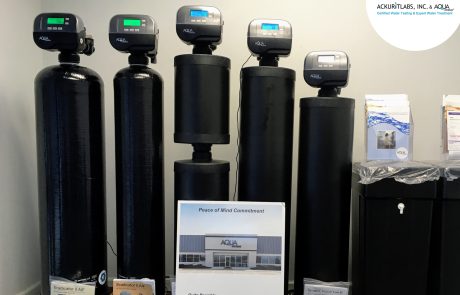
A carbon bed or block is the common answer when a city supply tastes or smells of disinfectant, and ordinary carbon handles free chlorine more easily than chloramine. Every carbon filter eventually fills up, so replacement or backwashing is part of owning one; a pre-filter often extends the life of the carbon.
The Filter Under the Cap: Sizes, Ratings and Swaps
The simplest way to protect a pump, a softener or a fixture is usually a sediment screen ahead of it, and the sequence is part of the design. A carbon cartridge installed in the same housing style handles taste while the sediment unit handles grit, and a pressure gauge on each side of the housing makes that visible.
Reverse Osmosis: Fair Expectations
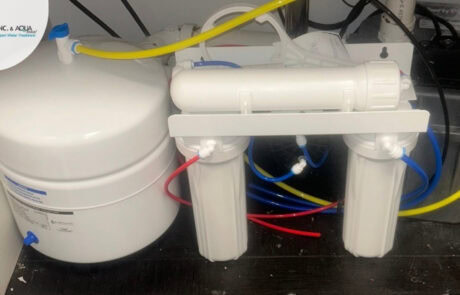
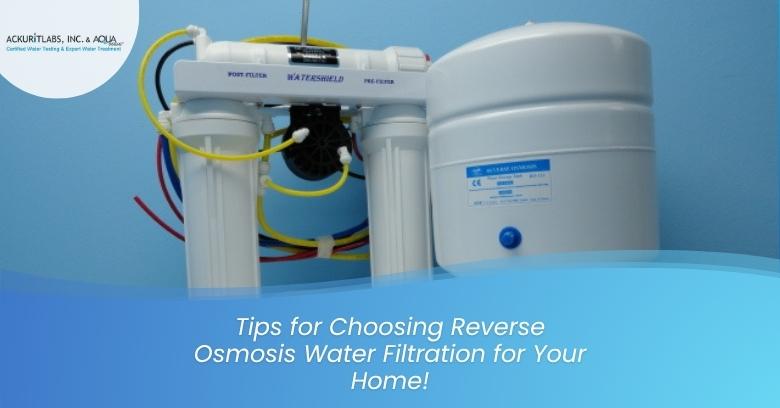
A small pump or the line pressure drives the flow through a membrane with extremely fine pores, and a small storage tank holds finished supply for the dedicated faucet. Pre-filters protect the membrane, and replacing them on time protects the system, and the reject volume is worth asking about.
Feeding Chlorine Into the Line: What the Installer Sets Up
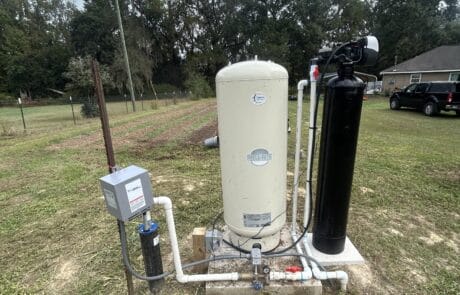
A chlorine injector meters a small amount of disinfectant into the line ahead of a holding tank; the tank is sized to the flow of the well. The final stage polishes taste and removes what remains of the disinfectant, and chemical equipment is installed and set up with care.
Scope of a System: What Each Layout Covers
Equipment where the supply enters the building protects all the plumbing downstream, and the machinery needs floor space near the main shutoff. A point-of-use unit serves a single faucet, usually the kitchen, and suits drinking and cooking; ask for a simple diagram of the plan.
Peak Demand Math – Pressure Drop and Pace
Treating the household's peak demand, not its average, keeps pressure from dropping; the number of bathrooms and people is part of the calculation. Equipment that is too small works harder and wears out sooner; ask to see the numbers behind the recommendation.
Plumbing, Power and Drain Needs: Tying Into Existing Lines
Good installations include a way to route flow around the unit when needed; a drain line, an air gap and a nearby outlet come with a softener. Whoever does the installation should be able to say what the local rules ask for; leave room to open the tank lid and swap a cartridge.
Two Starting Points: Different Problems, Different Gear
City lines usually deliver a steady, disinfected supply, so the complaints tend to be taste and scale, whereas chlorine and chloramine lead the list on a city line. A quick description of the plumbing path is enough to start the right conversation, and a lab report removes most of the guesswork.
After an Outage: What to Check Afterward
Softeners and filters with electronic controllers can lose their settings in a long outage unless a backup battery holds them, and a surge protector on the outlet is sensible protection for the electronics. A flooded system should be shut off and checked before use, since damage is not always visible; ask the installer what to do before a storm.
Practical Details Homeowners Ask About: Tanks, Hums and Cabinets
Pumps and metering equipment hum when they work, so placement matters for bedrooms and offices, and a level pad keeps tanks from shifting. Leaving room to open lids, change cartridges and read gauges makes upkeep a quick job; a tank that cannot get through a doorway is a common surprise.
Working With Existing Equipment – Keep, Repair or Replace
Many properties already have a tank, a filter housing or an under-sink unit, and the question is whether it still suits the supply; a fresh lab panel shows whether the present system is still doing its job. New components usually have to fit the pipe sizes, the pressure and the drain already in place; ask for a plain list of what changes and what stays.
Treatment at Business Scale: Duplex Tanks and Bigger Flows
Restaurants, offices and apartment buildings draw far more than a house, and the gear is scaled to match, and a controller can log regeneration cycles. Written procedures and a labeled schematic make handovers between staff smoother, and the provider can supply those if asked.
Service Schedule: Signs a Unit Needs Attention
Treatment is not a one-time purchase, since something wears out or runs low on every system; keep the paperwork in one place. Warning signs include a return of the old taste, scale reappearing and a drop in pressure; an annual look at the controls is sensible.
Proof After Installation – Numbers, Not Impressions
The most reliable verification is a fresh panel run on the same items as before; schedule it when the system goes in. A result that falls short is information, and it points to what to add or change; store copies where they can be found.
What Equipment Cannot Do – Matching Promises to Physics
No single device removes every substance, and a pitch that one box covers everything deserves doubt; ask for the specific substances a product addresses. A fair provider will tell you when equipment is not the fix, or not the whole fix; weigh each source on how specific it is.
What to Ask at the Door: Scope, Parts and Follow-Up
- What does the proposal assume about hardness, iron and chlorine, and where did those figures come from; a specific answer is what you want.
- How is the unit set up at the start, and what will you be shown before the crew leaves; clear scope prevents surprises.
- How will you know the equipment is working a few months from now; each of these is worth asking.
Talking It Through: Questions Are the Starting Point
Phone Ackuritlabs And Aqua Systems at 850-616-2634 to find out how a system would be planned and sized.
Bringing It Together: Test, Choose, Install, Confirm
The reliable path runs from a lab figure, through a sensible choice of equipment, to a retest that shows the change; this page on Whole House Water Filtration Installation in Ochlockonee Bay Florida is a starting point, and the details of each property decide the rest. The number to call is 850-616-2634, and the conversation is the first step; the call goes quickly.
Verified

Verified
Verified
Verified
Verified