Shopping for Water Filtration Throughout Perry Florida?
A treatment system is a tool for one job, so the job has to be named before the tool is picked; the sections below describe what each option does and where it stops.
Speak with Ackuritlabs And Aqua Systems at 850-616-2634 to ask how an installation is planned.
The Step Ahead of the Purchase: Why Skipping It Backfires
Equipment bought off a shelf may handle a different problem than the one at the tap, and the figure is what a provider uses to size and pick the unit. Even a brief description of the symptoms helps decide which measurements to order, and the choice of equipment follows once the numbers arrive.
Ion Exchange: How the Resin Works
Hardness minerals stick to a charged resin, which swaps them for sodium or potassium ions, and a salt or potassium brine recharges the bed on a schedule. Laundry and dishes tend to come out cleaner where the minerals have been removed, though a softener does little for iron staining beyond a modest level.
Conditioning Instead of Softening – Setting Expectations
These devices work on how scale sticks, and they do not strip the minerals out; they need no electricity in many designs. A conditioner will not give the slick feel that a softened supply has in the shower; asking for a plain description of the outcome avoids disappointment.
Taste and Odor Control – Granular Beds and Blocks
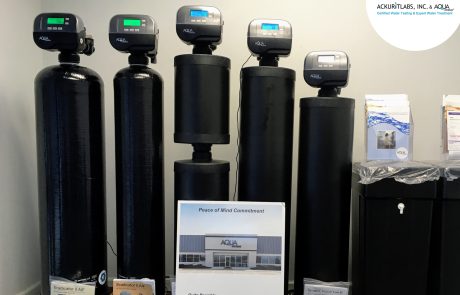
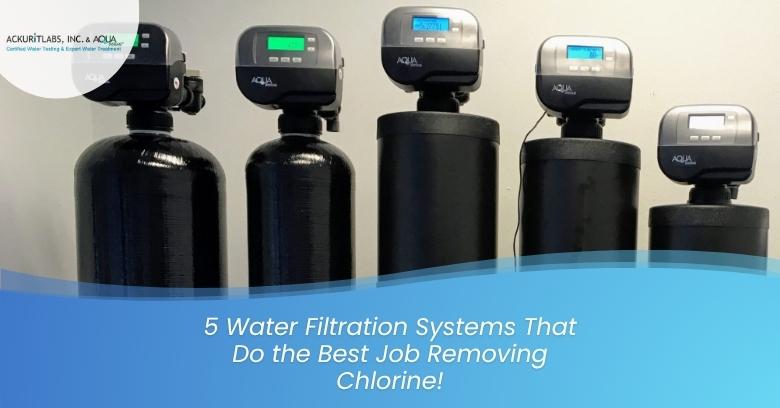
Filters based on carbon are the usual choice for chlorine taste and many household odors; a catalytic grade is often used where chloramine is the disinfectant. A saturated filter can release what it captured, which is why change schedules matter; a taste that creeps back is the usual reminder.
Housings and Replaceable Elements – Catching Grit Before It Travels On
Particle filters are the first stage in many systems, catching whatever would clog the rest, which lets each cartridge last longer. Pressure falls as an element loads up, which is the practical signal to swap it; a wrench for the housing is a worthwhile purchase.
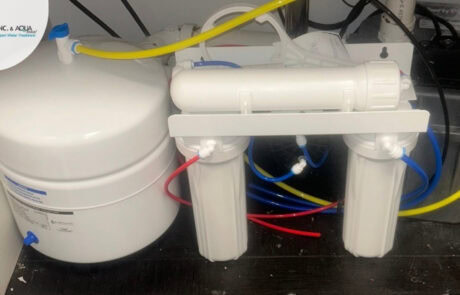
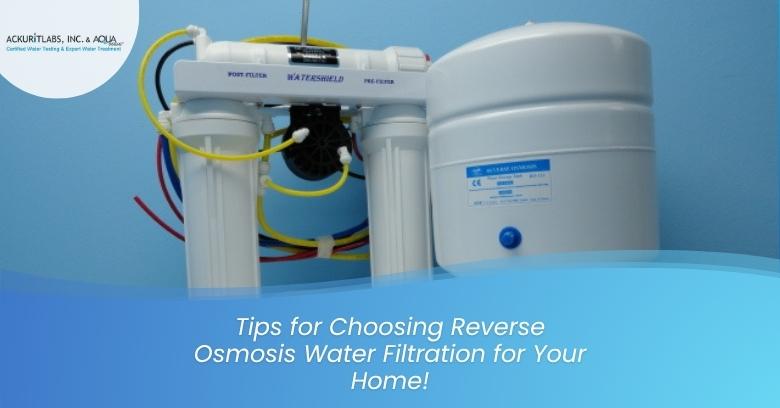
Reverse Osmosis – Storage Tank, Faucet and Drain
Dissolved solids stay on one side of the membrane and get flushed away; compact units fit under a sink and serve a single tap. Reverse osmosis units reduce many dissolved substances, though performance varies by model and by supply, and a membrane may last for a long stretch if it is protected.
Treating Iron, Sulfur and Microbes: Why Dose Control Matters
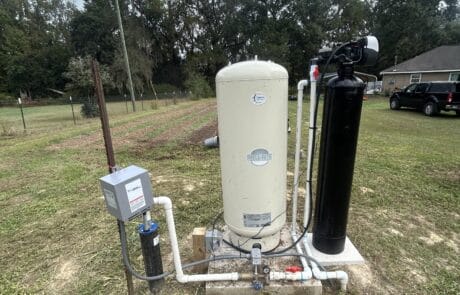
A metering pump feeds sodium hypochlorite into the flow, and a tank gives it time to react; the tank is sized to the flow of the well. Where the supply is meant for drinking, the leftover chlorine is filtered off, and chemical equipment is installed and set up with care.
Where the Equipment Sits – Matching Scope to Need
Point-of-entry installations deal with problems that affect the entire plumbing system; scale, iron and chlorine are the usual reasons to go this route. Many households combine both: a main-line device for scale and a sink model for taste; ask for a simple diagram of the plan.
Choosing a Capacity: Gallons per Minute and Grains
A unit has two numbers that matter: a peak flow rating and a capacity between cleanings; a bigger tank may be the practical answer. Oversizing has drawbacks too, since idle media can foul and extra tanks need space; ask to see the numbers behind the recommendation.
Plumbing, Power and Drain Needs: the Checklist Behind a Clean Install
Most systems need a bypass valve so the plumbing can keep flowing during service; chlorine feed pumps and contact tanks add their own requirements. Checking with the local office is sensible before anything is cut or glued; measure before ordering.
Wells Versus City Lines: Chlorine Added or Not
Raw well supply brings the chemistry of the ground straight to the plumbing, and equipment has to work with the pump's pressure and flow. Because the two sources differ, the same product can be a great fit on one and wasted on the other; neighbors on the same aquifer can still differ.
Hurricane-Season Readiness – Resetting the Clock and the Valve
A unit left without power may skip a scheduled recharge, which leaves the media tired when flow resumes, and the manual shows how to reset the controller. A flooded system should be shut off and checked before use, since damage is not always visible; write down the shutoff locations.
Day-to-Day Presence – Reaching the Controls
Most residential units are quiet, and the sounds they make are short bursts when a valve cycles or a recharge runs; clear floor space around a tank makes salt loading simple. Sunlight can damage clear housings and warm the supply, so shade is sensible outdoors; a tank that cannot get through a doorway is a common surprise.
Replacement and Add-Ons – Keep, Repair or Replace
Equipment bought long ago was chosen for a supply that may have changed since; the model number on the label usually leads to a manual and a parts list. The simplest upgrade is often a fresh set of cartridges or media, not a new system; photographs of the current setup speed up the first conversation.
Equipment for Operations: Duplex Tanks and Bigger Flows
Business equipment is sized for higher flows and often arranged in pairs so one tank can work while the other recharges; the existing mechanical room often decides what fits. Commercial owners usually want service records, so the system should make them easy to keep, because early warning beats a repair.
Service Schedule – Small Tasks That Protect Big Parts
Filters eventually clog, and carbon eventually saturates, so each has a replacement interval; keep the paperwork in one place. Noisy valves, salt bridges in the tank and slow flow are signs worth a look, and a retest confirms the numbers.
Closing the Loop – Numbers, Not Impressions
The most reliable verification is a fresh panel run on the same items as before; schedule it when the system goes in. If a reading is still high, the report guides the next adjustment; the file is useful for a future sale.
Expectations Worth Setting: Questions for Any Seller
Each technology removes some things and leaves others, so a layered setup is common; claims about results should point to a published test method. Anyone selling treatment equipment should be able to explain what it reduces and what it leaves alone, and a plain no is sometimes the most useful answer.
Questions for a Provider – Everything in Writing
- Which readings on the report are meant to change, and which are not expected to, and the proposal should say so on paper.
- How is the unit set up at the start, and what will you be shown before the crew leaves; get the details itemized.
- Which items are checked on a routine visit, and which need special tools; ask about it before work starts.
Getting Advice: Questions Are the Starting Point
Phone Ackuritlabs And Aqua Systems at 850-616-2634 and ask what to collect before any equipment is chosen.
In Plain Terms: Next Steps
Every lasting installation rests on a clear diagnosis, a suitable size and regular care; this page on Water Filtration in Perry Florida is a starting point, and the details of each property decide the rest. To get started, reach Ackuritlabs And Aqua Systems at 850-616-2634, and say what you would like to change.
Verified

Verified
Verified
Verified
Verified