Need Water Softeners Throughout Perry Florida?
Matching the device to the finding is what separates a useful installation from a blind guess, and the sections below cover sizing, setup and upkeep.
Call Ackuritlabs And Aqua Systems at 850-616-2634 to ask which questions come before any equipment.
The Order of Operations: a Lab Number Beats a Guess
Equipment bought off a shelf may handle a different problem than the one at the tap, and the figure is what a provider uses to size and pick the unit. Where no result exists yet, a provider can often suggest what to measure; patience at this stage tends to save money later.
Softening – What It Fixes and What It Leaves
The core of a standard softener is a resin bed that exchanges hardness minerals for a softer ion, and a salt or potassium brine recharges the bed on a schedule. Less mineral reaching the pipes also means less deposit inside them; the lab result still decides what else belongs in the plan.
Salt-Free Conditioners: What They Do and Do Not Do
Nothing is exchanged, so the lab number for hardness reads the same before and after, which suits some households and some local rules. Expect scale to be reduced rather than eliminated, and expect no change in how soap lathers, and it helps compare options fairly.
Adsorption Media: Chlorine, Odors and Organic Traces
Carbon holds onto certain compounds as supply passes through, which cuts chlorine taste and some odors, and the lab or the utility report can say. Capacity depends on how much is in the supply and how much a household uses, and the maker's change interval is a guide, not a promise.
Cartridges and Sediment Filters: Reading the Micron Number
Sediment cartridges screen out sand, rust flakes and silt before they reach appliances; the rating, given in microns, states how small a particle the element is built to catch. The installer chooses which element goes first, because a clogged first stage starves the rest; replacements are sold by size, so note the model.
High-Pressure Polishing: Where It Sits and What It Wastes
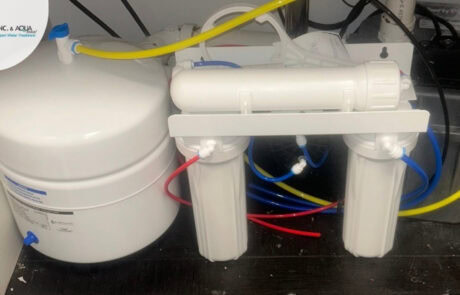
Pressure pushes the supply against a semipermeable membrane, and most dissolved material is held back; compact units fit under a sink and serve a single tap. A lab test before and after is the reliable way to know what a particular system achieves; a leak sensor is a sensible add-on.
Feeding Chlorine Into the Line: Why Dose Control Matters
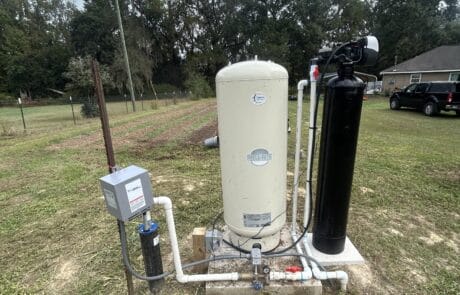
The setup pairs a feed pump with a retention tank so the chlorine has time to work; the tank is sized to the flow of the well. Where the supply is meant for drinking, the leftover chlorine is filtered off, and the setup should be checked after the first weeks.
Where the Equipment Sits: What Each Layout Covers
Equipment where the supply enters the building protects all the plumbing downstream, and the machinery needs floor space near the main shutoff. Single-tap filters and membranes work where only drinking supply needs the extra step; the provider can sketch where each unit would go.
Peak Demand Math: Room to Grow
A unit has two numbers that matter: a peak flow rating and a capacity between cleanings; a bigger tank may be the practical answer. Oversizing has drawbacks too, since idle media can foul and extra tanks need space, and an installer should explain why a particular size was chosen.
What the Job Requires: the Checklist Behind a Clean Install
A bypass lets the household isolate a unit without shutting off the whole supply; the installer plans the route up front. Permits or inspections can be required in some jurisdictions, depending on the work; measure before ordering.
Private Source or Public Main: Planning Around the Source
City lines usually deliver a steady, disinfected supply, so the complaints tend to be taste and scale, and equipment has to work with the pump's pressure and flow. Equipment picked from a neighbor's experience may not suit a different source; photos of the existing equipment help.
Weather and the Equipment Room: What to Check Afterward
Pumps, injectors and controllers all depend on electricity, and an outage pauses every one of them; checking the time and the settings after power returns takes a minute. Anything touched by flooding, including a well pump and chemical feed gear, deserves a professional look; write down the shutoff locations.
Where Everything Goes – Placement Decisions That Last
Noise from a unit tends to come from the drain line and the valve rather than the tanks, and the location is chosen to keep lines short and service easy. A tidy installation labels valves, supports the plumbing and keeps the area dry; measure doors and hallways as well.
Inherited Hardware: Planning a Sensible Sequence
Many properties already have a tank, a filter housing or an under-sink unit, and the question is whether it still suits the supply, and the provider can often read the date code. A sediment screen or a carbon stage can often be added without replacing everything, and old manuals are worth saving.
Larger Buildings and Heavier Demand – Coordinating With Maintenance
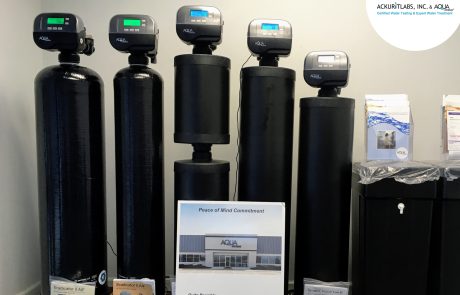
Larger buildings may need several tanks and manifolds, not one household unit; a duplex arrangement keeps soft supply flowing through each recharge. A property manager benefits from a maintenance plan that lists tasks, intervals and who does them, and the provider can supply those if asked.
Maintenance Rhythm – Small Tasks That Protect Big Parts
Treatment is not a one-time purchase, since something wears out or runs low on every system; keep the paperwork in one place. If stains come back, or the taste creeps back, something in the chain has used up its capacity; do not wait for a complete failure.
Closing the Loop – Numbers, Not Impressions
Nothing beats a repeat panel for showing whether the readings moved; schedule it when the system goes in. Some substances respond well and others hardly at all, which the new figures reveal; dates on everything keep the record clear.
Where Hardware Stops: Misuse and Misfit
Equipment performs within limits set by its design, the supply and the upkeep; ask how that is demonstrated. If a proposal does not mention the lab results, ask how it was reached; weigh each source on how specific it is.
A Short Interview: Details That Separate Good Plans
- What does the proposal assume about hardness, iron and chlorine, and where did those figures come from; ask for the reasoning in writing.
- How is the unit set up at the start, and what will you be shown before the crew leaves; clear scope prevents surprises.
- What signs should prompt a call before the next scheduled check; ask about it before work starts.
Planning a System: Bring What You Know
Contact Ackuritlabs And Aqua Systems at 850-616-2634 to find out how a system would be planned and sized.
What to Remember – Upkeep Keeps It Working
Matching a device to a lab result, sizing it to the building and keeping up with upkeep is the whole recipe; whatever has brought you to read about Water Softeners near Perry Florida, a short call sorts out where to begin. You can speak with Ackuritlabs And Aqua Systems at 850-616-2634 about your plumbing and your goals, and share what the lab report shows.
Verified

Verified
Verified
Verified
Verified