Need Water Filtration for a Property in Quincy Florida?
A treatment system is a tool for one job, so the job has to be named before the tool is picked; read on for how the pieces fit together.
Call Ackuritlabs And Aqua Systems at 850-616-2634 to ask which questions come before any equipment.
Where Treatment Begins – Results Decide the Hardware
Taste and appearance narrow the field, though only a lab report settles it, and the figure is what a provider uses to size and pick the unit. Anyone without a recent report can usually be pointed to a suitable panel first, and the choice of equipment follows once the numbers arrive.
Taking Out Hardness: a Bed of Beads and a Brine Tank
Hardness minerals stick to a charged resin, which swaps them for sodium or potassium ions; a control valve decides when to regenerate by clock or by usage. Scale buildup on heaters, kettles and shower heads slows down where hardness has been removed; the lab result still decides what else belongs in the plan.
Template-Assisted Units: What They Do and Do Not Do
Conditioners leave the hardness figure unchanged and change the shape of the crystals that form, which suits some households and some local rules. The results are described best as less crust, not no crust, and it helps compare options fairly.
Adsorption Media: Why Cartridges Run Out
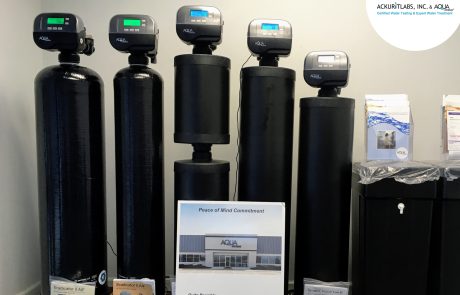
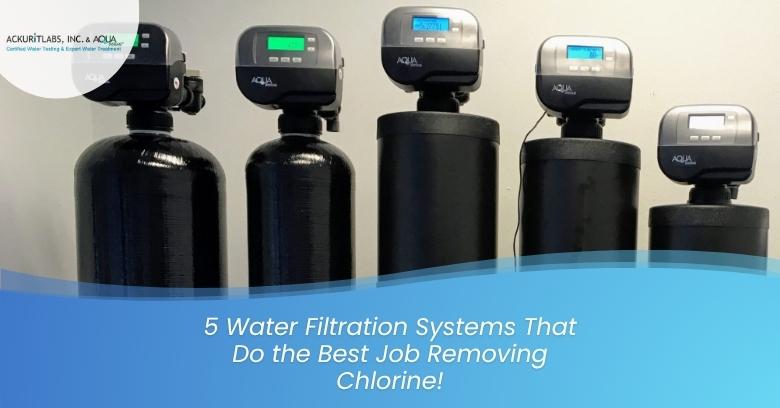
Filters based on carbon are the usual choice for chlorine taste and many household odors; each type of carbon targets specific compounds, so the media is picked to suit the finding. A saturated filter can release what it captured, which is why change schedules matter, and the maker's change interval is a guide, not a promise.
Cartridges and Sediment Filters: Sizes, Ratings and Swaps
The simplest way to protect a pump, a softener or a fixture is usually a sediment screen ahead of it, and the sequence is part of the design. Carbon cartridges, including carbon block types, often sit downstream of the sediment stage, and a pressure gauge on each side of the housing makes that visible.
The Under-Sink Purifier – Dissolved Solids Reduced
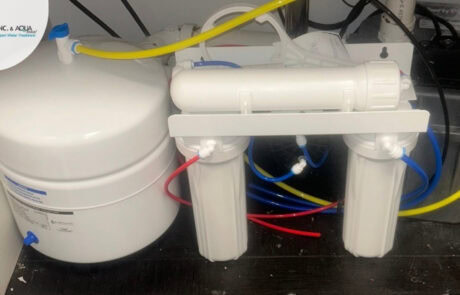
A small pump or the line pressure drives the flow through a membrane with extremely fine pores; compact units fit under a sink and serve a single tap. The reduction achieved depends on membrane condition, pressure and what is in the feed; the provider can explain what to expect for your supply.
Treating Iron, Sulfur and Microbes – Time, Dose and Cleanup
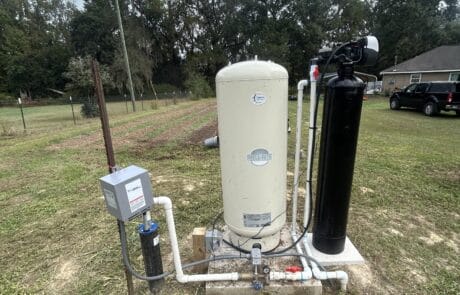
A metering pump feeds sodium hypochlorite into the flow, and a tank gives it time to react; the chlorine oxidizes iron and sulfide into forms that can be filtered out. A backwashing filter often follows, clearing the particles the reaction produces, and the setup should be checked after the first weeks.
Whole-House or Single-Tap: Choosing the Footprint
Whole-house layouts put one set of equipment ahead of every fixture; the flow at the entry is worth measuring before ordering. Many households combine both: a main-line device for scale and a sink model for taste; a layout on paper avoids surprises.
Choosing a Capacity – Pressure Drop and Pace
A unit has two numbers that matter: a peak flow rating and a capacity between cleanings; high readings use up capacity faster. Oversizing has drawbacks too, since idle media can foul and extra tanks need space; a reasoned answer is a good sign.
Practical Requirements: Bypass Valves, Drains and Outlets
Valves around the equipment allow it to be taken out of service in minutes; the walk-through before work matters. Local plumbing and electrical rules may apply, and the installer is the one to know them, and access for servicing should be planned from the start.
Supply Source Matters – Raw Groundwater Versus Treated
Raw well supply brings the chemistry of the ground straight to the plumbing, and equipment has to work with the pump's pressure and flow. Because the two sources differ, the same product can be a great fit on one and wasted on the other; mention the source on the first call.
Hurricane-Season Readiness – Protecting Gear From Surge and Silt
Many controllers keep their program in memory for a short while, and then need to be set again, and the manual shows how to reset the controller. A flooded system should be shut off and checked before use, since damage is not always visible; photographs taken before the season make later comparisons easier.
Where Everything Goes – Reaching the Controls
Pumps and metering equipment hum when they work, so placement matters for bedrooms and offices, and a level pad keeps tanks from shifting. Sunlight can damage clear housings and warm the supply, so shade is sensible outdoors; measure doors and hallways as well.
Replacement and Add-Ons – Keep, Repair or Replace
A house may come with equipment that nobody remembers installing, so a look at the labels is the first step; a fresh lab panel shows whether the present system is still doing its job. The simplest upgrade is often a fresh set of cartridges or media, not a new system; nothing is replaced without a reason.
Equipment for Operations: Written Specifications
Commercial installations are usually specified on paper, with flow rates and targets spelled out, and a drawing of the proposed layout is a reasonable request. Written procedures and a labeled schematic make handovers between staff smoother; ask what monitoring the equipment offers.
Routine Care: Signs a Unit Needs Attention
Every type of equipment has a consumable: salt for softeners, cartridges for filters, membranes for osmosis units; a simple calendar reminder prevents most lapses. Any change from how the system used to behave is the cue to check it; the provider can inspect and adjust.
The Second Sample – Filing the Evidence
A sample collected after the system is running shows whether the problem was solved; a retest a few months in shows whether the system is holding. Expect a number lower than before, not necessarily a number of zero, and keeping both reports together tells the story.
Expectations Worth Setting: Questions for Any Seller
No single device removes every substance, and a pitch that one box covers everything deserves doubt; compare the data sheet with your lab report. A provider unwilling to discuss limits is one to think twice about, and a plain no is sometimes the most useful answer.
Questions for a Provider: Points Worth Raising
- What does the proposal assume about hardness, iron and chlorine, and where did those figures come from; a specific answer is what you want.
- What parts and consumables are needed, and how often do they need replacing; a walk-through at the end is reasonable to ask for.
- Where should the paperwork for the system be stored; follow-up is as important as the install.
Talking It Through: Bring What You Know
Dial Ackuritlabs And Aqua Systems at 850-616-2634 to go over the lab report and the symptoms at your tap.
The Short Version – Upkeep Keeps It Working
Every lasting installation rests on a clear diagnosis, a suitable size and regular care, and everything above about Water Filtration in Quincy Florida is general background, not a verdict. Questions are welcome at 850-616-2634, where Ackuritlabs And Aqua Systems can lay out the options; the details you share shape the advice.
Verified

Verified
Verified
Verified
Verified