Looking for Commercial Water Filtration Throughout Tallahassee Florida?
Equipment gets chosen to fix a measured problem, and the fix is only as good as the diagnosis behind it, and the sections below explain how the common options differ.
Speak with Ackuritlabs And Aqua Systems at 850-616-2634 to ask how an installation is planned.
Where Treatment Begins: Naming the Target
Taste and appearance narrow the field, though only a lab report settles it, which keeps the proposal tied to evidence. A first conversation commonly ends with advice on what to sample before the next step; patience at this stage tends to save money later.
Resin Tanks – What It Fixes and What It Leaves
The core of a standard softener is a resin bed that exchanges hardness minerals for a softer ion; the unit needs a drain line and a power outlet. Laundry and dishes tend to come out cleaner where the minerals have been removed; it is not meant to filter out bacteria or chemicals.
Template-Assisted Units – Changing How Scale Forms
The minerals stay in the supply, but the device nudges them toward forming less scale on surfaces, which suits some households and some local rules. The results are described best as less crust, not no crust, and it helps compare options fairly.
The Charcoal Option: Why Cartridges Run Out
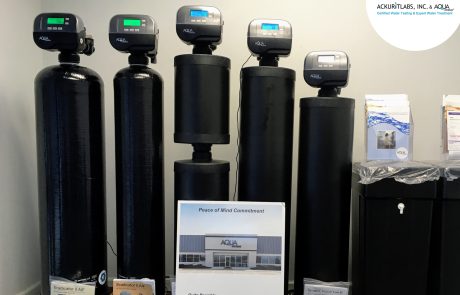
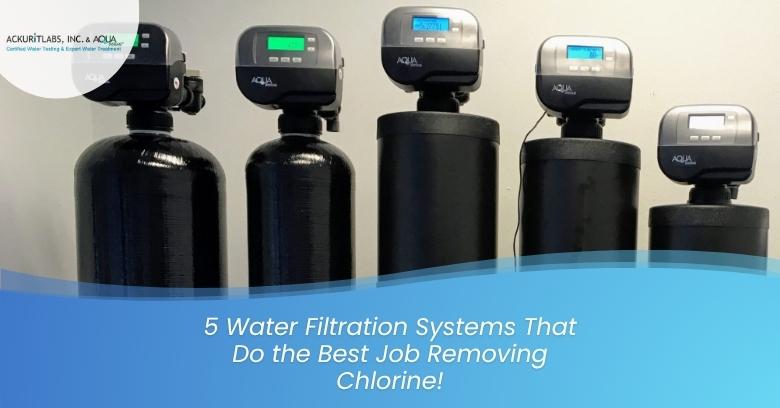
Filters based on carbon are the usual choice for chlorine taste and many household odors; a catalytic grade is often used where chloramine is the disinfectant. Carbon has a limited capacity, and once it is spent, it stops doing its job; keeping a date on the housing is a good habit.
Canisters on the Line: Keeping Spare Elements
Sediment cartridges screen out sand, rust flakes and silt before they reach appliances; the rating, given in microns, states how small a particle the element is built to catch. Putting stages in the wrong order shortens the life of the costlier cartridge; write the swap date on the canister.
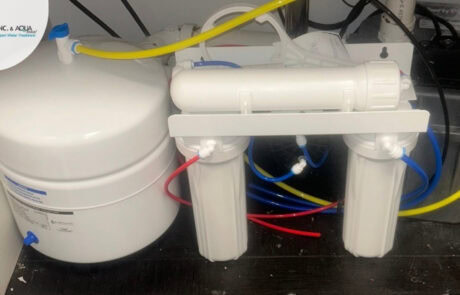
The Under-Sink Purifier: Where It Sits and What It Wastes
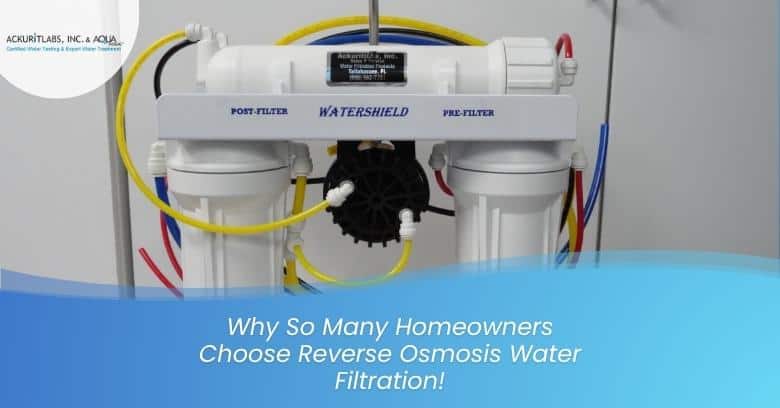
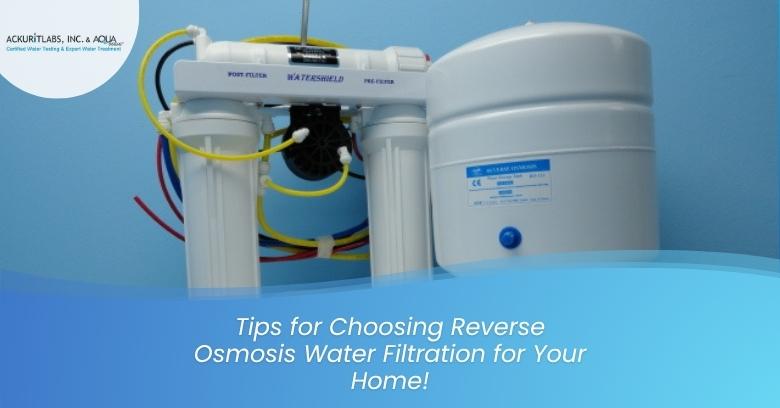
Dissolved solids stay on one side of the membrane and get flushed away, while larger units serve whole buildings. Pre-filters protect the membrane, and replacing them on time protects the system; ask for the maintenance schedule in writing.
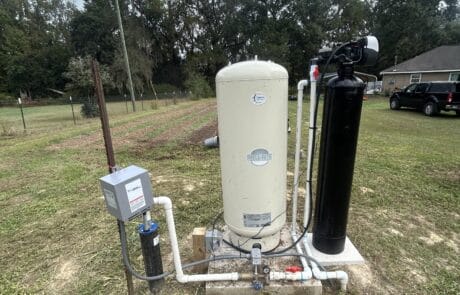
Chlorination: a Metering Pump and a Retention Tank
The setup pairs a feed pump with a retention tank so the chlorine has time to work, and it also acts on bacteria in the supply. The final stage polishes taste and removes what remains of the disinfectant; dosing is not a do-it-yourself guess.
Scope of a System – One Tap, One Sink, One Appliance
Equipment where the supply enters the building protects all the plumbing downstream; a garage or utility closet often becomes the home. Smaller units at one sink target what people drink, leaving the rest of the plumbing alone, and the two approaches work well together.
Flow Rate and Capacity: Gallons per Minute and Grains
Equipment is rated by how fast supply can pass through it and by how much it can treat before servicing, along with the hardness or iron level on the lab report. Oversizing has drawbacks too, since idle media can foul and extra tanks need space; ask to see the numbers behind the recommendation.
Plumbing, Power and Drain Needs – Codes and Neighbors
Valves around the equipment allow it to be taken out of service in minutes, and electrical needs vary from a plug-in transformer to a dedicated circuit. Whoever does the installation should be able to say what the local rules ask for; a tidy install is easier to maintain.
Private Source or Public Main – Raw Groundwater Versus Treated
Raw well supply brings the chemistry of the ground straight to the plumbing, and the right system differs accordingly. A carbon unit that suits a city line may be useless against the main problem of a well; mention the source on the first call.
Weather and the Equipment Room: What to Check Afterward
Pumps, injectors and controllers all depend on electricity, and an outage pauses every one of them, and the manual shows how to reset the controller. Equipment that sat in floodwater needs inspection before it goes back into service; keep manuals and settings notes together.
Living With the Equipment – Placement Decisions That Last
Compressors and pumps are the noisiest parts of larger systems, and they normally sit in a mechanical space, and the location is chosen to keep lines short and service easy. Some owners build a small enclosure, though it must not block air or access, and the provider should ask about access.
Working With Existing Equipment: Planning a Sensible Sequence
Equipment bought long ago was chosen for a supply that may have changed since, and the provider can often read the date code. The simplest upgrade is often a fresh set of cartridges or media, not a new system; ask for a plain list of what changes and what stays.
When a Property Has Many Users: Duplex Tanks and Bigger Flows
Larger buildings may need several tanks and manifolds, not one household unit, and a controller can log regeneration cycles. Training the people on site about shutoffs and alarms prevents small problems from growing; ask what monitoring the equipment offers.
Routine Care: Signs a Unit Needs Attention
Treatment is not a one-time purchase, since something wears out or runs low on every system; keep the paperwork in one place. Bad smells from a filter housing mean it has gone too long, and a retest confirms the numbers.
Proof After Installation: Tracking Performance
A sample collected after the system is running shows whether the problem was solved, and the lab can run the identical methods again. Expect a number lower than before, not necessarily a number of zero; a short note on the equipment installed completes the record.
Where Hardware Stops: Misuse and Misfit
Marketing language tends to be broader than what a product actually does; read the data sheet, not just the front of the box. A provider unwilling to discuss limits is one to think twice about; weigh each source on how specific it is.
A Short Interview: Points Worth Raising
- Does the plan name the substances it targets, rather than speaking in general terms; ask for the reasoning in writing.
- How is the unit set up at the start, and what will you be shown before the crew leaves; ask for a copy of the manuals too.
- What does a retest look like, and when is it scheduled; ask about it before work starts.
Talking It Through: Bring What You Know
Phone Ackuritlabs And Aqua Systems at 850-616-2634 to go over the lab report and the symptoms at your tap.
The Short Version – the Sequence That Works
Every lasting installation rests on a clear diagnosis, a suitable size and regular care; this page on Commercial Water Filtration in Tallahassee Florida is a starting point, and the details of each property decide the rest. To get started, reach Ackuritlabs And Aqua Systems at 850-616-2634; mention whether the supply is a well or a utility line.
Verified

Verified
Verified
Verified
Verified