Need Water Treatment Company for a Property in Tallahassee Florida?
A treatment system is a tool for one job, so the job has to be named before the tool is picked, and the sections below explain how the common options differ.
Dial Ackuritlabs And Aqua Systems at 850-616-2634 to talk through what the tap has been doing.
The Step Ahead of the Purchase: Naming the Target
Taste and appearance narrow the field, though only a lab report settles it; most reputable providers ask for results before quoting a system. If the history of the supply is unknown, a baseline panel is the sensible opener, and a short delay beats replacing the wrong unit.
Resin Tanks: Regeneration in Plain Terms
The core of a standard softener is a resin bed that exchanges hardness minerals for a softer ion; the unit needs a drain line and a power outlet. Laundry and dishes tend to come out cleaner where the minerals have been removed, and it will not change the taste of the supply on its own.
Conditioning Instead of Softening: What They Do and Do Not Do
Conditioners leave the hardness figure unchanged and change the shape of the crystals that form, though results vary with the water and the model. The results are described best as less crust, not no crust; asking for a plain description of the outcome avoids disappointment.
Adsorption Media – Contact Time and Capacity
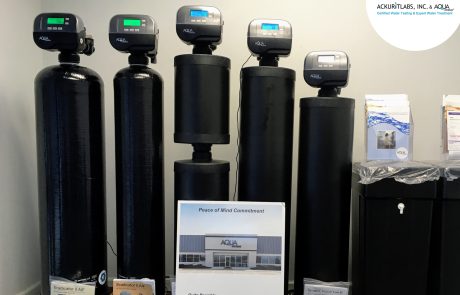
Surfaces inside the carbon grab onto particular chemicals, leaving a cleaner taste behind, and ordinary carbon handles free chlorine more easily than chloramine. Every carbon filter eventually fills up, so replacement or backwashing is part of owning one, and the maker's change interval is a guide, not a promise.
The Filter Under the Cap – Catching Grit Before It Travels On
Sediment cartridges screen out sand, rust flakes and silt before they reach appliances; a series of coarse then fine elements spreads the load. Pressure falls as an element loads up, which is the practical signal to swap it; keep a spare cartridge on a shelf.
The Under-Sink Purifier: Where It Sits and What It Wastes
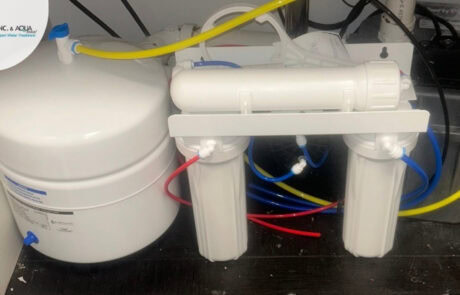
A membrane passes the liquid and rejects a large share of dissolved salts and other solids, while larger units serve whole buildings. Reverse osmosis units reduce many dissolved substances, though performance varies by model and by supply, and the reject volume is worth asking about.
Oxidation Systems – the Carbon Stage Afterward
A chlorine injector meters a small amount of disinfectant into the line ahead of a holding tank; the chlorine oxidizes iron and sulfide into forms that can be filtered out. Where the supply is meant for drinking, the leftover chlorine is filtered off, and chemical equipment is installed and set up with care.
Where the Equipment Sits: Choosing the Footprint
Point-of-entry installations deal with problems that affect the entire plumbing system; larger tanks and brine cabinets take real room. Single-tap filters and membranes work where only drinking supply needs the extra step; a layout on paper avoids surprises.
Peak Demand Math – People, Fixtures and Usage
A unit has two numbers that matter: a peak flow rating and a capacity between cleanings; a bigger tank may be the practical answer. Equipment that is too small works harder and wears out sooner, and an installer should explain why a particular size was chosen.
Space and Connections: the Checklist Behind a Clean Install
Shutoffs on both sides of a unit make servicing simple; the walk-through before work matters. Local plumbing and electrical rules may apply, and the installer is the one to know them; leave room to open the tank lid and swap a cartridge.
What Changes by Source: Chlorine Added or Not
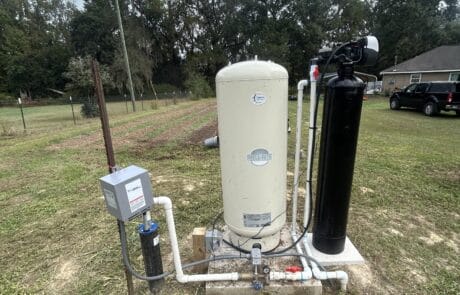
Private wells deliver untreated groundwater, which can carry iron, sulfur, hardness and microbes; sediment and iron tend to be the early concerns. A carbon unit that suits a city line may be useless against the main problem of a well; each property gets its own plan.
After an Outage: Controllers, Pumps and Flooding
Softeners and filters with electronic controllers can lose their settings in a long outage unless a backup battery holds them; a quick look at the salt level and the drain line completes the check. Silt in a housing, a wet motor or a corroded joint can turn a repair into a replacement; write down the shutoff locations.
Living With the Equipment – Reaching the Controls
Compressors and pumps are the noisiest parts of larger systems, and they normally sit in a mechanical space, and the location is chosen to keep lines short and service easy. Sunlight can damage clear housings and warm the supply, so shade is sensible outdoors, and the installer can suggest a layout.
Replacement and Add-Ons: Planning a Sensible Sequence
Inherited hardware is worth examining before anything new is added; the model number on the label usually leads to a manual and a parts list. Mixing parts from different makers is possible, though compatibility needs checking; nothing is replaced without a reason.
Commercial Systems: Boilers, Ice Machines and Kitchens
Business equipment is sized for higher flows and often arranged in pairs so one tank can work while the other recharges; a duplex arrangement keeps soft supply flowing through each recharge. A property manager benefits from a maintenance plan that lists tasks, intervals and who does them, because early warning beats a repair.
Maintenance Rhythm: What Gets Neglected
Soft supply depends on a brine tank that is kept stocked; adjust to what the supply actually does. If stains come back, or the taste creeps back, something in the chain has used up its capacity, and a retest confirms the numbers.
Proof After Installation: Tracking Performance
Nothing beats a repeat panel for showing whether the readings moved, which matters for cartridges and media that wear. Expect a number lower than before, not necessarily a number of zero; the file is useful for a future sale.
Honest Limits – Matching Promises to Physics
A softener will not make a supply taste different, and a carbon filter will not soften it; ask how that is demonstrated. Honest answers sound specific, and vague answers sound like a sales line, and a plain no is sometimes the most useful answer.
Questions for a Provider – Written Answers Preferred
- Is the recommended size tied to the lab figures and the household's flow, and the proposal should say so on paper.
- Where will the drain, the power and the bypass go, and what will be cut or moved; clear scope prevents surprises.
- What signs should prompt a call before the next scheduled check; follow-up is as important as the install.
Getting Advice – One Call Sorts Out Next Steps
Phone Ackuritlabs And Aqua Systems at 850-616-2634 to find out how a system would be planned and sized.
Pulling the Threads – the Sequence That Works
Every lasting installation rests on a clear diagnosis, a suitable size and regular care; whatever has brought you to read about Water Treatment Company near Tallahassee Florida, a short call sorts out where to begin. Questions are welcome at 850-616-2634, where Ackuritlabs And Aqua Systems can lay out the options, and share what the lab report shows.
Verified

Verified
Verified
Verified
Verified