Shopping for Residential Water Softener Installation Throughout Woodville Florida?
Equipment gets chosen to fix a measured problem, and the fix is only as good as the diagnosis behind it; read on for how the pieces fit together.
Contact Ackuritlabs And Aqua Systems at 850-616-2634 to talk through what the tap has been doing.
The Step Ahead of the Purchase: Why Skipping It Backfires
Orange stains, chalky scale and a swampy smell can each have a separate cause, and each calls for different gear; having a report on hand speeds everything up. Anyone without a recent report can usually be pointed to a suitable panel first; skipping ahead is where most mismatches begin.
Resin Tanks – Swapping Minerals for Sodium or Potassium
Hardness minerals stick to a charged resin, which swaps them for sodium or potassium ions, and the stored brine is topped up with salt as needed. Where a softener is sized correctly, white crust becomes much less of a chore; it is not meant to filter out bacteria or chemicals.
Scale Control Without Salt: What They Do and Do Not Do
Nothing is exchanged, so the lab number for hardness reads the same before and after, which suits some households and some local rules. Expect scale to be reduced rather than eliminated, and expect no change in how soap lathers, and a good provider explains that before the purchase.
Activated Carbon – Granular Beds and Blocks
A carbon bed or block is the common answer when a city supply tastes or smells of disinfectant, and the lab or the utility report can say. Contact time and flow rate affect results, and a unit pushed too hard performs worse, and the maker's change interval is a guide, not a promise.
Cartridges and Sediment Filters – Why Order Matters
The simplest way to protect a pump, a softener or a fixture is usually a sediment screen ahead of it, and a smaller rating catches finer particles but clogs sooner. Putting stages in the wrong order shortens the life of the costlier cartridge; keep a spare cartridge on a shelf.
Membrane Systems – Dissolved Solids Reduced
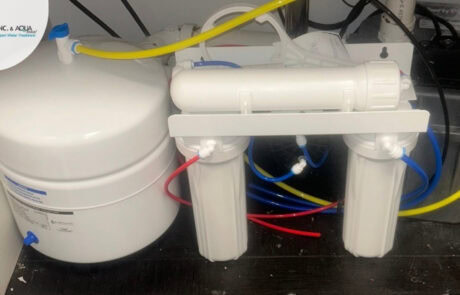
Dissolved solids stay on one side of the membrane and get flushed away; the rejected stream runs to a drain, so a connection to the sink drain is part of the installation. The reduction achieved depends on membrane condition, pressure and what is in the feed; ask for the maintenance schedule in writing.
Treating Iron, Sulfur and Microbes – the Carbon Stage Afterward
A pump, a tank and a backwashing filter form the heart of a chlorination setup, and it also acts on bacteria in the supply. Residual chlorine has to be removed afterward, and a carbon filter normally takes that job; a wrong dose helps nobody.
Point of Entry Versus Point of Use – One Tap, One Sink, One Appliance
Point-of-entry installations deal with problems that affect the entire plumbing system, and the machinery needs floor space near the main shutoff. Many households combine both: a main-line device for scale and a sink model for taste, and the two approaches work well together.
Matching the Unit to the House – People, Fixtures and Usage
A unit has two numbers that matter: a peak flow rating and a capacity between cleanings; a bigger tank may be the practical answer. An undersized system forces flow past the media too fast, which weakens the result, and a vague one deserves a follow-up question.
Plumbing, Power and Drain Needs: Bypass Valves, Drains and Outlets
Good installations include a way to route flow around the unit when needed; the walk-through before work matters. Whoever does the installation should be able to say what the local rules ask for; a tidy install is easier to maintain.
What Changes by Source: Chlorine Added or Not
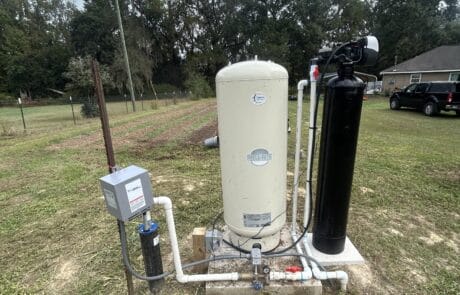
City lines usually deliver a steady, disinfected supply, so the complaints tend to be taste and scale; wells also bring a pump and a pressure tank into the plan. The provider needs to know which source feeds the house before suggesting anything, and a lab report removes most of the guesswork.
Weather and the Equipment Room: Controllers, Pumps and Flooding
A unit left without power may skip a scheduled recharge, which leaves the media tired when flow resumes, and a surge protector on the outlet is sensible protection for the electronics. A flooded system should be shut off and checked before use, since damage is not always visible; ask the installer what to do before a storm.
Noise, Space and Appearance: Tanks, Hums and Cabinets
Noise from a unit tends to come from the drain line and the valve rather than the tanks; a garage, a utility closet or a pump house is the usual home. Some owners build a small enclosure, though it must not block air or access; a sketch of the space helps the planning.
Working With Existing Equipment – Reading Old Labels
Many properties already have a tank, a filter housing or an under-sink unit, and the question is whether it still suits the supply; the model number on the label usually leads to a manual and a parts list. Mixing parts from different makers is possible, though compatibility needs checking, and the installer should explain what is being kept.
Treatment at Business Scale – Keeping Service Running
Business equipment is sized for higher flows and often arranged in pairs so one tank can work while the other recharges; the survey of the site comes first. Written procedures and a labeled schematic make handovers between staff smoother; ask what monitoring the equipment offers.
Keeping Equipment in Shape – Setting Reminders
Resin beads age slowly, and cartridges and pre-filters age quickly; a label on each housing with the install date helps. If stains come back, or the taste creeps back, something in the chain has used up its capacity; do not wait for a complete failure.
Verifying What Changed – Numbers, Not Impressions
The most reliable verification is a fresh panel run on the same items as before, and the lab can run the identical methods again. If a reading is still high, the report guides the next adjustment; a short note on the equipment installed completes the record.
Honest Limits – Matching Promises to Physics
A softener will not make a supply taste different, and a carbon filter will not soften it; claims about results should point to a published test method. Honest answers sound specific, and vague answers sound like a sales line, and the same standard applies to anything written on this page.
Before You Sign: Details That Separate Good Plans
- Which readings on the report are meant to change, and which are not expected to, and the proposal should say so on paper.
- Which local rules apply to this installation, and who handles them; ask for a copy of the manuals too.
- What signs should prompt a call before the next scheduled check; each of these is worth asking.
Talking It Through – One Call Sorts Out Next Steps
Speak with Ackuritlabs And Aqua Systems at 850-616-2634 and describe the house, the plumbing and what you want changed.
The Short Version: Next Steps
A dependable setup follows a sequence: measure the supply, pick equipment to suit, install it carefully and test again; whatever has brought you to read about Residential Water Softener Installation near Woodville Florida, a short call sorts out where to begin. You can speak with Ackuritlabs And Aqua Systems at 850-616-2634 about your plumbing and your goals; the call goes quickly.
Verified

Verified
Verified
Verified
Verified