Thinking About Water Filtration System Throughout Woodville Florida?
A treatment system is a tool for one job, so the job has to be named before the tool is picked, and the sections below explain how the common options differ.
Phone Ackuritlabs And Aqua Systems at 850-616-2634 and describe the stains, scale or smells you want gone.
The Order of Operations: Why Skipping It Backfires
Equipment bought off a shelf may handle a different problem than the one at the tap; a sample sent to a laboratory turns a guess into a figure. Anyone without a recent report can usually be pointed to a suitable panel first; patience at this stage tends to save money later.
Softening – Swapping Minerals for Sodium or Potassium
The core of a standard softener is a resin bed that exchanges hardness minerals for a softer ion, and the stored brine is topped up with salt as needed. Softened supply leaves less scale on fixtures, glass and heating elements, though a softener does little for iron staining beyond a modest level.
Salt-Free Conditioners – Setting Expectations
The minerals stay in the supply, but the device nudges them toward forming less scale on surfaces, though results vary with the water and the model. The results are described best as less crust, not no crust; ask what the device will not do.
The Charcoal Option – Contact Time and Capacity
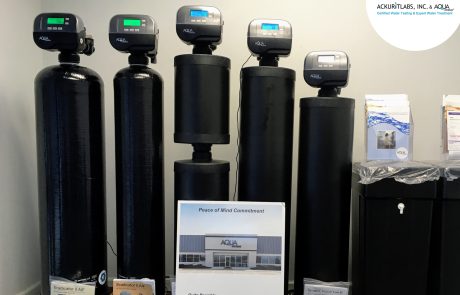
Carbon holds onto certain compounds as supply passes through, which cuts chlorine taste and some odors; it helps to know what the utility adds. Contact time and flow rate affect results, and a unit pushed too hard performs worse; a pre-filter often extends the life of the carbon.
Canisters on the Line – Why Order Matters
A housing on the line holds a cartridge that screens out particles above a chosen size, which lets each cartridge last longer. The installer chooses which element goes first, because a clogged first stage starves the rest; keep a spare cartridge on a shelf.
High-Pressure Polishing: Fair Expectations
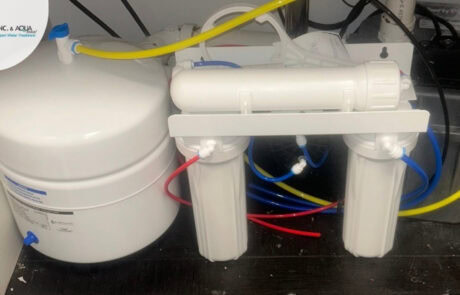
Dissolved solids stay on one side of the membrane and get flushed away, while larger units serve whole buildings. The reduction achieved depends on membrane condition, pressure and what is in the feed, and a membrane may last for a long stretch if it is protected.
Chlorination: What the Installer Sets Up
Where a well carries iron, sulfur or microbes, injecting chlorine is a long-established approach, and the dose is set from lab readings. A backwashing filter often follows, clearing the particles the reaction produces; dosing is not a do-it-yourself guess.
Treating Everything or Just the Faucet: Planning the Pipe Run
Point-of-entry installations deal with problems that affect the entire plumbing system; a garage or utility closet often becomes the home. Where only one fixture matters, a compact installation avoids treating the whole house, and it shows which walls and lines are involved.
Choosing a Capacity – Pressure Drop and Pace
Ratings printed on the label describe the equipment, and the installer matches them to the building; a bigger tank may be the practical answer. Equipment that is too small works harder and wears out sooner, and a vague one deserves a follow-up question.
Plumbing, Power and Drain Needs: the Checklist Behind a Clean Install
Good installations include a way to route flow around the unit when needed; the walk-through before work matters. Permits or inspections can be required in some jurisdictions, depending on the work; a tidy install is easier to maintain.
Supply Source Matters: Chlorine Added or Not
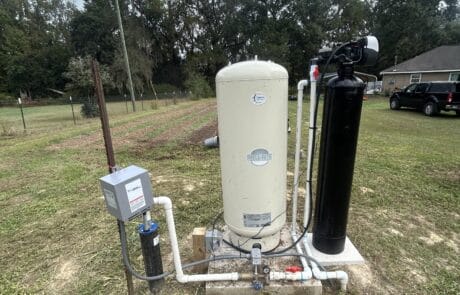
A well has no utility between it and the tap, so equipment often handles more of the load, and equipment has to work with the pump's pressure and flow. Because the two sources differ, the same product can be a great fit on one and wasted on the other; photos of the existing equipment help.
After an Outage – Resetting the Clock and the Valve
Electronic valves keep time with the power, so a clock that resets can trigger recharges at odd hours, and a surge protector on the outlet is sensible protection for the electronics. A flooded system should be shut off and checked before use, since damage is not always visible; write down the shutoff locations.
Practical Details Homeowners Ask About: Keeping the Area Tidy
Pumps and metering equipment hum when they work, so placement matters for bedrooms and offices, which is worth thinking through before delivery. Sunlight can damage clear housings and warm the supply, so shade is sensible outdoors, and the provider should ask about access.
Upgrading What Is Already There: Planning a Sensible Sequence
Equipment bought long ago was chosen for a supply that may have changed since; the model number on the label usually leads to a manual and a parts list. Mixing parts from different makers is possible, though compatibility needs checking, and old manuals are worth saving.
When a Property Has Many Users: Written Specifications
Restaurants, offices and apartment buildings draw far more than a house, and the gear is scaled to match; the survey of the site comes first. Training the people on site about shutoffs and alarms prevents small problems from growing, and it supports any later troubleshooting.
Maintenance Rhythm – Small Tasks That Protect Big Parts
Soft supply depends on a brine tank that is kept stocked; a simple calendar reminder prevents most lapses. Bad smells from a filter housing mean it has gone too long; do not wait for a complete failure.
Verifying What Changed: When to Retest
The most reliable verification is a fresh panel run on the same items as before; a retest a few months in shows whether the system is holding. If a reading is still high, the report guides the next adjustment; a short note on the equipment installed completes the record.
Honest Limits: Misuse and Misfit
No single device removes every substance, and a pitch that one box covers everything deserves doubt; ask for the specific substances a product addresses. Anyone selling treatment equipment should be able to explain what it reduces and what it leaves alone; clear explanations are the best sign.
A Short Interview – Everything in Writing
- Which readings on the report are meant to change, and which are not expected to, and what stays the same afterward.
- How is the unit set up at the start, and what will you be shown before the crew leaves; get the details itemized.
- Where should the paperwork for the system be stored; write the answers down.
Getting Advice: Questions Are the Starting Point
Contact Ackuritlabs And Aqua Systems at 850-616-2634 to ask what a sensible first step would be for your supply.
Pulling the Threads: Matching Hardware to the Finding
The reliable path runs from a lab figure, through a sensible choice of equipment, to a retest that shows the change; whatever has brought you to read about Water Filtration System near Woodville Florida, a short call sorts out where to begin. To get started, reach Ackuritlabs And Aqua Systems at 850-616-2634, and say what you would like to change.
Verified

Verified
Verified
Verified
Verified