Looking for Whole House Water Filtration Installation Throughout Quincy Florida?
Good installations start from a lab result and work toward a device that suits it; read on for how the pieces fit together.
Speak with Ackuritlabs And Aqua Systems at 850-616-2634 to ask which questions come before any equipment.
Before Any Equipment: Naming the Target
A smell, a stain or a taste is a symptom, and the symptom alone rarely identifies the cure; having a report on hand speeds everything up. Anyone without a recent report can usually be pointed to a suitable panel first; the equipment decision waits until the numbers are in.
Softening: How the Resin Works
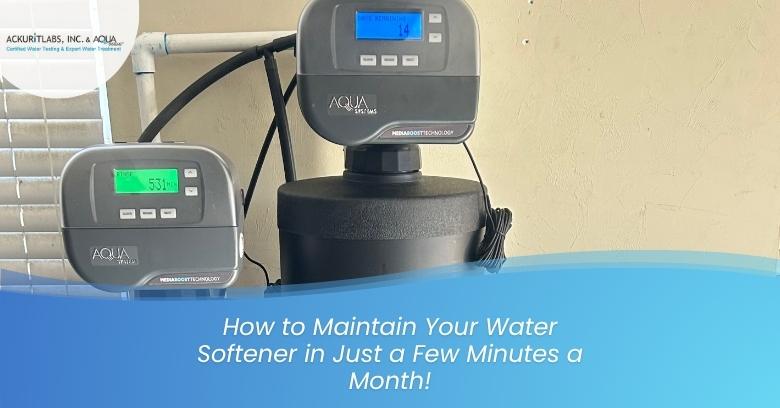
A conventional softener passes the supply through a bed of resin beads that grab calcium and magnesium; the unit needs a drain line and a power outlet. Laundry and dishes tend to come out cleaner where the minerals have been removed; the lab result still decides what else belongs in the plan.
Salt-Free Conditioners: No Drain, No Salt, Different Results
Conditioners leave the hardness figure unchanged and change the shape of the crystals that form, and maintenance is limited to replacing the media on a schedule. Because the minerals remain, soap and shampoo behave as they would on hard supply, and a good provider explains that before the purchase.
The Charcoal Option: Why Cartridges Run Out
Porous carbon traps many organic molecules and chlorine on its surfaces as flow moves across them; a catalytic grade is often used where chloramine is the disinfectant. Capacity depends on how much is in the supply and how much a household uses; a taste that creeps back is the usual reminder.
Cartridges and Sediment Filters: Keeping Spare Elements
The simplest way to protect a pump, a softener or a fixture is usually a sediment screen ahead of it; the rating, given in microns, states how small a particle the element is built to catch. A carbon cartridge installed in the same housing style handles taste while the sediment unit handles grit; write the swap date on the canister.
Drinking Supply Upgrades: Where It Sits and What It Wastes
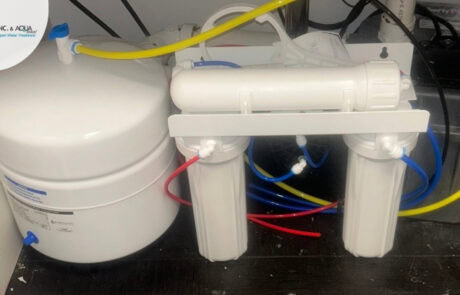
Dissolved solids stay on one side of the membrane and get flushed away; compact units fit under a sink and serve a single tap. Reverse osmosis units reduce many dissolved substances, though performance varies by model and by supply, and the reject volume is worth asking about.
Injectors and Contact Tanks – Time, Dose and Cleanup
A pump, a tank and a backwashing filter form the heart of a chlorination setup, and it also acts on bacteria in the supply. A backwashing filter often follows, clearing the particles the reaction produces; dosing is not a do-it-yourself guess.
Point of Entry Versus Point of Use: Planning the Pipe Run
Everything inside the building sees treated flow when equipment sits at the entry; larger tanks and brine cabinets take real room. Smaller units at one sink target what people drink, leaving the rest of the plumbing alone; the provider can sketch where each unit would go.
Choosing a Capacity: What Undersizing Looks Like
Treating the household's peak demand, not its average, keeps pressure from dropping; a unit that is too small shortens the time between regenerations. Oversizing has drawbacks too, since idle media can foul and extra tanks need space; ask to see the numbers behind the recommendation.
Plumbing, Power and Drain Needs: Tying Into Existing Lines
Good installations include a way to route flow around the unit when needed; a drain line, an air gap and a nearby outlet come with a softener. Checking with the local office is sensible before anything is cut or glued; measure before ordering.
Private Source or Public Main: Planning Around the Source
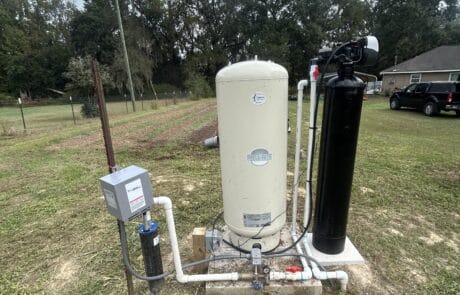
Private wells deliver untreated groundwater, which can carry iron, sulfur, hardness and microbes, and equipment has to work with the pump's pressure and flow. A quick description of the plumbing path is enough to start the right conversation; each property gets its own plan.
After an Outage: What to Check Afterward
Pumps, injectors and controllers all depend on electricity, and an outage pauses every one of them, and a surge protector on the outlet is sensible protection for the electronics. Equipment that sat in floodwater needs inspection before it goes back into service; keep manuals and settings notes together.
Noise, Space and Appearance: Garages, Closets and Mechanical Rooms
Noise from a unit tends to come from the drain line and the valve rather than the tanks, and a level pad keeps tanks from shifting. A tidy installation labels valves, supports the plumbing and keeps the area dry, and the provider should ask about access.
Working With Existing Equipment – Reading Old Labels
Equipment bought long ago was chosen for a supply that may have changed since, and the readings guide whether to repair, keep or replace. Adding a stage to an existing setup requires attention to order, flow rate and pressure drop; nothing is replaced without a reason.
Commercial Systems: Duplex Tanks and Bigger Flows
Commercial installations are usually specified on paper, with flow rates and targets spelled out, and a controller can log regeneration cycles. Commercial owners usually want service records, so the system should make them easy to keep, and the provider can supply those if asked.
Service Schedule: What Gets Neglected
Soft supply depends on a brine tank that is kept stocked; the manual lists intervals, though a heavy load shortens them. Bad smells from a filter housing mean it has gone too long, and a retest confirms the numbers.
Confirming the Result: Tracking Performance
A sample collected after the system is running shows whether the problem was solved; collecting at the same tap, in the same way, keeps the comparison fair. Expect a number lower than before, not necessarily a number of zero; dates on everything keep the record clear.
Expectations Worth Setting: Misuse and Misfit
Each technology removes some things and leaves others, so a layered setup is common; ask how that is demonstrated. If a proposal does not mention the lab results, ask how it was reached; nothing here replaces advice for your property.
What to Ask at the Door – Written Answers Preferred
- Is the recommended size tied to the lab figures and the household's flow, and what stays the same afterward.
- Which local rules apply to this installation, and who handles them; clear scope prevents surprises.
- Where should the paperwork for the system be stored; follow-up is as important as the install.
Getting Advice: Questions Are the Starting Point
Phone Ackuritlabs And Aqua Systems at 850-616-2634 to find out how a system would be planned and sized.
Bringing It Together: Test, Choose, Install, Confirm
A dependable setup follows a sequence: measure the supply, pick equipment to suit, install it carefully and test again; whatever has brought you to read about Whole House Water Filtration Installation near Quincy Florida, a short call sorts out where to begin. Questions are welcome at 850-616-2634, where Ackuritlabs And Aqua Systems can lay out the options; the details you share shape the advice.
Verified

Verified
Verified