Most homeowners treat a water softener like a smoke detector, namely, it sits in the garage, hums quietly, and gets attention only when something goes wrong. The problem is that by the time you notice spotty glassware, stiff laundry, soap that refuses to lather, or a fresh ring of scale inside the kettle, the unit has usually been underperforming for weeks. Water softeners are mechanical, and like anything mechanical, they drift out of adjustment, especially in a climate like Tallahassee, Florida, where summer humidity, afternoon thunderstorms, and power flickers all conspire against a brine tank.
The good news is that regular water softener upkeep is genuinely quick. The monthly routine comes down to four checks consisting of salt level, salt bridge, brine water level, and the control valve clock. A homeowner who knows what to look for can finish all four in less time than it takes to unload a dishwasher. Everything beyond that is an annual job, and some of it is better left to a water softening service technician.
This article walks through that monthly routine step by step, explains the local conditions in Tallahassee and Woodville, Florida, the areas that cause most failures, covers salt selection and realistic consumption, and sorts out what water softeners can and cannot treat. It also addresses the most common questions that come up on service calls.
The Four-Check Monthly Routine
Set a recurring reminder for the first weekend of the month. Bring a flashlight and a broom handle.
Check the Salt Level
Lift the lid and look. The tank should be between one-third and one-half full, with salt sitting roughly three to four inches above the water line in the brine. Topping it to the brim feels efficient but works against the system - a tall column of salt in a hot, humid garage absorbs moisture from the air and begins to fuse. Smaller, fresher loads that are bought more often outperform a stockpile of eight bags. Keep the lid closed between checks.
Break Up Any Salt Bridge
A salt bridge is a hard crust that forms across the tank, creating an air gap underneath. Although the tank appears to be full, the brine well is actually dry. As a result, humidity levels in the home may decrease, drying the air and causing materials like wood to shrink or crack. This gradual moisture loss can reduce the house's overall comfort and structural integrity. Push a broom handle straight down in several places; if it stops short and then punches through with a crack, that was a bridge. Use wood or plastic, never a metal bar or screwdriver, which can puncture the tank or damage the brine well.
Look at the Brine Water and Check for Mushing
Yes, the brine tank should have water of usually several inches, depending on the valve settings. What should not be there is a slushy layer of recrystallized sludge at the bottom, known as mushing. Mushing blocks the brine draw and cannot be fixed by stirring; it has to be scooped out, and the tank rinsed. If a homeowner finds this twice a year, it is worth having a water softening service check the salt type, the garage environment, and the refill timing.
Verify the Clock and Bypass
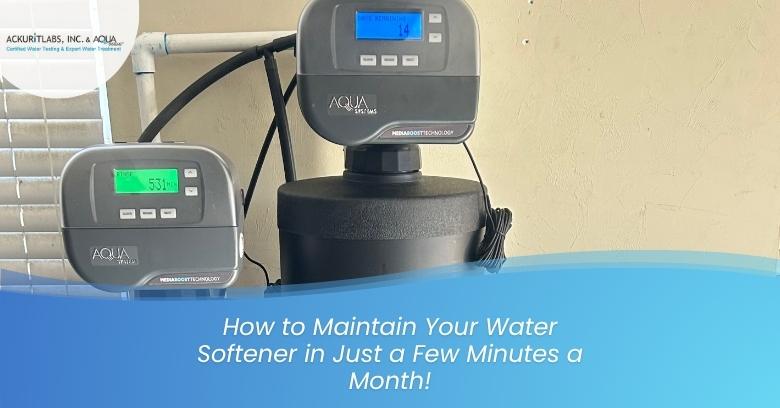
After any outage, confirm the time of day on the control head and that the valve is in service position, not bypass. Most control valves, such as the Fleck 5600SXT, Clack WS1, Autotrol 255, and 760, only maintain the clock for about 24 to 48 hours with capacitor backup. A water softener that thinks it is 2 a.m. when it is actually 7 a.m. will regenerate mid-shower and send hard, slightly salty water through the house.
Why North Florida Is Hard on Water Softeners
Humidity and Unconditioned Garages
Summer conditions in the Tallahassee, Florida, area drive bridging and mushing more than anything else. An uninsulated garage in northern Florida can swing thirty degrees in a day, and every cycle of warm, damp air pulls moisture into the salt. That is why the "keep it one-third to one-half full" rule matters more locally than in a dry climate, and why many homeowners around Tallahassee and Woodville, Florida, do better with pellets rather than with coarse solar crystals.
Storms, Outages, and Chlorine Spikes
From June through November, afternoon storms and tropical systems regularly knock out power. Each outage is a reason to check the clock again. Storm-related boil-water notices can push chlorine spikes into the city supply, which exhaust carbon cartridges faster than normal. If a home has a carbon filter before or after the softener, plan to replace it sooner after a notice. Chlorinated municipal water also shortens resin life, which is why 10% crosslink resin typically outlasts standard 8% resin on city water.
Winter Freezes
Hard freezes hit a few nights most winters. Brine tanks, drain lines, and bypass valves in garages or on exterior walls should be insulated before the first cold snap. A split drain line discovered in January is an avoidable repair.
Salt: Type, Quantity, and Cost
A family of four typically uses 40 to 60 pounds of salt a month, though that varies with hardness, household water use, and how the water softener is programmed. The City of Tallahassee sources its water from the Floridan Aquifer, which typically has a hardness level ranging from six to nine grains per gallon. This is considered moderate hardness, especially compared to levels found in the Midwest. So the main focus is managing scale and soap scum, not dealing with extremely hard water. Rural wells in Leon, Wakulla, and Gadsden counties vary far more widely.
As for what to buy:
- Pellets resist bridging best and are the default recommendation for humid garages.
- Crystals work well in high-volume systems but bridge more easily in small tanks.
- Solar salt is evaporated sea salt; it dissolves cleanly but can leave more residue over time.
- Potassium chloride is the sodium-free option. Across the industry, it costs roughly three to four times as much as sodium chloride, and you usually need to raise the salt dose by about 10%.
- Rock salt carries more insolubles and tends to create the sludge that forces a tank cleanout.
For context on the sodium question, softened water adds roughly 8 mg per liter of sodium for every grain of hardness removed. At typical area hardness, that is a small number, but anyone on a strict sodium-restricted diet should discuss it with a physician or run potassium chloride instead.
Settings That Quietly Waste Salt and Water
Most inefficiency is programming, not hardware. A few items worth confirming or asking a technician to confirm during water softening servicing:
- Regeneration time. Set it for about 2 a.m., when no one is drawing water.
- Compensated hardness. If the water carries dissolved iron, the hardness setting must be raised by roughly four to five grains per 1 ppm of iron. Skipping this is the most common reason a correctly sized unit still fouls.
- Irrigation t-shaped pipe fitting placement. Sprinklers and outdoor hose bibs should be allowed for and plumbed ahead of the softener. Landscape watering burns salt for no benefit, and irrigation season peaks April through June. Homes in Woodville, Florida, with large yards can noticeably cut salt use by moving that tee.
- Drain line air gap. Florida plumbing code requires the drain to discharge to an approved receptor with an air gap and never a direct connection.
- Septic considerations. Each regeneration uses roughly 35 to 80 gallons of water. For septic systems in Crawfordville and Fort Braden, that volume matters, and a demand-initiated valve regenerating only when needed is far gentler on a drainfield than a timer set to cycle every third night.
The Annual Tasks
Once a year, the brine tank should be emptied, washed, and refilled; the brine well and float should be cleaned; and the injector or venturi screen should be pulled and rinsed, since a clogged injector stops the brine draw entirely. Homes on iron-bearing wells should also run a resin cleaner on a regular schedule. Resin inside water softeners generally lasts 10 to 15 years, and a drop in capacity after a decade is normal wear, not a malfunction.
Households that pair a softener with filtration have a second calendar: sediment prefilters every three to six months, carbon blocks every six to twelve months, reverse osmosis membranes every two to five years, and an RO tank air charge of about 5 to 7 psi checked with the tank empty. A scheduled water softening service visit is the easiest way to keep both calendars from slipping.
What a Softener Will Not Fix
Water softeners remove hardness minerals. They do not remove bacteria, PFAS, lead, or hydrogen sulfide odor, and they will not clear the tannins that tint well water yellow near the Apalachicola River Edge, Lake Talquin, or Hampton Springs. Rotten-egg smell and orange staining point to sulfur and iron, which call for chlorination, carbon, or a dedicated iron filter, sized from actual lab numbers, not guesswork.
That is where water testing matters. A free in-store hard water test at Ackuritlabs Inc. gives an immediate read on hardness, while Ackuritlabs' NELAP-accredited laboratory, certified by the Florida Department of Health under number E81350, handles the chemical and microbiological analysis that determines what treatment a well actually needs. For Tallahassee and Woodville homeowners weighing a new system or troubleshooting an old one, that combination of lab data and installed treatment removes most of the guesswork.
The Bottom Line
To prevent most water softener issues, do four monthly checks: salt level, salt bridge, brine water, and the control clock. These checks only require a flashlight and a broom handle. While the annual tasks of cleaning the tank, rinsing the injector, and reviewing settings take longer, they are essential to keep salt consumption reasonable and extend the resin's lifespan to 10 to 15 years. Homeowners who skip these maintenance tasks may face scale buildup in the water heater, reduced appliance lifespan, and premature replacements.
If a water softener has gone a year or more without maintenance, or if the water remains hard even with a full salt tank, run a hardness test and schedule a professional inspection. To save on costs, plan your water softening service before hurricane season instead of waiting for the first outage to disrupt the valve. For help, schedule an appointment with a professional water softener service in the Tallahassee, Florida, area to be sure your system is functioning properly!
Key Takeaways
- Keep the brine tank one-third to one-half full with salt sitting three to four inches above the water line, and resist the urge to overfill in a humid garage.
- Probe for a salt bridge monthly with a wooden or plastic handle; a full-looking tank with hard water in the house is the classic symptom.
- Reset the control valve clock after every power outage, because most heads hold the time only 24 to 48 hours.
- Move sprinklers and outdoor hose T-shaped pip fittings ahead of the softener so irrigation does not consume salt for no benefit.
- Remember that a softener removes hardness only; bacteria, sulfur odor, tannins, lead, and PFAS require separate, lab-guided treatment.
Frequently Asked Questions
My tank is full of salt, but the water is hard again. Why?
Almost always a salt bridge, where a crust of fused salt spans the tank and leaves the brine well empty underneath. Push a broom handle down through the salt in several places; if it breaks through with a crack, refill and run a manual regeneration.
Is there supposed to be water in the brine tank?
Yes, several inches of brine in the bottom is normal and necessary. What is not normal is a slushy sludge layer, which indicates mushing and needs to be scooped out rather than stirred.
Does softened water taste salty, and is it safe on a low-sodium diet?
It should not taste salty, since softening adds roughly 8 mg per liter of sodium per grain of hardness removed. Anyone on a medically restricted sodium intake should ask their physician or switch to potassium chloride.
Why does my water feel slippery?
That slippery feel is simply soap rinsing away completely instead of combining with calcium and magnesium to leave a film on the skin. It is a sign the system is working, not a sign of residue.
Will a softener handle my well's rotten-egg smell or orange staining?
No, sulfur odor and iron staining require chlorination, carbon, or a dedicated iron filter. A laboratory test identifies the concentrations so the treatment can be sized correctly.
Can brine discharge hurt my septic system?
The salt itself is generally tolerated, but the 35 to 80 gallons of water per regeneration can strain a marginal drainfield. A demand-initiated valve that regenerates only when needed reduces that load considerably.
Should I bypass the softener when we leave for a month?
Bypassing the valve is reasonable for extended absences, but run a manual regeneration when you return. Stagnant resin can develop odor, so flush the system before heavy use.
Do I need to sanitize after a boil-water notice?
Sanitizing the softener after a boil-water notice is a sound precaution, typically done with an approved sanitizer followed by a full regeneration. Carbon cartridges also exhaust faster after chlorine spikes and should be checked.