Thinking About Water Treatment in Tallahassee Florida?
A treatment system is a tool for one job, so the job has to be named before the tool is picked; the sections below put the options in plain language.
Contact Ackuritlabs And Aqua Systems at 850-616-2634 to ask which questions come before any equipment.
The Order of Operations: a Lab Number Beats a Guess
Equipment bought off a shelf may handle a different problem than the one at the tap, and the figure is what a provider uses to size and pick the unit. Anyone without a recent report can usually be pointed to a suitable panel first; the equipment decision waits until the numbers are in.
Ion Exchange: a Bed of Beads and a Brine Tank
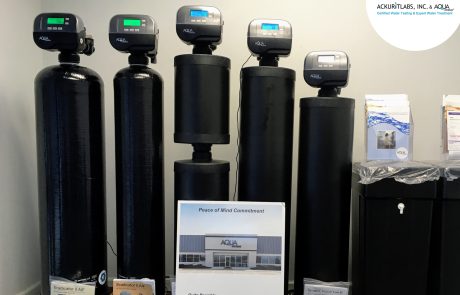
The core of a standard softener is a resin bed that exchanges hardness minerals for a softer ion, and a salt or potassium brine recharges the bed on a schedule. Laundry and dishes tend to come out cleaner where the minerals have been removed, and it will not change the taste of the supply on its own.
Template-Assisted Units: What They Do and Do Not Do
Nothing is exchanged, so the lab number for hardness reads the same before and after, and maintenance is limited to replacing the media on a schedule. Anyone expecting the soft feel of a true softener should know the two are different things, and it helps compare options fairly.
The Charcoal Option: Why Cartridges Run Out
Surfaces inside the carbon grab onto particular chemicals, leaving a cleaner taste behind, and ordinary carbon handles free chlorine more easily than chloramine. Carbon has a limited capacity, and once it is spent, it stops doing its job; a taste that creeps back is the usual reminder.
Housings and Replaceable Elements: Keeping Spare Elements
Sediment cartridges screen out sand, rust flakes and silt before they reach appliances; the rating, given in microns, states how small a particle the element is built to catch. The installer chooses which element goes first, because a clogged first stage starves the rest; keep a spare cartridge on a shelf.
Membrane Systems – Storage Tank, Faucet and Drain
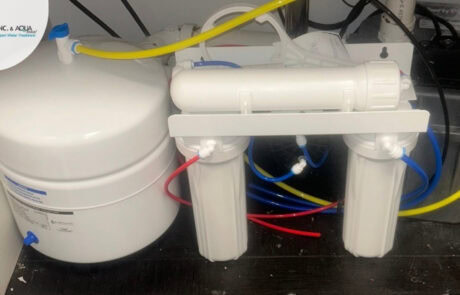
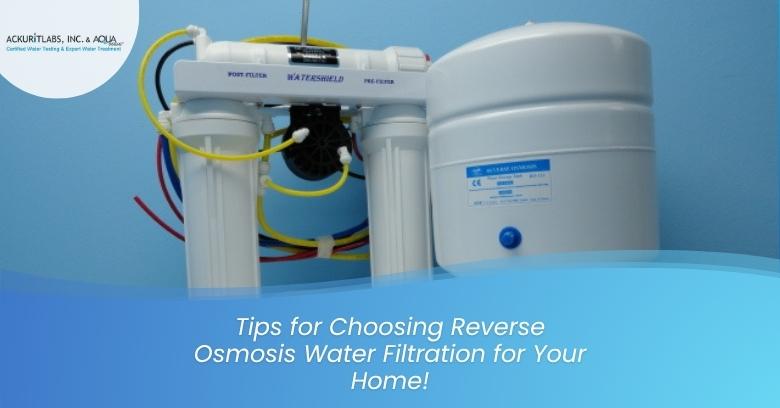
Pressure pushes the supply against a semipermeable membrane, and most dissolved material is held back, and a small storage tank holds finished supply for the dedicated faucet. A lab test before and after is the reliable way to know what a particular system achieves; the provider can explain what to expect for your supply.
Injectors and Contact Tanks: a Metering Pump and a Retention Tank
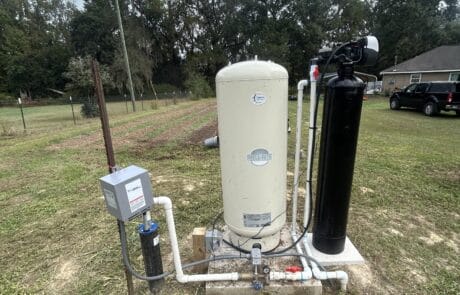
The setup pairs a feed pump with a retention tank so the chlorine has time to work; the tank is sized to the flow of the well. Residual chlorine has to be removed afterward, and a carbon filter normally takes that job, and the setup should be checked after the first weeks.
Treating Everything or Just the Faucet: Choosing the Footprint
Everything inside the building sees treated flow when equipment sits at the entry; a garage or utility closet often becomes the home. Many households combine both: a main-line device for scale and a sink model for taste, and it shows which walls and lines are involved.
Flow Rate and Capacity – Pressure Drop and Pace
Equipment is rated by how fast supply can pass through it and by how much it can treat before servicing, along with the hardness or iron level on the lab report. When a unit is too small, pressure falls at fixtures during busy mornings, and an installer should explain why a particular size was chosen.
Installation Details: Bypass Valves, Drains and Outlets
Most systems need a bypass valve so the plumbing can keep flowing during service; chlorine feed pumps and contact tanks add their own requirements. Checking with the local office is sensible before anything is cut or glued; measure before ordering.
Wells Versus City Lines: Different Problems, Different Gear
Supply from a public system arrives already disinfected, which changes what is left to fix; sediment and iron tend to be the early concerns. Because the two sources differ, the same product can be a great fit on one and wasted on the other; neighbors on the same aquifer can still differ.
After an Outage: Controllers, Pumps and Flooding
Pumps, injectors and controllers all depend on electricity, and an outage pauses every one of them; a quick look at the salt level and the drain line completes the check. Anything touched by flooding, including a well pump and chemical feed gear, deserves a professional look, and the provider can describe what a post-storm check involves.
Where Everything Goes: Keeping the Area Tidy
A recharge brings gurgling and flowing noises for a spell, usually at a scheduled hour; clear floor space around a tank makes salt loading simple. Some owners build a small enclosure, though it must not block air or access, and the provider should ask about access.
Replacement and Add-Ons – Keep, Repair or Replace
A house may come with equipment that nobody remembers installing, so a look at the labels is the first step; a fresh lab panel shows whether the present system is still doing its job. The simplest upgrade is often a fresh set of cartridges or media, not a new system, and old manuals are worth saving.
Larger Buildings and Heavier Demand: Written Specifications
Boilers, cooling equipment and ice makers can be sensitive to scale, which shapes the design, and a drawing of the proposed layout is a reasonable request. Commercial owners usually want service records, so the system should make them easy to keep, because early warning beats a repair.
Maintenance Rhythm: Salt, Cartridges and Media
Every type of equipment has a consumable: salt for softeners, cartridges for filters, membranes for osmosis units; a simple calendar reminder prevents most lapses. Bad smells from a filter housing mean it has gone too long, and a retest confirms the numbers.
Confirming the Result: Before and After Side by Side
A sample collected after the system is running shows whether the problem was solved; collecting at the same tap, in the same way, keeps the comparison fair. Some substances respond well and others hardly at all, which the new figures reveal; store copies where they can be found.
Honest Limits – Read the Fine Print
Equipment performs within limits set by its design, the supply and the upkeep; ask for the specific substances a product addresses. A provider unwilling to discuss limits is one to think twice about; nothing here replaces advice for your property.
Comparing Proposals – Everything in Writing
- What does the proposal assume about hardness, iron and chlorine, and where did those figures come from; a specific answer is what you want.
- Who installs the equipment, and who services it after the job is done; get the details itemized.
- How will you know the equipment is working a few months from now; write the answers down.
A Call Before a Purchase – One Call Sorts Out Next Steps
Call Ackuritlabs And Aqua Systems at 850-616-2634 to ask what a sensible first step would be for your supply.
The Short Version: Matching Hardware to the Finding
Every lasting installation rests on a clear diagnosis, a suitable size and regular care, because each property in Tallahassee Florida has its own story, whatever any page says about Water Treatment. To get started, reach Ackuritlabs And Aqua Systems at 850-616-2634; mention whether the supply is a well or a utility line.
Verified

Verified
Verified
Verified
Verified