Weighing Options for Chlorination System Installation Around Monticello Florida?
Each piece of hardware on the market answers a particular complaint, and none answers all of them, and the sections below explain how the common options differ.
Phone Ackuritlabs And Aqua Systems at 850-616-2634 to talk through what the tap has been doing.
Before Any Equipment: Naming the Target
Taste and appearance narrow the field, though only a lab report settles it, and the figure is what a provider uses to size and pick the unit. Even a brief description of the symptoms helps decide which measurements to order, and a short delay beats replacing the wrong unit.
Ion Exchange – Swapping Minerals for Sodium or Potassium
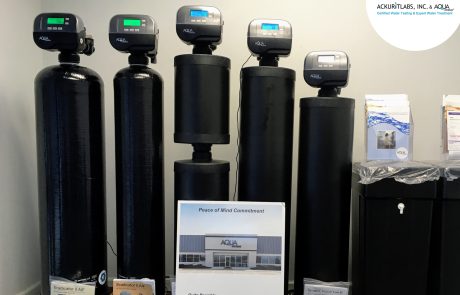
The beads in a softener hold hardness minerals until they are rinsed clean, and the stored brine is topped up with salt as needed. Softened supply leaves less scale on fixtures, glass and heating elements; the lab result still decides what else belongs in the plan.
Salt-Free Conditioners: an Honest Comparison
A salt-free unit does not remove calcium or magnesium; it alters how those minerals behave, and maintenance is limited to replacing the media on a schedule. Expect scale to be reduced rather than eliminated, and expect no change in how soap lathers, and a good provider explains that before the purchase.
Adsorption Media – Granular Beds and Blocks
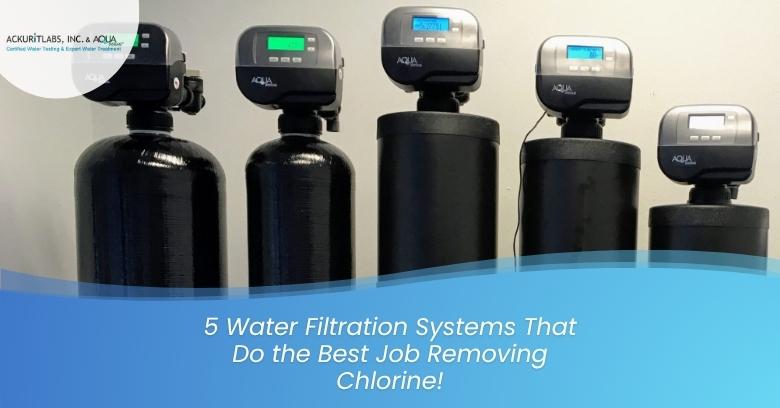
Carbon holds onto certain compounds as supply passes through, which cuts chlorine taste and some odors, and ordinary carbon handles free chlorine more easily than chloramine. Every carbon filter eventually fills up, so replacement or backwashing is part of owning one, and the maker's change interval is a guide, not a promise.
Canisters on the Line – Catching Grit Before It Travels On
Grit and flakes get stopped by a pleated or wound element sitting in a clear or opaque canister, which lets each cartridge last longer. Pressure falls as an element loads up, which is the practical signal to swap it; a wrench for the housing is a worthwhile purchase.
Drinking Supply Upgrades: Where It Sits and What It Wastes
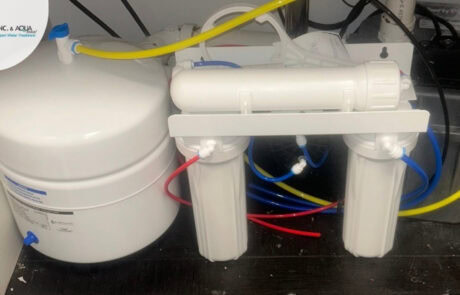
The membrane is the center of the system, flanked by pre-filters and a final carbon stage; compact units fit under a sink and serve a single tap. The reduction achieved depends on membrane condition, pressure and what is in the feed; ask for the maintenance schedule in writing.
Treating Iron, Sulfur and Microbes: What the Installer Sets Up
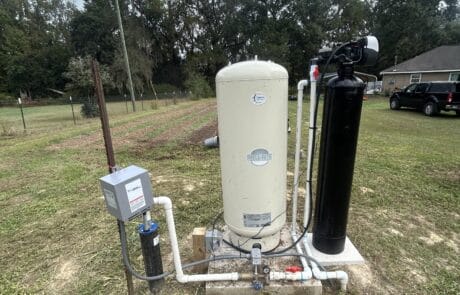
A pump, a tank and a backwashing filter form the heart of a chlorination setup, and the dose is set from lab readings. The final stage polishes taste and removes what remains of the disinfectant; chemicals are stored and handled according to the label.
Treating Everything or Just the Faucet – One Tap, One Sink, One Appliance
Everything inside the building sees treated flow when equipment sits at the entry; scale, iron and chlorine are the usual reasons to go this route. Many households combine both: a main-line device for scale and a sink model for taste, and the two approaches work well together.
Flow Rate and Capacity: Gallons per Minute and Grains
Treating the household's peak demand, not its average, keeps pressure from dropping; high readings use up capacity faster. When a unit is too small, pressure falls at fixtures during busy mornings; a reasoned answer is a good sign.
Practical Requirements – Planning for Service Access
Valves around the equipment allow it to be taken out of service in minutes; the walk-through before work matters. Codes affect drain connections, backflow protection and the placement of equipment; a tidy install is easier to maintain.
Supply Source Matters – Raw Groundwater Versus Treated
A well has no utility between it and the tap, so equipment often handles more of the load, and equipment has to work with the pump's pressure and flow. Because the two sources differ, the same product can be a great fit on one and wasted on the other; neighbors on the same aquifer can still differ.
Storms and Power Interruptions: What to Check Afterward
Pumps, injectors and controllers all depend on electricity, and an outage pauses every one of them; a quick look at the salt level and the drain line completes the check. Equipment that sat in floodwater needs inspection before it goes back into service; keep manuals and settings notes together.
Noise, Space and Appearance: Tanks, Hums and Cabinets
Compressors and pumps are the noisiest parts of larger systems, and they normally sit in a mechanical space, which is worth thinking through before delivery. Leaving room to open lids, change cartridges and read gauges makes upkeep a quick job, and the provider should ask about access.
Upgrading What Is Already There – Reading Old Labels
Older units may still work but have worn parts, such as seals, valves, resin or membranes; the model number on the label usually leads to a manual and a parts list. Adding a stage to an existing setup requires attention to order, flow rate and pressure drop; photographs of the current setup speed up the first conversation.
When a Property Has Many Users: Boilers, Ice Machines and Kitchens
Business equipment is sized for higher flows and often arranged in pairs so one tank can work while the other recharges; a duplex arrangement keeps soft supply flowing through each recharge. Training the people on site about shutoffs and alarms prevents small problems from growing, and the provider can supply those if asked.
Service Schedule: Signs a Unit Needs Attention
Soft supply depends on a brine tank that is kept stocked; a label on each housing with the install date helps. Noisy valves, salt bridges in the tank and slow flow are signs worth a look, and a retest confirms the numbers.
Closing the Loop – Numbers, Not Impressions
Comparing a new lab report against the original is how a household confirms the hardware did its job, and the lab can run the identical methods again. Treatment can reduce certain items without eliminating them, and the report shows by how much; the file is useful for a future sale.
Honest Limits: Questions for Any Seller
No single device removes every substance, and a pitch that one box covers everything deserves doubt; ask for the specific substances a product addresses. A fair provider will tell you when equipment is not the fix, or not the whole fix; nothing here replaces advice for your property.
What to Ask at the Door – Written Answers Preferred
- Is the recommended size tied to the lab figures and the household's flow; vague answers deserve a follow-up.
- Which local rules apply to this installation, and who handles them; a walk-through at the end is reasonable to ask for.
- What does a retest look like, and when is it scheduled; write the answers down.
Planning a System: Bring What You Know
Contact Ackuritlabs And Aqua Systems at 850-616-2634 and describe the house, the plumbing and what you want changed.
What to Remember: Test, Choose, Install, Confirm
Good outcomes come from habits worth repeating: testing first, buying second and checking afterward; whatever has brought you to read about Chlorination System Installation near Monticello Florida, a short call sorts out where to begin. You can speak with Ackuritlabs And Aqua Systems at 850-616-2634 about your plumbing and your goals, and share what the lab report shows.
Verified

Verified
Verified
Verified
Verified