Thinking About Residential Water Softener Installation Around Tallahassee Florida?
Good installations start from a lab result and work toward a device that suits it; read on for how the pieces fit together.
Phone Ackuritlabs And Aqua Systems at 850-616-2634 to ask which questions come before any equipment.
Before Any Equipment – Reading the Problem Correctly
Orange stains, chalky scale and a swampy smell can each have a separate cause, and each calls for different gear, and the figure is what a provider uses to size and pick the unit. Anyone without a recent report can usually be pointed to a suitable panel first, and a short delay beats replacing the wrong unit.
Taking Out Hardness: How the Resin Works
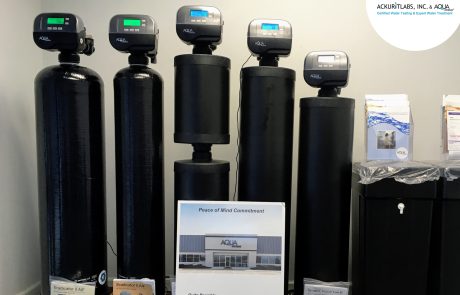
The beads in a softener hold hardness minerals until they are rinsed clean; the unit needs a drain line and a power outlet. Laundry and dishes tend to come out cleaner where the minerals have been removed, and it will not change the taste of the supply on its own.
Template-Assisted Units – Setting Expectations
Nothing is exchanged, so the lab number for hardness reads the same before and after; people choose these devices to avoid salt, brine discharge and a drain connection. The results are described best as less crust, not no crust, and a good provider explains that before the purchase.
Adsorption Media: Why Cartridges Run Out
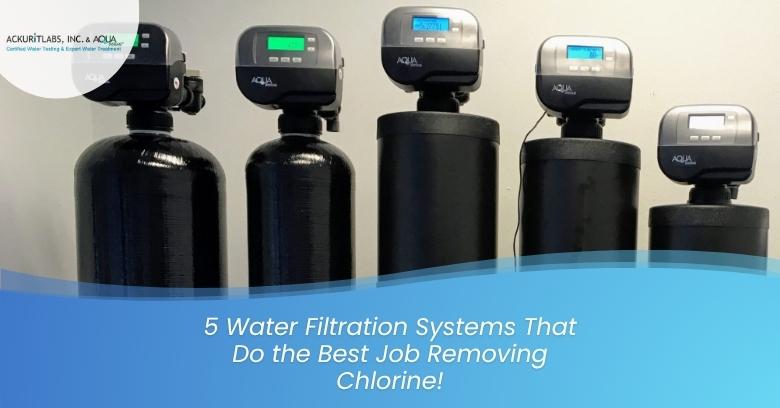
Filters based on carbon are the usual choice for chlorine taste and many household odors, and ordinary carbon handles free chlorine more easily than chloramine. Capacity depends on how much is in the supply and how much a household uses, and the maker's change interval is a guide, not a promise.
Spun, Pleated and Wound Media: Sizes, Ratings and Swaps
A housing on the line holds a cartridge that screens out particles above a chosen size; a series of coarse then fine elements spreads the load. The installer chooses which element goes first, because a clogged first stage starves the rest; a wrench for the housing is a worthwhile purchase.
Drinking Supply Upgrades: Fair Expectations
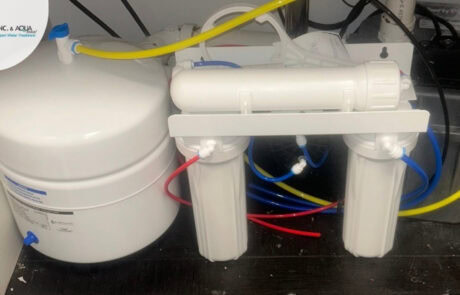
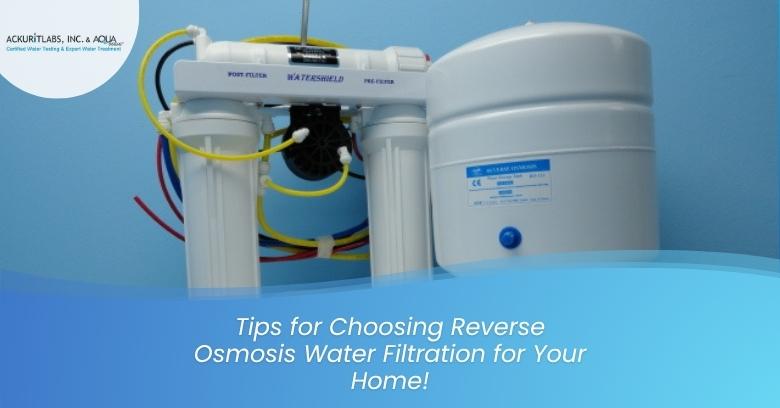
A membrane passes the liquid and rejects a large share of dissolved salts and other solids; compact units fit under a sink and serve a single tap. The reduction achieved depends on membrane condition, pressure and what is in the feed; the provider can explain what to expect for your supply.
Injectors and Contact Tanks – the Carbon Stage Afterward
A metering pump feeds sodium hypochlorite into the flow, and a tank gives it time to react, and it also acts on bacteria in the supply. The final stage polishes taste and removes what remains of the disinfectant; a wrong dose helps nobody.
Whole-House or Single-Tap – Matching Scope to Need
Equipment where the supply enters the building protects all the plumbing downstream; larger tanks and brine cabinets take real room. Single-tap filters and membranes work where only drinking supply needs the extra step; the provider can sketch where each unit would go.
Flow Rate and Capacity: What Undersizing Looks Like
The size of the housing and the volume of media set how much a system can handle; a unit that is too small shortens the time between regenerations. Oversizing has drawbacks too, since idle media can foul and extra tanks need space; a reasoned answer is a good sign.
Practical Requirements: Bypass Valves, Drains and Outlets
Valves around the equipment allow it to be taken out of service in minutes; the walk-through before work matters. Whoever does the installation should be able to say what the local rules ask for, and access for servicing should be planned from the start.
Two Starting Points: Different Problems, Different Gear
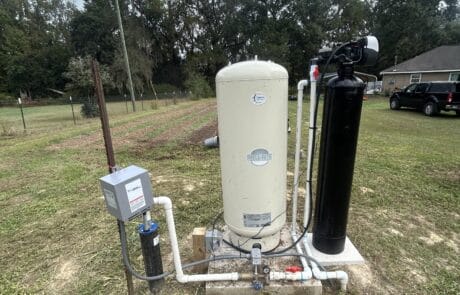
Raw well supply brings the chemistry of the ground straight to the plumbing, and equipment has to work with the pump's pressure and flow. The provider needs to know which source feeds the house before suggesting anything, and a lab report removes most of the guesswork.
After an Outage: Planning Before the Season
Pumps, injectors and controllers all depend on electricity, and an outage pauses every one of them, and a surge protector on the outlet is sensible protection for the electronics. Silt in a housing, a wet motor or a corroded joint can turn a repair into a replacement; write down the shutoff locations.
Practical Details Homeowners Ask About – Reaching the Controls
Noise from a unit tends to come from the drain line and the valve rather than the tanks, and a level pad keeps tanks from shifting. A tidy installation labels valves, supports the plumbing and keeps the area dry, and the installer can suggest a layout.
An Older System in the Garage – Keep, Repair or Replace
Equipment bought long ago was chosen for a supply that may have changed since; a fresh lab panel shows whether the present system is still doing its job. Adding a stage to an existing setup requires attention to order, flow rate and pressure drop, and the installer should explain what is being kept.
When a Property Has Many Users – Keeping Service Running
Restaurants, offices and apartment buildings draw far more than a house, and the gear is scaled to match; the existing mechanical room often decides what fits. Training the people on site about shutoffs and alarms prevents small problems from growing; ask what monitoring the equipment offers.
Keeping Equipment in Shape: What Gets Neglected
Every type of equipment has a consumable: salt for softeners, cartridges for filters, membranes for osmosis units; a label on each housing with the install date helps. Bad smells from a filter housing mean it has gone too long; an annual look at the controls is sensible.
Confirming the Result – Filing the Evidence
Nothing beats a repeat panel for showing whether the readings moved; schedule it when the system goes in. Treatment can reduce certain items without eliminating them, and the report shows by how much; a short note on the equipment installed completes the record.
Expectations Worth Setting: Questions for Any Seller
Marketing language tends to be broader than what a product actually does; read the data sheet, not just the front of the box. Anyone selling treatment equipment should be able to explain what it reduces and what it leaves alone, and a plain no is sometimes the most useful answer.
Questions for a Provider: Points Worth Raising
- Is the recommended size tied to the lab figures and the household's flow, and the proposal should say so on paper.
- Who installs the equipment, and who services it after the job is done; get the details itemized.
- What signs should prompt a call before the next scheduled check; each of these is worth asking.
Getting Advice – Share Your Lab Report
Dial Ackuritlabs And Aqua Systems at 850-616-2634 and describe the house, the plumbing and what you want changed.
The Short Version – Upkeep Keeps It Working
A dependable setup follows a sequence: measure the supply, pick equipment to suit, install it carefully and test again; this page on Residential Water Softener Installation in Tallahassee Florida is a starting point, and the details of each property decide the rest. Call 850-616-2634 to reach Ackuritlabs And Aqua Systems and talk over your situation; the call goes quickly.
Verified

Verified
Verified
Verified
Verified