Looking for Water Filtration Throughout Woodville Florida?
Good installations start from a lab result and work toward a device that suits it, and the sections below cover sizing, setup and upkeep.
Speak with Ackuritlabs And Aqua Systems at 850-616-2634 to ask which questions come before any equipment.
Where Treatment Begins: a Lab Number Beats a Guess
A smell, a stain or a taste is a symptom, and the symptom alone rarely identifies the cure; having a report on hand speeds everything up. If the history of the supply is unknown, a baseline panel is the sensible opener; the equipment decision waits until the numbers are in.
Softening – What It Fixes and What It Leaves
Inside the tank, tiny resin beads attract the minerals that cause scale and give up sodium or potassium in return; when the beads fill up, a brine rinse flushes the captured minerals to a drain. Scale buildup on heaters, kettles and shower heads slows down where hardness has been removed; it is not meant to filter out bacteria or chemicals.
Alternatives to the Brine Tank – Changing How Scale Forms
Conditioners leave the hardness figure unchanged and change the shape of the crystals that form; people choose these devices to avoid salt, brine discharge and a drain connection. Anyone expecting the soft feel of a true softener should know the two are different things, and a good provider explains that before the purchase.
Taste and Odor Control: Matching Carbon to the Target
Surfaces inside the carbon grab onto particular chemicals, leaving a cleaner taste behind; it helps to know what the utility adds. Every carbon filter eventually fills up, so replacement or backwashing is part of owning one; a taste that creeps back is the usual reminder.
The Filter Under the Cap: Reading the Micron Number
Sediment cartridges screen out sand, rust flakes and silt before they reach appliances, which lets each cartridge last longer. The installer chooses which element goes first, because a clogged first stage starves the rest; write the swap date on the canister.
Drinking Supply Upgrades – Dissolved Solids Reduced
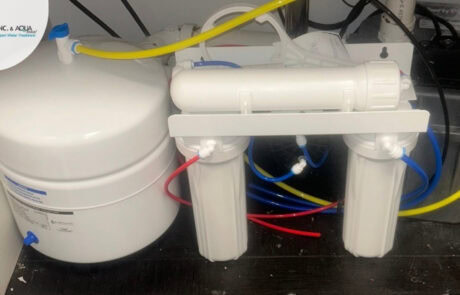
A small pump or the line pressure drives the flow through a membrane with extremely fine pores; most home units sit under a sink and serve one tap. The reduction achieved depends on membrane condition, pressure and what is in the feed; ask for the maintenance schedule in writing.
Treating Iron, Sulfur and Microbes: Why Dose Control Matters
A pump, a tank and a backwashing filter form the heart of a chlorination setup; time in the tank is what makes the reaction complete. After the contact tank, a carbon stage strips leftover chlorine so the tap smells clean, and chemical equipment is installed and set up with care.
Point of Entry Versus Point of Use: Planning the Pipe Run
Equipment where the supply enters the building protects all the plumbing downstream; larger tanks and brine cabinets take real room. Where only one fixture matters, a compact installation avoids treating the whole house, and the two approaches work well together.
Choosing a Capacity: Gallons per Minute and Grains
Treating the household's peak demand, not its average, keeps pressure from dropping; high readings use up capacity faster. When a unit is too small, pressure falls at fixtures during busy mornings, and an installer should explain why a particular size was chosen.
Practical Requirements – Planning for Service Access
Good installations include a way to route flow around the unit when needed, and electrical needs vary from a plug-in transformer to a dedicated circuit. Codes affect drain connections, backflow protection and the placement of equipment; leave room to open the tank lid and swap a cartridge.
Supply Source Matters – Pressure Tanks and Pumps
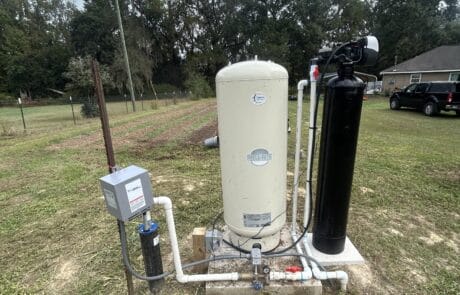
Private wells deliver untreated groundwater, which can carry iron, sulfur, hardness and microbes; sediment and iron tend to be the early concerns. A carbon unit that suits a city line may be useless against the main problem of a well; mention the source on the first call.
Weather and the Equipment Room: Controllers, Pumps and Flooding
Many controllers keep their program in memory for a short while, and then need to be set again, since a stuck valve is easier to catch early. Silt in a housing, a wet motor or a corroded joint can turn a repair into a replacement; keep manuals and settings notes together.
Living With the Equipment: Keeping the Area Tidy
Pumps and metering equipment hum when they work, so placement matters for bedrooms and offices; clear floor space around a tank makes salt loading simple. A tidy installation labels valves, supports the plumbing and keeps the area dry; a sketch of the space helps the planning.
Inherited Hardware: Test Before Deciding
Equipment bought long ago was chosen for a supply that may have changed since; a fresh lab panel shows whether the present system is still doing its job. The simplest upgrade is often a fresh set of cartridges or media, not a new system; nothing is replaced without a reason.
Commercial Systems – Keeping Service Running
Business equipment is sized for higher flows and often arranged in pairs so one tank can work while the other recharges, and a controller can log regeneration cycles. Staff who run the building need to know where the valves are and what each one does, and it supports any later troubleshooting.
Routine Care: What Gets Neglected
Every type of equipment has a consumable: salt for softeners, cartridges for filters, membranes for osmosis units; the manual lists intervals, though a heavy load shortens them. If stains come back, or the taste creeps back, something in the chain has used up its capacity, and a retest confirms the numbers.
Proof After Installation: Tracking Performance
The most reliable verification is a fresh panel run on the same items as before, and the lab can run the identical methods again. If a reading is still high, the report guides the next adjustment; a short note on the equipment installed completes the record.
What Equipment Cannot Do: No Single Device Fixes Everything
A softener will not make a supply taste different, and a carbon filter will not soften it; ask how that is demonstrated. Anyone selling treatment equipment should be able to explain what it reduces and what it leaves alone; nothing here replaces advice for your property.
What to Ask at the Door: Scope, Parts and Follow-Up
- Which lab results is the proposal based on, and which items does it address, and the proposal should say so on paper.
- What parts and consumables are needed, and how often do they need replacing; clear scope prevents surprises.
- What signs should prompt a call before the next scheduled check, and what does it say about future servicing.
Planning a System: Questions Are the Starting Point
Dial Ackuritlabs And Aqua Systems at 850-616-2634 and ask what to collect before any equipment is chosen.
Pulling the Threads – the Sequence That Works
Good outcomes come from habits worth repeating: testing first, buying second and checking afterward; this page on Water Filtration in Woodville Florida is a starting point, and the details of each property decide the rest. To get started, reach Ackuritlabs And Aqua Systems at 850-616-2634; the call goes quickly.
Verified

Verified
Verified
Verified
Verified