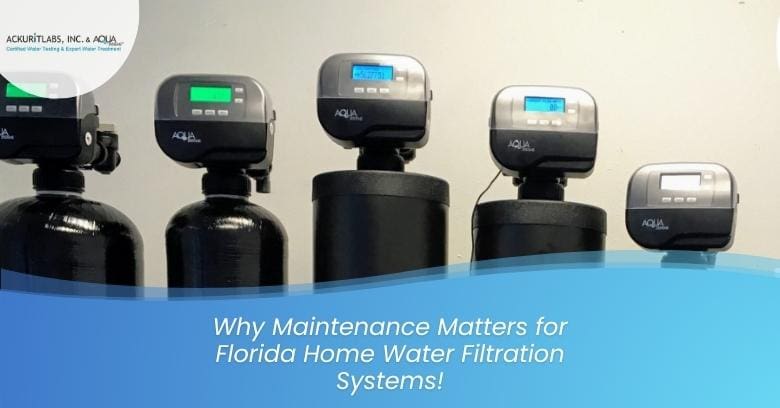
Most homeowners think about water treatment exactly twice: the day they notice the problem, and the day the equipment goes in. After that, the tank in the garage or the cartridges in the well house quietly disappear into the background. That is precisely when water filtration stops doing what the owner believes it is doing, not with an alarm or a leak, but silently, while the taste stays acceptable and the pressure feels normal enough. In Tallahassee, Florida, and nearby Woodville, where the supply comes entirely from the Floridan aquifer, that silence is especially misleading because the most common local problems are mineral scale and invisible chemistry rather than anything the eye can catch.
Timing matters too. Water leaves the aquifer around 70°F year-round, and warm feed water encourages biofilm to regrow on spent carbon, so a cartridge that still works fine can quietly become a habitat rather than a barrier. Add a hurricane season that runs June 1 through November 30, the hard freeze that split outdoor sumps across the Panhandle in January 2025, and summer irrigation that pushes far more gallons through a water filtration system than its designer assumed. The maintenance interval printed on the box starts to look optimistic.
This article covers what the local water actually contains, how each treatment stage fails, what hurricanes and outages do to equipment, why only lab testing reveals carbon or membrane breakthrough, and a practical service calendar that keeps water filtration performing year after year.
What the Local Supply Really Puts Through Your Equipment
City Water: Treated, But Still Demanding
City wells draw 100% groundwater, disinfect it with chlorine, and deliver water that is naturally hard and alkaline after passing through limestone. Hardness across the Floridan aquifer commonly runs in the 120 to 250 mg/L as CaCO3 range, which is why Tallahassee residents complain about spotted glassware, crusted fixtures, and shorter appliance serviceable life rather than sediment. Chlorine is the second issue: it does its job in the main, then arrives at the tap as taste and odor. Carbon handles that well until it exhausts, which happens with no warning at all. The annual Consumer Confidence Report describes what enters the distribution system, not what is left of the capacity in household water filtration system months later.
Private Wells: Unregulated After Day One
Step outside city limits toward Woodville, Florida, Fort Braden, Crawfordville, Havana, Gretna, or the Lake Talquin area, and private wells dominate. These wells are essentially unregulated after installation, with no chlorine residual to keep anything in check. The results show up as iron bacteria, hydrogen sulfide with its rotten-egg smell, tannins from swamp-influenced shallow wells, and occasional coliform intrusion. Iron above 0.3 mg/L stains laundry and fixtures, while sulfide is detectable by smell well below 0.1 mg/L. Well owners near Woodville often run multi-stage filtration systems including sediment, then oxidizing media such as Birm, Katalox, or KDF-85, then softening and every one of those stages has its own failure mode and its own clock.
Stage-by-Stage: How Maintenance Actually Fails
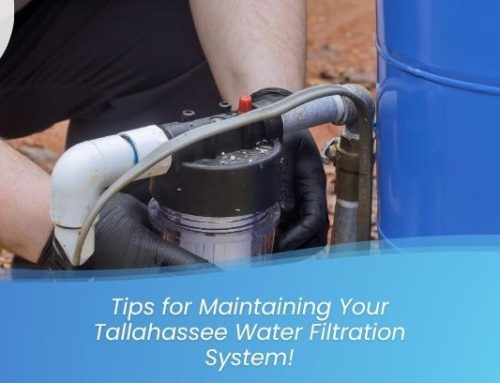
Neglect rarely shuts a system down. It degrades water filtration stage by stage, and each stage fails characteristically:
- Sediment cartridges blind off. A 5-micron cartridge typically lasts 3 to 6 months. A pressure drop of 10 to 15 psi across the housing means change it now, not next month. House pressure usually sits at 40 to 60 psi, and well pump switches are set at 30/50 or 40/60, so a clogged pre-filter can starve everything downstream.
- Carbon exhausts silently. Carbon blocks typically run 6 to 12 months. Once chlorine breaks through, there is no taste warning; the water simply stops being treated while the housing looks identical.
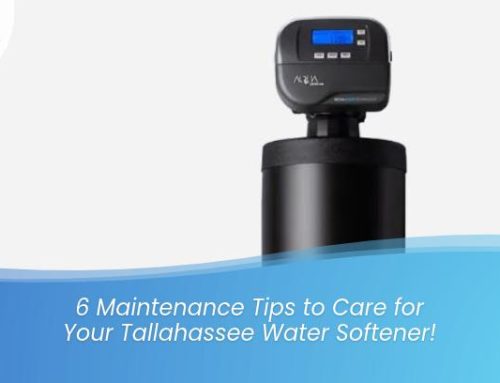
- Softener resin fouls with iron. Softener resins do not filter; they exchange hardness for sodium. Feed one untreated iron or sulfide and the resin fouls early, which is why a tank consuming salt can still deliver hard water. Resin iron cleaner helps, but prevention upstream matters more.
- Brine tanks bridge or mush. A bridge is a hardened salt crust with a hollow void beneath it; mushing is a sludgy layer at the bottom. Both stop brine from forming, and you can find either by probing the tank with a broom handle.
- Chlorine injector check valves stick. Liquid sodium hypochlorite also loses strength quickly in a hot pump house, so a dose that worked in March under-treats in August.
- RO stages drift out of spec. Pre and post-filters are annual items, membranes last 2 to 5 years, and a trickling faucet usually points to a waterlogged tank. An empty RO tank bladder should read 5 to 8 psi.
Households around Woodville, Florida that combine a well, a softener, and an under-sink RO are running three independent maintenance schedules at once. Writing them down is the difference between a system that performs and water filtration that merely occupies space.
Storms, Freezes, and Outages: The Local Variables
After the Storm
Hurricane season brings more than inconvenience. Hurricanes Michael in 2018, Idalia in 2023, and Helene and Debby in 2024 produced flooding and multi-day outages across Leon, Gadsden, and Wakulla counties. A flooded wellhead is a contamination event: the well needs shock chlorination, and a post-event bacteria test should confirm the result before anyone trusts the filtration system again. Running contaminated water through carbon does not sanitize it - it seeds the media. Boil-water notices in Tallahassee, Florida carry a similar lesson, since the advisory applies to whatever comes out of the treated tap as well.
After the Power Goes Out
Extended outages reset or stall Fleck and Clack control valve programming. A softener may regenerate at 2 p.m. on a Tuesday, regenerate at the wrong hardness setting, or skip regeneration entirely while still looking normal. Checking the time, hardness, and regeneration schedule after every multi-hour outage takes two minutes and prevents weeks of hard water.
After a Freeze
The January 2025 Florida Panhandle snow and hard freeze split outdoor filter sumps and exposed well-house plumbing. Clear 4.5” x 20” Big Blue housings are especially vulnerable when they sit outside or in an unheated pump house, and a hairline crack often only shows up under pressure. Insulating housings, heat-taping exposed lines, and inspecting sumps each winter keep water filtration equipment out of the emergency-repair category.
Testing: The Only Way to See What Maintenance Missed
Carbon and reverse osmosis both reduce PFAS, but their capacity is finite and completely invisible. No color change, smell, or pressure signal indicates when a bed reaches breakthrough. EPA set limits for PFOA and PFOS at 4 parts per trillion in 2024, with utility compliance deadlines extended into the early 2030s, which means household water filtration is doing real work in the interim if it is still working at all. Periodic lab analysis is the only honest confirmation, and PFAS panels typically run $300 to $600 industry-wide.
Tallahassee area well owners have a separate baseline obligation: coliform and E. coli plus nitrate, annually at minimum, and again after any flooding event. For an RO unit, there is a quick health check anyone can perform if treated-water TDS exceeds roughly 15% of feed TDS, the membrane is finished. Beyond that, matching equipment to certifications is worth doing before buying: NSF/ANSI 42 covers aesthetic claims, 53 health claims, 58 reverse osmosis, 44 softeners, and 401 emerging contaminants. Residents near Woodville, Florida, and across Gadsden County benefit from testing before specifying media, since low-pH well water may require calcite or soda ash to prevent corrosion, regardless of what the water filtration stages remove.
Ackuritlabs is NELAP-certified and certified by the Florida Department of Health under certification number E81350, with chemists and microbiologists on staff and more than 30 years of technical leadership in environmental testing. Through the Aqua Systems brand, homeowners get a free in-store water test that gives an immediate read on hard water from a sample they bring in.
A Maintenance Calendar That Holds Up
- Monthly: Check brine tank salt level and probe for bridging; a 40 lb. bag of salt runs roughly $6-$9 trade-wide. Note the pressure gauge reading before and after the filter housing.
- Every 3 to 6 months: Replace 5-micron sediment cartridges, or sooner if pressure drop reaches 10 to 15 psi. Cartridges generally cost $8-$40 each.
- Every 6 to 12 months: Replace carbon blocks on schedule, not on taste. Summer irrigation and pool fills raise throughput and shorten media life.
- Annually: Change RO pre and post-filters, verify tank bladder pressure at 5 to 8 psi, test wells for coliform and nitrate, and sanitize housings.
- Every 2 to 5 years: Replace the RO membrane, guided by the TDS comparison rather than the calendar alone.
- Every 10 to 15 years: Plan softener resin replacement; carbon media backwashing typically falls in the $400 to $900 range across the trade.
- Event-driven: Reprogram control valves after outages, shock-chlorinate and retest flooded wells, and inspect sumps after a freeze.
Properties running several water filtrations in series need one shared schedule, not separate guesses. Pairing that schedule with annual lab analysis turns water filtration from a purchase into a managed process.
Conclusion
Equipment that is never serviced doesn't announce its retirement; it keeps running while the protection quietly disappears, and in a region supplied by warm, hard, mineral-rich groundwater, the consequences compound fast. Homeowners and commercial building owners throughout Tallahassee and Woodville, Florida, and the surrounding counties should treat water filtration maintenance and testing as a single discipline: change filter elements on schedule, inspect after storms, freezes, and outages, and confirm performance with lab analysis rather than assumption.
The essential next step is simple: pull the service records, note the last cartridge change, and schedule a water test to establish where things actually stand. Acting before hurricane season or a freeze arrives is far less expensive than reacting afterward, and it keeps a water filtration system doing exactly what it was installed to do!
Key Takeaways
- Carbon filters exhaust without taste, smell, or pressure warnings, so replace them on a calendar and based on lab testing rather than noticeable symptoms.
- A 10 to 15 psi pressure drop across a filter housing means you need to change the cartridge immediately, not at the next convenient opportunity.
- Softeners exchange hardness for sodium and don't remove iron or sulfide, so untreated well water will foul the resin and cause early failure.
- Flooded wellheads require shock chlorination and a follow-up bacteria test before the treatment equipment can be trusted again.
- Extended power outages can reset Fleck or Clack valve programming, so verify time, hardness, and regeneration settings afterward.
- Annual coliform, E. coli, and nitrate testing is the baseline for private wells, with PFAS panels added where contamination is a concern.
Frequently Asked Questions
City water is already treated so why do I need to do anything at home?
Treatment addresses safety and disinfection, not hardness or taste. Local groundwater is naturally hard and alkaline from limestone, and chlorine residual arrives at the tap, so scale control and carbon polishing remain household concerns.
My water smells like rotten eggs only in the hot tap. Why is that?
That pattern usually points to the water heater's anode rod reacting with sulfate-reducing bacteria, not a whole-house source. A test can distinguish heater-related sulfide from hydrogen sulfide from the well, which needs upstream oxidizing media.
Why is my softener using salt but the water is still hard?
The most common causes are a salt bridge, mushing in the brine tank, iron-fouled resin, or a control valve that lost its programming. Probe the brine tank first, then verify the valve settings.
How do I tell a salt bridge from mushing?
A bridge is a hard crust with an air gap beneath it; mushing is a sludgy layer sitting on the tank floor. Push a broom handle down; resistance near the top means bridging, resistance at the bottom means mush.
Can I skip the sediment filter and run carbon alone?
No, that shortens carbon life significantly and risks channeling. Sediment cartridges are inexpensive protection for far more costly filter elements downstream.
Do I need to test after a hurricane or boil-water notice?
Yes, especially for private wells that may have been submerged. Shock-chlorinate the well, then run a coliform and E. coli test before relying on the treatment equipment again.
Does my filter remove PFAS, and how would I know it stopped?
Carbon and reverse osmosis reduce PFAS, but capacity is finite, and breakthrough is invisible. Only a periodic lab panel confirms whether the system is still performing.
Is softened water a sodium concern?
Softening adds sodium in proportion to the hardness removed, which is modest at typical local hardness levels. Households on sodium-restricted diets often add a reverse osmosis unit at the drinking tap.
Is a salt-free conditioner the same as a softener?
No, conditioners change how scale forms but don't remove hardness minerals. Water tested after a conditioner will still read hard.