Water Softener Installation
If your dishes come out spotted, your shower door has a permanent chalky film, and your water heater seems to be working overtime, you are likely living with hard water. Homeowners across Tallahassee and the surrounding communities deal with this daily, whether their water comes from a municipal supply or a private well drawing from the Floridan aquifer. We install water softening systems designed around the specific mineral content and plumbing setup of your home, correcting the problem at its source instead of masking it.
Water softener installation: what it is and why it matters
Hard water forms when calcium and magnesium build up in your water supply, and it shows up in ways most homeowners recognize immediately even if they do not know the cause. Soap barely lathers. Skin feels dry and tight after a shower. Laundry comes out dingy or stiff. White, chalky scale collects on faucets, showerheads, and coffee makers, and over months that same scale builds up inside pipes, water heaters, and appliances, shortening their lifespan and reducing efficiency.
A water softener addresses this directly by removing the minerals responsible for the buildup before they ever reach your fixtures. This is not a cosmetic fix; it is a mechanical process that changes the composition of the water running through your entire home. Communities throughout the region, including Crawfordville, Quincy, Perry, Madison, and Monticello, along with homes across Wakulla County, deal with varying degrees of hardness depending on whether they draw from municipal lines or private wells, which is why a one-size-fits-all softener rarely performs as well as a system matched to your actual water profile.
Our installation process
Every installation starts with understanding what is actually in your water, not guessing based on symptoms alone. Our approach follows a consistent sequence so homeowners know what to expect from start to finish:
- Water assessment. We test your water supply to measure hardness levels and identify any additional concerns, such as iron or sediment, that might affect equipment choice.
- System sizing. Using your household's water usage, number of occupants, and hardness readings, we calculate the right capacity so the unit regenerates on a schedule that matches real demand rather than running inefficiently.
- Equipment placement. We evaluate your plumbing layout to determine the best location for the unit, considering drainage access, space constraints, and ease of future maintenance, an important detail in older Midtown and Betton Hills homes around Tallahassee where garage and utility closet space is often tight.
- Plumbing integration. Our team ties the system into your main water line so treated water reaches every fixture in the house, not just select taps.
- Testing and homeowner training. Once installed, we run the unit through its cycles, confirm proper operation, and walk you through salt refills, settings, and basic upkeep so you are comfortable managing it going forward.
This process is the same whether we are working in a Tallahassee neighborhood or a rural well-supplied home in Lamont or Greenville; the steps stay consistent even though the water conditions and equipment specifications often differ. We also pull any applicable local plumbing permit before tying into a home's main line, since cross-connection work on well systems in Wakulla County falls under county code and is not something to skip.
Water softener systems and technology
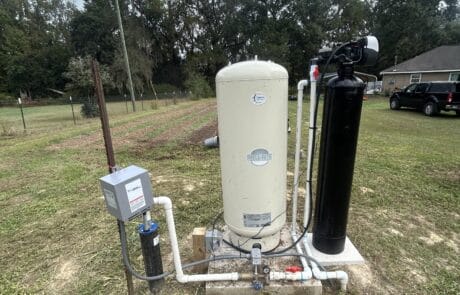
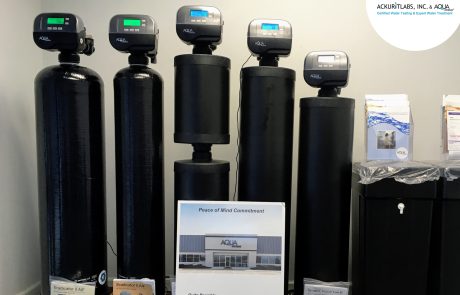
The systems we install use ion-exchange technology, the proven method for removing hardness minerals from water. Inside the unit, resin beads attract calcium and magnesium ions and swap them for sodium or potassium ions, effectively stripping the water of what causes scale before it ever reaches your plumbing. Backed by Aqua Systems equipment, what we install is built for sustained, daily performance rather than short-term relief.
Sizing and capacity matter more than most homeowners expect. A unit that is too small will regenerate constantly and wear out faster; one that is too large wastes salt and water with each cycle. We factor in household size, fixture count, and measured hardness to land on equipment that runs efficiently for years. Maintenance is straightforward once installed: periodic salt refills, occasional resin bed checks, and attention to the brine tank are typically all that is needed to keep a system performing well long-term. In our humid Panhandle climate, we also recommend checking the brine tank a bit more often than manuals from drier states suggest, since ambient moisture can cause salt to bridge or cake inside the tank.
Local water challenges across Tallahassee and surrounding communities
Water quality issues in this region are not uniform, and that is exactly why a generic installation often falls short. Municipal water in and around Tallahassee, including areas served by the city's Lake Bradford Road plant, frequently carries chlorine or chloramine, added for disinfection but often responsible for the taste and smell homeowners notice at the tap. Households on private wells, common throughout Wakulla County, Fort Braden, and smaller communities like Greensboro and Gretna, tend to face a different set of problems: iron staining, sulfur odor, sediment, and tannins that discolor water and stain fixtures or laundry, a familiar complaint from limestone-heavy well water near the Wakulla Springs area.
Homeowners in Blountstown, Chattahoochee, Havana, Midway, Saint Marks, and Woodville have all dealt with some version of these challenges, whether it is scale buildup from mineral-heavy municipal supply or the unpredictable quality that comes with a private well. A proper water softener installation accounts for these regional differences rather than applying the same equipment to every address. That is why our process always begins with testing specific to your home's water source, not assumptions based on your zip code.
What changes after installation
Once a softener is installed and running, most homeowners notice a difference within days. The improvements tend to show up in the same general areas:
- Cleaner dishes and glassware, without the cloudy mineral film that hard water leaves behind
- Softer skin and hair, since soap and shampoo actually rinse clean instead of leaving residue
- Brighter, softer laundry, with less fading and stiffness over time
- Longer-lasting appliances, including water heaters, washing machines, and dishwashers, since scale buildup no longer accumulates inside them
- Reduced plumbing wear, lowering the risk of pipe corrosion and mineral clogs over the years
These changes accumulate over time, meaning the real payoff of a properly sized system often shows up months and years down the line in the form of appliances that last longer and plumbing that stays in better condition.
How do you know if you need a water softener?
Not every household needs the same level of treatment, but a few signs consistently point toward hard water as the culprit:
- Visible scale on fixtures, showerheads, or coffee makers
- Soap or shampoo that will not lather well
- Spots on dishes even after washing
- Dry skin or hair after bathing
- Appliances that seem to fail earlier than expected
If two or more of these sound familiar, a water hardness test is worth scheduling before assuming the cause.
Free water assessment
Before recommending any equipment, we test your water directly rather than guessing based on general regional trends. This assessment identifies hardness levels along with any other concerns, such as iron or sediment for well-supplied homes, so the system we recommend is actually matched to your water rather than a generic average.
Why choose Ackuritlabs And Aqua Systems?
We have spent years working with the specific water conditions found throughout Tallahassee and the surrounding communities, from municipal supply areas to rural wells scattered across Wakulla County and beyond. That regional experience means we are not installing equipment based on generic assumptions; we are drawing on a track record of testing and treating water across a wide range of conditions, from chlorine taste issues in town to iron and sulfur odor in well water out toward Chattahoochee or Lamont. Every recommendation starts with data from your home, not a standard package applied to every customer, and our team stays involved after installation to make sure the system continues performing as expected.
Hard water problems rarely resolve themselves, and the longer scale and mineral buildup are left unaddressed, the more wear they cause to pipes, water heaters, and appliances that are expensive to replace. A professional water softener installation, backed by an accurate water assessment, corrects the issue at its source and delivers noticeably better water for drinking, cooking, bathing, and laundry throughout your home. If you have noticed scale on fixtures, dry skin after showers, or appliances wearing out faster than they should, now is the time to find out what is actually in your water rather than continuing to guess. Contact us to schedule a free water assessment, and let our team design a solution built around your home's actual water conditions. Every month you wait is another month of scale quietly working through your water heater, dishwasher, and pipes, and that damage tends to cost far more to repair than the softener would have cost to install in the first place. Reach out today, and we will get a technician out to test your water and walk you through exactly what we find, no pressure and no guesswork involved.